
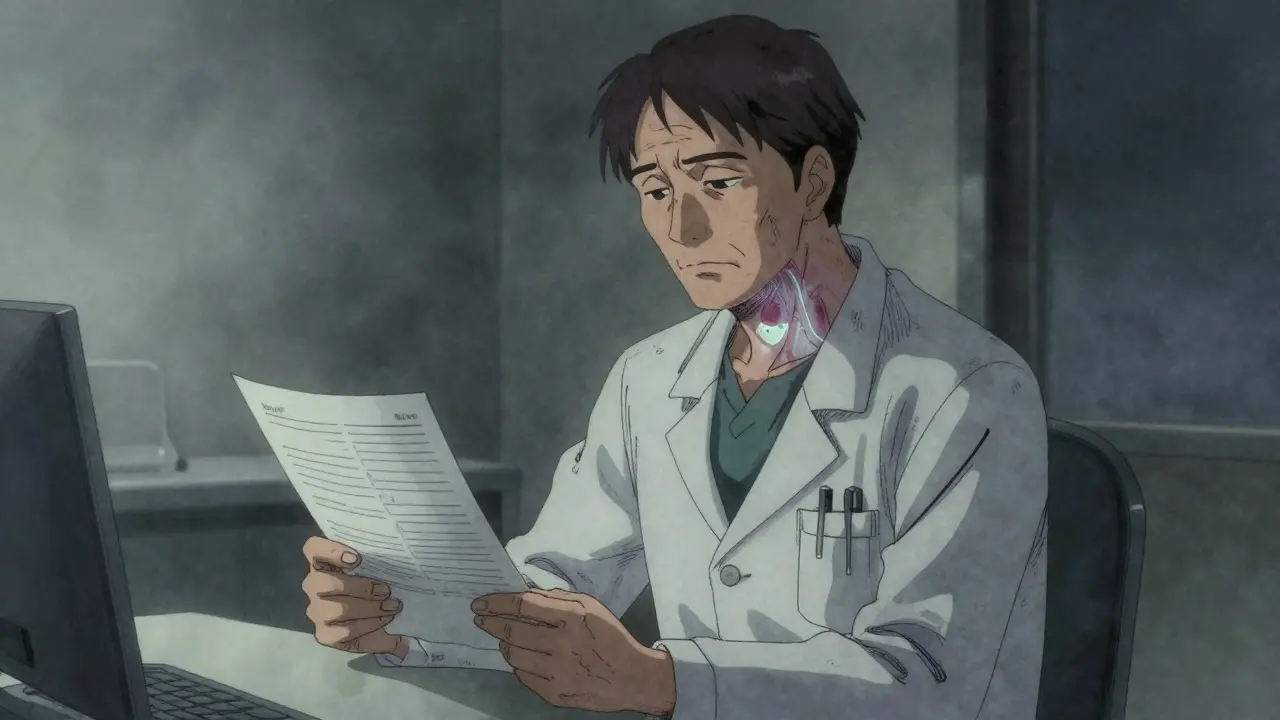
Imagine going for a routine blood test and finding out your thyroid is "overactive," even though you feel completely fine. You aren't shaking, you haven't lost weight, and you aren't feeling anxious. This is the paradox of Subclinical Hyperthyroidism is a condition where thyroid-stimulating hormone (TSH) levels are low, but the actual thyroid hormones (T4 and T3) remain within the normal range . Because there are often no obvious symptoms, it frequently slips under the radar. However, while you might feel great, your heart might be under significant stress. The real danger isn't how you feel today, but the long-term pressure this puts on your cardiovascular system, especially as you get older.
The Silent Shift: How it's Diagnosed
Most people discover they have this condition by accident. It usually shows up during a general check-up when a doctor notices that the TSH-the signal from your brain telling the thyroid to work-is suppressed, typically below 0.45 mIU/L. In a healthy system, if thyroid hormone levels were too high, TSH would drop to compensate. In subclinical cases, the TSH is low, but the Free T4 and Free T3 (the active hormones) haven't crossed the threshold into "overt" hyperthyroidism yet.
It's not a one-and-done diagnosis. Because TSH levels can fluctuate for various reasons, doctors usually require repeated testing to confirm the suppression is persistent. This condition is particularly common in those with Nodular Goiter (lumps in the thyroid gland). As we age, the prevalence climbs sharply; while only about 4-8% of the general population is affected, that number jumps to 15.4% for people over 75. This makes it a critical focal point for geriatric medicine.
Why Your Heart Should Care
Even if you don't feel a "racing heart," the excess thyroid hormone acts like a constant, low-level stimulant to your cardiovascular system. It increases the heart rate and changes how the heart muscle behaves. Over time, this can lead to structural changes, such as an increase in left ventricular mass and a decrease in heart rate variability, meaning your heart loses some of its ability to adapt to stress.
The most significant risk is Atrial Fibrillation (AFib), an irregular heart rhythm that can lead to blood clots and strokes. The risk isn't equal for everyone; it depends heavily on how low your TSH actually is. When TSH drops below 0.1 mIU/L, the risk of AFib spikes significantly. Research involving over 8,000 participants showed that those with TSH below 0.1 had a hazard ratio of 2.54, meaning they were more than twice as likely to develop AFib compared to people with normal thyroid levels.
Then there is the risk of Heart Failure. When the heart is constantly pushed to work harder, it can eventually wear out or become too stiff to fill properly. For those with TSH levels below 0.1 mIU/L, some studies have shown the risk of heart failure is nearly five times higher than in euthyroid individuals. For anyone over 60, the risk of developing AFib over a decade is roughly tripled if they have this thyroid imbalance.
| TSH Level | Heart Risk Level | Key Concerns | Bone Health Impact |
|---|---|---|---|
| 0.1 - 0.44 mIU/L | Moderate | Mild AFib risk, usually asymptomatic | Low to Moderate |
| Below 0.1 mIU/L | High | High AFib & Heart Failure risk | High (Increased Fracture Risk) |
Beyond the Heart: Bone and Brain
The impact of subclinical hyperthyroidism doesn't stop at the chest. Your bones also take a hit. Excess thyroid hormone can accelerate bone turnover, leading to a decrease in bone mineral density. This makes you more susceptible to fractures. In fact, people with TSH levels below 0.1 mIU/L have been found to have a fracture risk more than double that of people with normal thyroid function.
There is also a subtle effect on the brain. While not as dramatic as the heart risks, some elderly patients experience a decline in executive function-the ability to plan, focus, and multitask. While these cognitive shifts are often mild, they add another layer of concern for patients already dealing with the challenges of aging.
Making the Call: To Treat or Not to Treat?
This is where things get tricky. Unlike a broken arm, where the treatment is obvious, treating subclinical hyperthyroidism requires a careful balancing act. If you treat it too aggressively, you risk swinging the other way into hypothyroidism (an underactive thyroid), which has its own set of cardiovascular risks and lethargy.
Guidelines generally suggest a tiered approach based on your TSH and your health profile:
- For those with TSH below 0.1 mIU/L: Treatment is strongly considered, especially for adults over 65 or those who already have heart disease. This is often viewed as a high-risk group where the benefits of intervention outweigh the risks.
- For those with TSH between 0.1 and 0.44 mIU/L: Doctors usually take a "watch and wait" approach. Treatment is typically reserved for people who are actually showing symptoms, have osteoporosis, or have existing cardiac abnormalities.
The choice of treatment depends on the cause. If the issue is caused by Graves' Disease or toxic nodules, options might include radioactive iodine or surgery. For those whose levels are high because they are taking too much thyroid replacement medication (exogenous cause), the solution is often as simple as adjusting the dosage.
Many doctors start with Beta-blockers. These aren't thyroid medications per se, but they help manage the heart's response by slowing the heart rate and reducing the physical stress on the heart muscle, providing a safety net while a more permanent solution is decided upon.
Expert Perspectives and the Future
There is a bit of a global divide on how to handle this. The European Thyroid Association tends to be more aggressive, recommending treatment for almost everyone with a persistent TSH below 0.1 mIU/L. In contrast, American guidelines emphasize a more individualized approach, weighing the patient's overall comorbidities before jumping in.
We are currently waiting on more definitive data. The DEPOSIT study, which is tracking 5,000 older patients across Europe, is expected to wrap up in 2026. This study will provide critical insights into whether treating mild thyroid suppression actually improves long-term heart outcomes or if we are simply over-treating a condition that doesn't always need intervention. Until then, the rule of thumb is: the lower the TSH, the more urgent the conversation with your endocrinologist becomes.
What is the difference between subclinical and overt hyperthyroidism?
Overt hyperthyroidism involves high levels of T3 and T4 hormones and usually comes with clear symptoms like weight loss, tremors, and anxiety. Subclinical hyperthyroidism is "silent"; the T3 and T4 levels are still in the normal range, but the TSH is low, meaning the thyroid is just starting to overproduce or is being barely held in check by the pituitary gland.
Do I need treatment if my TSH is 0.3 mIU/L?
Generally, if your TSH is between 0.1 and 0.44 mIU/L and you have no symptoms or heart disease, doctors often recommend annual monitoring rather than active treatment. However, if you have osteoporosis or a history of heart failure, your doctor might suggest an earlier intervention.
Can subclinical hyperthyroidism cause a heart attack?
While it isn't a direct cause of a heart attack in the way that clogged arteries are, it significantly increases the risk of Atrial Fibrillation and heart failure. These conditions can weaken the heart muscle over time and increase the risk of strokes, which is why monitoring is so important.
How often should I have my thyroid checked?
If your TSH is very low (below 0.1 mIU/L), tests are often repeated every 3 to 6 months. For those with mild suppression (0.1-0.44 mIU/L) and no risk factors, an annual check is typically sufficient, especially for patients over 60.
Will taking beta-blockers cure my thyroid problem?
No, beta-blockers do not fix the thyroid gland itself. They only treat the symptoms by blocking the effects of excess thyroid hormone on the heart, effectively lowering your heart rate and reducing palpitations.
Next Steps and Troubleshooting
If you've just received a lab report with a low TSH, don't panic, but do be proactive. First, ask your doctor if this was a single reading or a persistent trend. If you are taking thyroid replacement hormone for hypothyroidism, check if your dose is too high; a small adjustment could bring your TSH back to a safe range.
For those over 65, a cardiovascular screening-such as an ECG or an echocardiogram-is a smart move. This helps determine if the thyroid imbalance has already started affecting your heart structure, which can shift the decision from "watch and wait" to "active treatment." Finally, keep a log of any subtle changes in sleep, mood, or heart rhythm, as these can provide the clinical context your doctor needs to make the right call.