
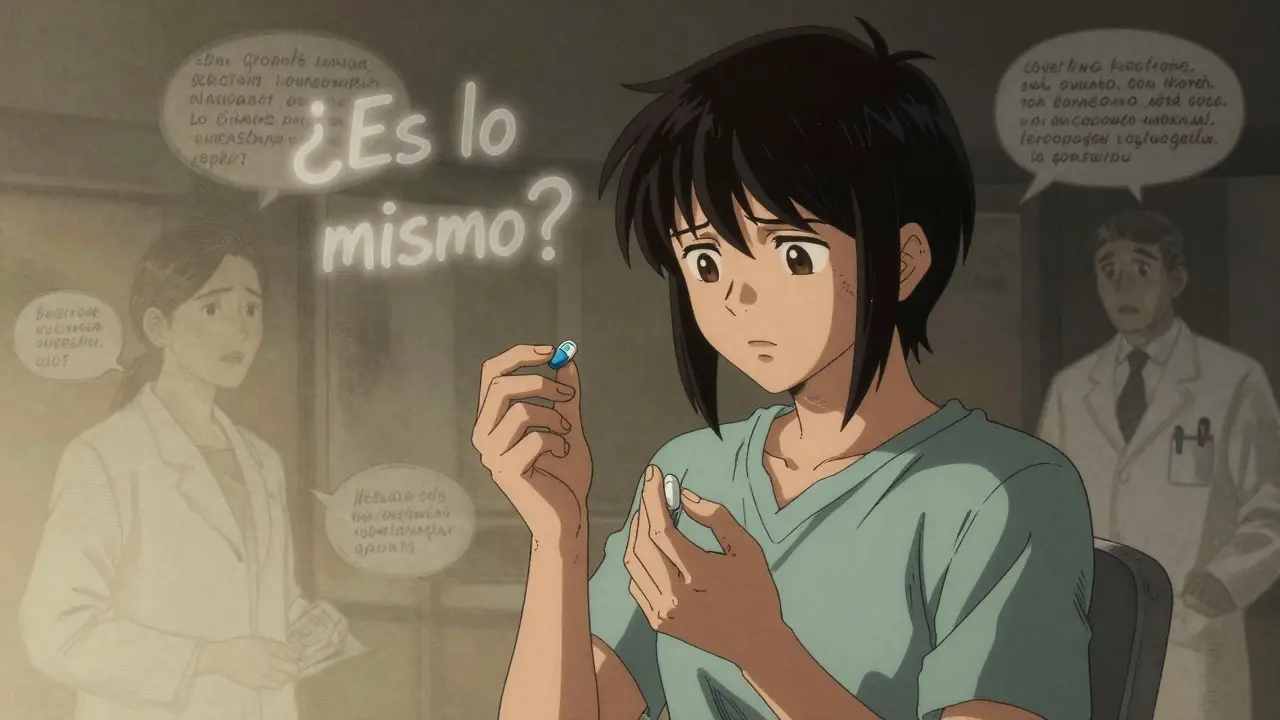
When you’re taking medication, knowing what you’re taking and why matters. For Spanish-speaking patients in the U.S., that understanding often hits a wall-not because of lack of interest, but because of language gaps. Many patients hear their doctor say, "Vamos a cambiar a la versión genérica"-"We’re switching to the generic version"-but don’t fully grasp what that means. They see a pill that looks different: smaller, white instead of blue, no logo on it. And suddenly, they wonder: "¿Es lo mismo?" Is it the same?
This isn’t just about confusion. It’s about safety. A 2023 study from the University of Miami found that 37% fewer patients stopped taking their meds when they saw side-by-side images showing that different-looking pills could still be the same medicine. That’s why Spanish-language resources on generic medications aren’t just helpful-they’re essential.
What Exactly Is "Medicamento Genérico"?
In Spanish, "medicamento genérico" means the same thing as "generic medication" in English. But the term alone doesn’t explain much. The real issue? Many patients don’t know that a generic drug has the same active ingredient, strength, dosage form, and route of administration as the brand-name version. The FDA requires generics to be bioequivalent-meaning they work the same way in the body. But that’s not always communicated clearly.
Resources like the Agency for Healthcare Research and Quality (AHRQ)’s "My Medicines List"-available in Spanish since February 2023-help patients write down both the brand and generic names of their drugs, why they take them, and how often. This simple tool helps patients track their meds and ask better questions at the pharmacy. One patient in California told a nurse: "I finally understood I could save $200 a month without losing effectiveness. My father’s blood pressure hasn’t changed since we switched."
Where to Find Reliable Spanish-Language Medication Guides
Not all Spanish-language materials are created equal. Some are vague. Others use regional slang that confuses more than helps. Here are the most trusted sources currently available:
- MedlinePlus.gov (Spanish): Offers bilingual PDFs comparing brand and generic names with clear side-by-side layouts. Updated quarterly, it’s one of the few resources that includes common side effects in plain Spanish.
- AHRQ’s "My Medicines List" (Spanish): Designed for daily use. Includes space to write down dosage, timing, and purpose. Also has QR codes linking to short video explanations in multiple Spanish dialects, launched in early 2024.
- Wake AHEC’s Pharmacy Translation Card: Used by nurses and pharmacists. Includes phrases like: "Esta medicina tiene una apariencia diferente, pero es lo mismo" (This medicine looks different, but it’s the same). It’s practical, not academic.
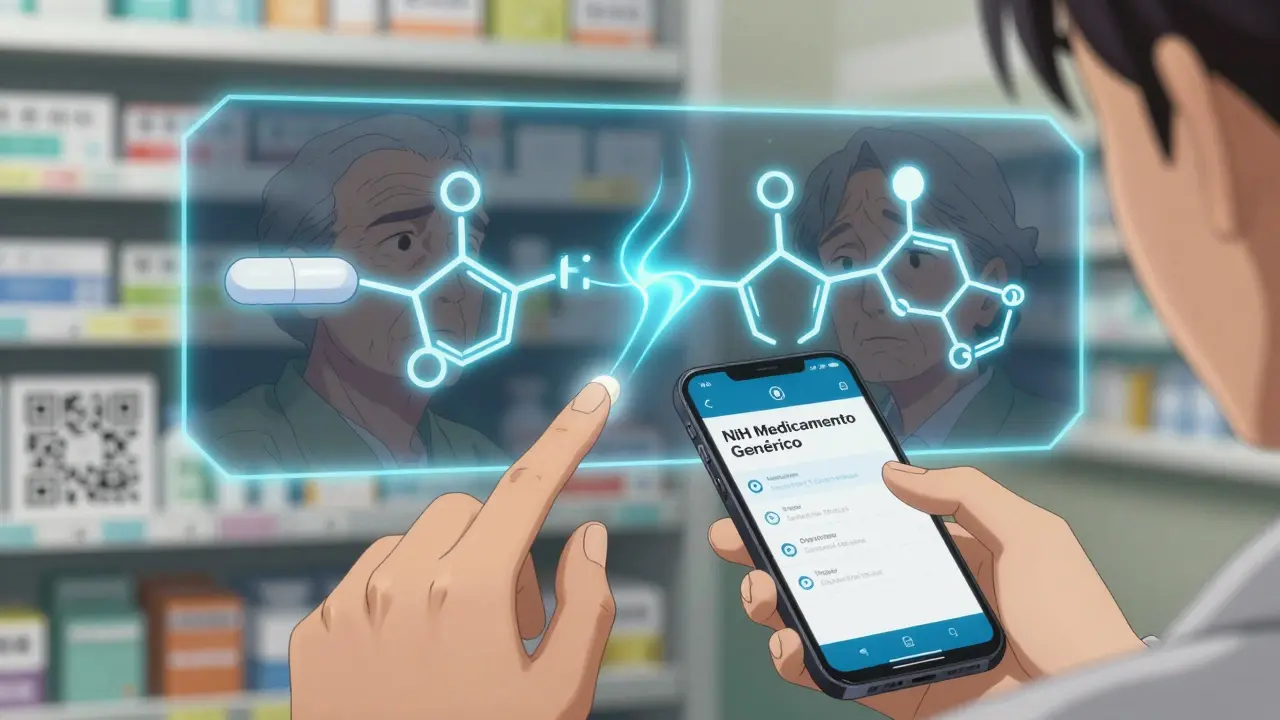
- NIH’s "Medicamento Genérico" App: Launched in September 2023, this free app lets users scan a pill, compare images of brand vs. generic versions, calculate cost savings, and even listen to correct pronunciation of drug names.
- Spanish Academy’s Pharmacy Vocabulary Guide (July 2023): Lists 27 key terms like "medicamentos de venta libre" (OTC meds), "receta médica" (prescription), and "efectos secundarios" (side effects). Great for building basic vocabulary.
These aren’t just translations. They’re tools built by healthcare professionals who’ve seen the consequences of misunderstanding. One pharmacist in Texas said: "I used to spend 15 minutes explaining to each patient why their new pills looked different. Now I hand them the card. It cuts the time in half-and the confusion even more."
Why Appearance Confusion Leads to Stopped Medications
One of the biggest reasons patients stop taking generics? They think different-looking pills mean different medicine. That’s not just a myth-it’s a documented risk.
A Medscape report from February 2023 described a patient who stopped taking warfarin after switching to a generic version. The brand pill was red. The generic was white. The patient believed the color change meant the drug didn’t work anymore. He didn’t tell anyone. Three weeks later, he had a stroke.
That’s why visual aids matter. Studies show that showing patients pictures of the brand pill and the generic pill side by side reduces confusion by 37%. The NIH app includes this feature. So does Kaiser Permanente’s Spanish medication portal, which launched in late 2022. Since then, patient calls about "strange-looking pills" dropped by 52%.
It’s not enough to say "it’s the same." You have to show it.
Regional Differences Can Be Dangerous
Not all Spanish is the same. What’s called "paracetamol" in Spain is "acetaminofén" in Mexico, Colombia, and most of Latin America. Both are the same drug-Tylenol in the U.S. But if a patient moves from Texas to Florida and hears a different word, they might think they’re getting a different medicine.
Translation expert Elena Rodriguez points out that many Spanish-language resources don’t account for this. A patient might get a handout from their clinic using "paracetamol," then hear their pharmacy say "acetaminofén." That mismatch can trigger fear, especially in older adults or those with low health literacy.
That’s why the best resources now include regional notes. The AHRQ’s updated 2024 version adds footnotes like: "In some countries, this is called acetaminofén." The NIH app even lets users select their country of origin to tailor terminology.
What Patients Are Really Saying
On Reddit’s r/MedicalSpanish forum, a thread from May 2023 had 47 comments from patients and caregivers. Common themes:
- "The pharmacist didn’t explain why the pill looked different. I thought it was fake."
- "My abuela refused to take her blood pressure meds because she said the new ones were "más débiles"-weaker."
- "I finally understood after seeing a video that showed the same chemical formula on both pills."
A survey by the California Health Care Foundation in January 2023 found that 78% of Spanish-speaking patients felt more confident using generics after using bilingual guides. But 63% still doubted they worked as well as brand-name drugs.
That gap isn’t about intelligence. It’s about trust. And trust comes from clear, consistent, visual, and culturally relevant communication.
How Healthcare Providers Can Do Better
Doctors and pharmacists aren’t always trained in cultural or linguistic nuances. Wake AHEC’s 2022 guide says most providers need 10-15 hours of training to use these tools effectively. Many still rely on Google Translate-which often misuses terms like "genérico" (generic) as "barato" (cheap), implying lower quality.
Best practices include:
- Always show a picture of the brand and generic pill together.
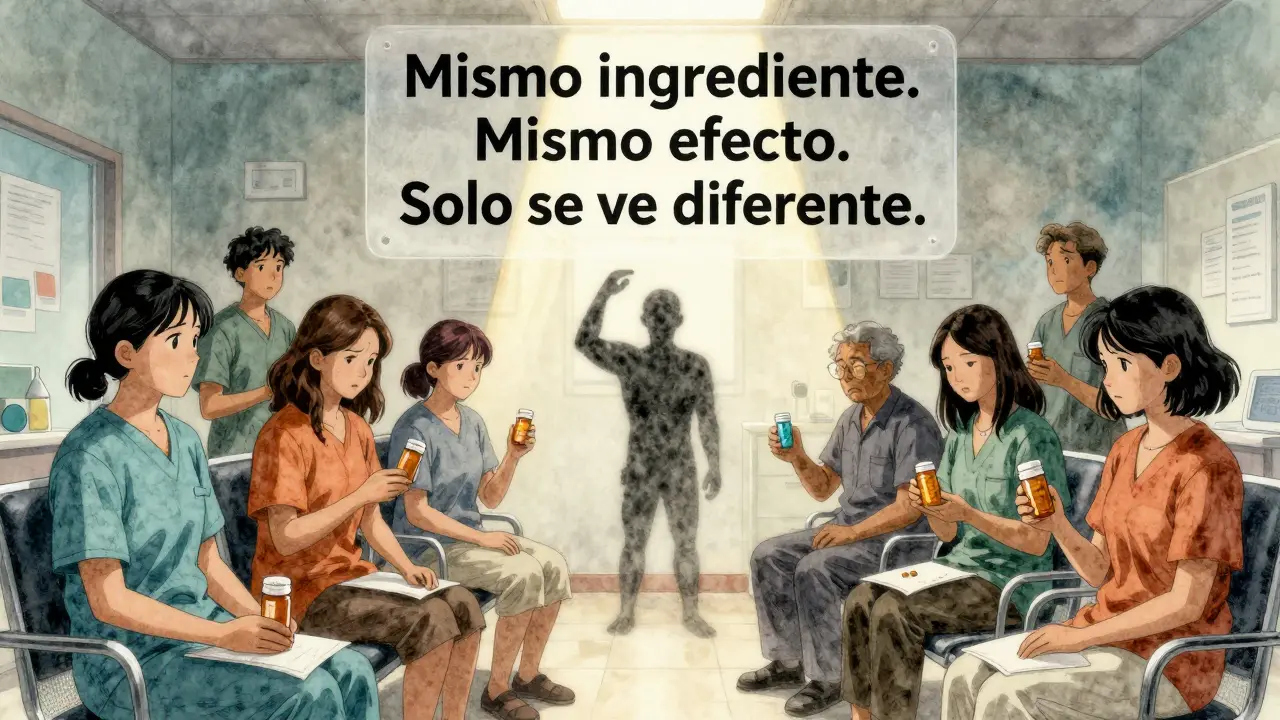
- Use the phrase: "El medicamento genérico tiene el mismo ingrediente activo. Es igual, solo se ve diferente." (The generic medicine has the same active ingredient. It’s the same, just looks different.)
- Avoid the word "barato" when describing generics. Say "más económico" instead.
- Include audio pronunciations for drug names. "Farmacia" is pronounced "far-MA-sya," not "far-MAY-shee-ah."
- Offer materials in multiple dialects if your patient population is diverse.
One clinic in Chicago started using the NIH app during consultations. Within six months, generic medication adherence among Spanish-speaking patients rose from 54% to 82%.
The Bigger Picture: Why This Matters
Generics make up 90% of prescriptions filled in the U.S. But they account for only 22% of total drug spending. That’s billions saved every year-for patients, insurers, and the system. Yet, if patients don’t understand or trust generics, those savings vanish.
According to the American Pharmacists Association, 40% of medication errors in Spanish-speaking patients stem from confusion over names, dosages, or appearance. And the Hispanic population in the U.S. is growing: 62.1 million in 2023, projected to hit 111 million by 2060.
Health equity isn’t just about access. It’s about understanding. A patient who knows their medication is safe, effective, and affordable is more likely to take it. And that’s the real goal.
Frequently Asked Questions
What does "medicamento genérico" mean in English?
"Medicamento genérico" means "generic medication" in English. It’s a version of a brand-name drug that contains the same active ingredient, works the same way in the body, and meets the same safety standards set by the FDA. The only differences are usually in color, shape, or inactive ingredients-and these don’t affect how well the drug works.
Why do generic pills look different from brand-name ones?
By law, generic drugs can’t look exactly like brand-name drugs because of trademark rules. That’s why the shape, color, or markings might change. But the active ingredient-the part that treats your condition-is identical. Visual guides that show both versions side by side help patients understand this difference isn’t a sign of lower quality.
Is "paracetamol" the same as "acetaminofén"?
Yes. "Paracetamol" is the term used in Spain and some European countries. "Acetaminofén" is used in Latin America and the U.S. Both refer to the same pain reliever and fever reducer, known as Tylenol in the U.S. This difference in naming can confuse patients who move between regions or get prescriptions from different providers. Always check the active ingredient, not just the name.
Where can I find free Spanish-language guides for generic medications?
You can download free, reliable Spanish-language guides from MedlinePlus.gov, the Agency for Healthcare Research and Quality (AHRQ), and the National Institutes of Health (NIH). The NIH also offers a free mobile app called "Medicamento Genérico," which includes images, cost comparisons, and audio pronunciations. These are all government-backed and updated regularly.
Can I trust generic medications as much as brand-name ones?
Yes. The FDA requires generic drugs to be just as safe and effective as brand-name drugs. They must have the same active ingredient, strength, dosage form, and route of administration. They’re tested to make sure they work the same way in the body. The only differences are in cost and appearance. Many patients save hundreds of dollars a year by switching-without losing effectiveness.
What should I ask my pharmacist if I’m unsure about a generic medication?
Ask: "¿Es esta la misma medicina que mi doctor recetó?" (Is this the same medicine my doctor prescribed?) and "¿Tiene una versión de marca de esta medicina?" (Do you have a brand-name version of this medicine?) You can also ask to see a picture of the brand version next to the generic. If they can’t show you, ask for a printed guide. Most pharmacies now have these available.
What Comes Next
Technology is making these resources better. Epic Systems, a major electronic health record provider, is testing AI tools that automatically generate personalized Spanish explanations based on a patient’s region and dialect. Hospitals in 37 states are piloting this now.
But the most powerful tool remains simple: clear language, visual proof, and trust. A patient who understands their medication is more likely to take it. And that’s the only outcome that matters.
James Dwyer
January 28, 2026 AT 03:32Finally, someone put this into words I can actually use with my patients. I’ve been handing out those AHRQ cards for months now, and the drop in confused calls to the front desk has been insane. No more ‘but this pill looks wrong’ panic. Just quiet nods and ‘ah, ok’.
jonathan soba
January 29, 2026 AT 08:01Interesting that you cite a 37% reduction in non-adherence based on visual aids, but you don’t mention the margin of error or sample size. The University of Miami study had n=182, which is statistically underpowered for a population of over 60 million. Also, ‘37% fewer patients stopped’ is a misleading phrasing-it implies causation without controlling for socioeconomic variables. This feels like advocacy masquerading as evidence.
Rose Palmer
January 30, 2026 AT 12:39Thank you for this comprehensive, well-researched piece. As a bilingual nurse practitioner, I’ve seen firsthand how the visual mismatch between brand and generic medications creates fear-not ignorance. The NIH app is a game-changer. We now use it during intake, and patients leave with not just understanding, but confidence. This isn’t just about compliance-it’s about dignity.
Timothy Davis
January 31, 2026 AT 11:50You listed five ‘trusted’ sources, but none of them are peer-reviewed journals. MedlinePlus is a government portal, AHRQ is a policy org, Wake AHEC is regional, and the NIH app? It’s a mobile tool, not a clinical guideline. Where’s the Cochrane review? Where’s the RCT data proving these tools reduce hospitalizations? This reads like a marketing brochure disguised as public health guidance.
John Rose
January 31, 2026 AT 22:53I love that you included regional terminology differences. My abuela in Arizona still calls ibuprofen ‘motrin’ even though it’s been generic for 15 years. I showed her the NIH app’s dialect toggle-she picked ‘Mexico’ and suddenly ‘ibuprofeno’ made sense. It’s small, but it matters. I wish more providers knew this existed.
Lexi Karuzis
February 2, 2026 AT 04:47Wait-so now we’re trusting an app built by the NIH to tell us what’s in our pills? Who funded that? Who’s behind the ‘Medicamento Genérico’ app? And why does it only show FDA-approved versions? What about the pills coming across the border? Are you really telling me the government isn’t hiding something? I’ve seen pills with no markings, no logos-just white tablets. They’re not generics-they’re counterfeit, and you’re normalizing them!
Brittany Fiddes
February 3, 2026 AT 06:51Oh, how quaint. You think Americans have a monopoly on healthcare literacy? In the UK, we’ve had NHS-branded generic pill cards since 2017-designed by pharmacists, not bureaucrats. And we don’t need apps. We just have NHS Direct, and everyone knows ‘paracetamol’ is paracetamol, no matter the colour. This whole ‘visual aids’ obsession feels like American exceptionalism wrapped in a QR code.
Amber Daugs
February 3, 2026 AT 11:05Why are we still letting people take generics at all? They’re not ‘the same.’ They’re cheaper. And cheaper means corners cut. I read a study once-maybe it was 2021, maybe 2022-where generics had 12% more side effects in elderly patients. You’re not educating people-you’re pressuring them to accept subpar medicine because it’s ‘economical.’ And now you’re using Spanish-speaking patients as props to justify this. Shameful.
Robert Cardoso
February 4, 2026 AT 12:19Let’s be honest: this entire narrative is built on the assumption that language barriers are the primary obstacle to adherence. But what about literacy? What about distrust in institutions? What about the fact that 42% of Spanish-speaking patients in the U.S. are undocumented and afraid to ask questions? You’re treating symptoms, not root causes. And you’re ignoring the elephant in the room: the pharmaceutical industry’s lobbying against generic transparency. This is performative allyship.
matthew martin
February 4, 2026 AT 21:37Man, I used to think generics were just cheap knockoffs until my cousin showed me that NIH app. Scanned his blood pressure pill-brand was blue oval, generic was white round. Same chemical structure, same FDA stamp. He cried. Not because he was sad-because he finally felt like someone had spoken to him like a human, not a statistic. That’s what this is. Not info. Connection.
Jeffrey Carroll
February 5, 2026 AT 01:57Thank you for highlighting the importance of dialect-specific terminology. The distinction between 'paracetamol' and 'acetaminofén' is not trivial-it is a critical point of cultural and linguistic precision that directly impacts patient safety. I recommend that all clinical translation workflows incorporate regional lexical mapping as a mandatory component of patient education materials. This approach aligns with best practices in health communication theory and should be standardized across federally funded programs.