

Why Sleep Gets So Hard During Pregnancy
By the third trimester, many pregnant women are exhausted-but not because they’re just tired. Their bodies are fighting an invisible battle every night. Snoring isn’t just annoying anymore; it could be a sign of sleep apnea. Heartburn keeps them awake even after three antacids. And no matter how they try to get comfortable, lying flat feels impossible. These aren’t just inconveniences. They’re medical issues that affect both mom and baby.
One in ten pregnant women develops obstructive sleep apnea (OSA) by the end of pregnancy. That number jumps to nearly one in four if they’re overweight. The cause? Hormones relax the muscles in the throat, fluid builds up in the neck, and the growing uterus pushes up on the diaphragm. The result? Breathing stops for seconds at a time, oxygen drops, and sleep shatters-often without the person even realizing it.
What Sleep Apnea Does to You and Your Baby
Untreated sleep apnea during pregnancy doesn’t just mean you wake up groggy. It raises your risk of serious complications. Studies show women with sleep apnea are more than twice as likely to develop preeclampsia, a dangerous condition marked by high blood pressure and organ damage. They’re also 1.7 times more likely to get gestational diabetes and 2.1 times more likely to need a C-section.
For the baby, the risks are just as real. Poor oxygen flow from repeated breathing pauses can slow fetal growth. One large study found that untreated sleep apnea increases the chance of low birth weight by 42%. And here’s the kicker: these problems don’t disappear after birth. Nearly 6 out of 10 women who had sleep apnea during pregnancy develop high blood pressure within ten years-even if their apnea went away after delivery.
How to Diagnose Sleep Apnea When You’re Pregnant
Most women don’t realize they have sleep apnea because they don’t wake up gasping. Their partner does. Snoring that’s loud, irregular, or stops suddenly? That’s a red flag. Daytime fatigue that doesn’t go away? Another. But feeling tired is normal in pregnancy-so doctors can miss it.
The American College of Obstetricians and Gynecologists now recommends screening all pregnant women using a simple questionnaire called the STOP-Bang. It asks about snoring, tiredness, observed breathing pauses, high blood pressure, BMI, age, neck size, and gender. If you score high, you’ll need a sleep study.
There are two types: one in a lab (polysomnography) and one at home. Home tests are now accepted for low-risk patients. They measure breathing, oxygen levels, and heart rate while you sleep. You wear a small device on your finger and a belt around your chest. No needles. No wires. Just sleep. Results usually come back in a week.
CPAP: The Most Effective Treatment-And How to Make It Work
Continuous Positive Airway Pressure (CPAP) is the gold standard. It’s a machine that gently blows air through a mask to keep your airway open. For pregnant women, it’s not just helpful-it’s life-saving. A 2023 study found that starting CPAP between 24 and 28 weeks reduced preeclampsia risk by 30% and gestational hypertension by 35%.
But many women quit. Why? The mask feels claustrophobic. Nasal swelling makes it leak. The machine is noisy. The humidity dries out their nose. Here’s how to fix it:
- Use nasal pillows instead of full-face masks-they’re lighter and don’t press on swollen cheeks.
- Choose a machine with auto-titrating pressure (like ResMed AirSense 11 Pregnancy Mode). It adjusts automatically as your body changes.
- Set the humidifier to 37°C. That’s body temperature. It prevents dryness.
- Try the Boppy Noggin CPAP pillow. It cradles your head and keeps you on your side without squishing the mask.
Adherence jumps from 58% to 82% when women get a 30-minute setup session with a sleep tech who shows them how to fit the mask, clean the tubing, and troubleshoot leaks. Don’t skip this step.
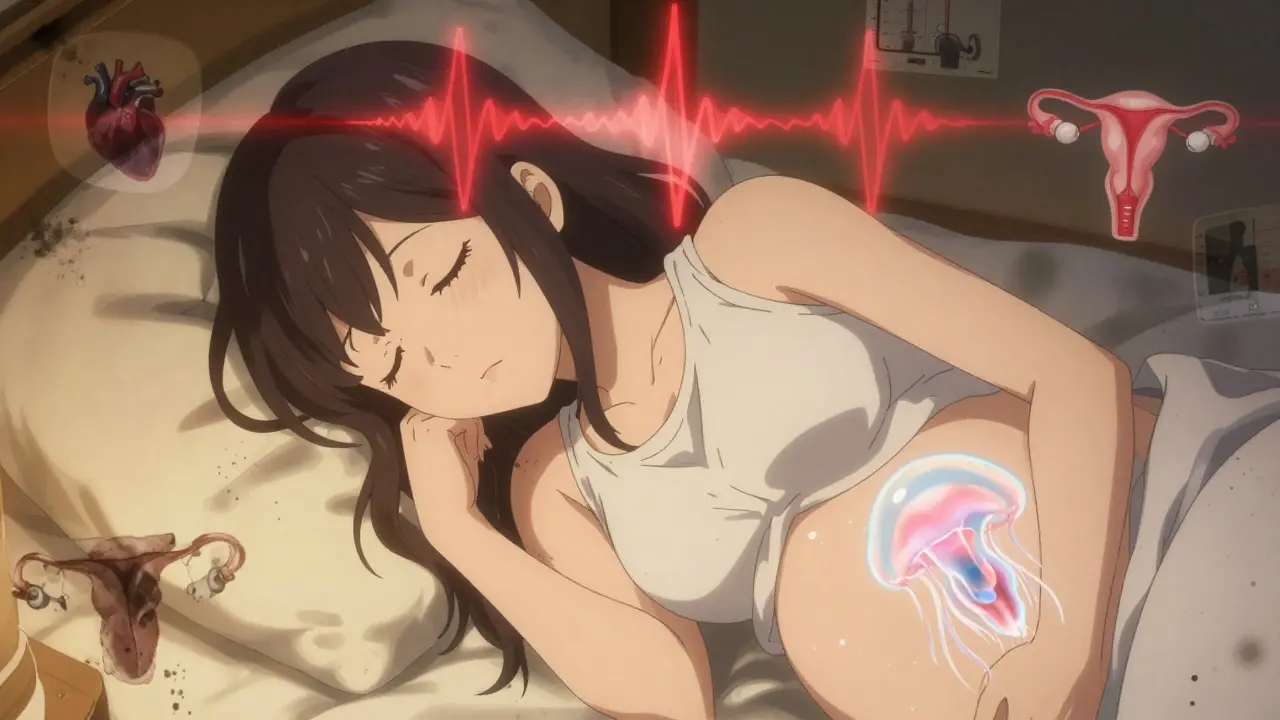
Positioning: The Simple Fix That Works for Mild Apnea
If your apnea is mild (less than 15 breathing pauses per hour), changing how you sleep can help-without a machine. Sleeping on your back is the worst. It lets your tongue and soft tissues collapse into your throat. Sleeping on your left side is best. It takes pressure off your main blood vessels and improves blood flow to the placenta.
Studies show that left-side sleeping reduces the apnea-hypopnea index (AHI) by nearly 23%. But staying on your side all night? Hard. That’s where pregnancy pillows come in.
Full-body pillows (like the Leachco Snoogle or the Boppy Total Body Pillow) wrap around you, supporting your belly, back, and legs. They keep you from rolling onto your back. One user on Reddit said: “My AHI dropped from 18 to 6 in two weeks after I started using the Boppy pillow.”
Don’t just stack regular pillows under your belly. That can tilt your spine and make apnea worse. Use a pillow designed for pregnancy-firm, long, and shaped to hold you in place.
Tackling Reflux: More Than Just Antacids
Heartburn during pregnancy isn’t just spicy food. It’s hormones slowing digestion and the baby pressing up on your stomach. Lying down makes it worse. But propping yourself up with pillows? That’s a mistake. It bends your spine and can actually worsen apnea.
The right fix? Elevate the head of your bed-not just your head. Use wooden blocks under the bed legs or a wedge pillow that’s 6 to 8 inches high. This uses gravity to keep stomach acid where it belongs.
Other tips:
- Avoid eating within three hours of bedtime.
- Skip caffeine, chocolate, citrus, and fried foods after noon.
- Use Gaviscon Advance (alginate-based). It forms a foam barrier on top of stomach contents without being absorbed into your bloodstream. Safe. Effective. Costs about $15 for a bottle.
One study found that combining bed elevation with alginate antacids reduced nighttime heartburn by 70% compared to regular antacids.
What Doesn’t Work (And Why)
Some treatments that work for non-pregnant people are risky during pregnancy.
Mandibular advancement devices (mouthpieces that push your jaw forward) aren’t recommended. Pregnancy hormones loosen ligaments-including in your jaw. These devices can cause pain, TMJ issues, or even tooth movement. No long-term safety data exists.
Weight loss isn’t advised during pregnancy. But staying within the Institute of Medicine’s recommended weight gain range (11.5-16 kg for normal weight, 5-9 kg for obese) helps. Too much weight gain increases pressure on your airway and worsens both apnea and reflux.
Over-the-counter sleep aids are a no-go. Even “natural” ones like melatonin or valerian root haven’t been proven safe in pregnancy. Stick to non-drug solutions.

When to Get Help-And What to Expect After Baby
Don’t wait until you’re miserable. If you snore loudly, stop breathing at night, wake up gasping, or feel exhausted even after 8 hours of sleep, talk to your OB-GYN. Ask for a sleep screening at your first prenatal visit.
Most women see big improvements within two weeks of starting CPAP or positional therapy. Energy levels rise. Headaches fade. Blood pressure stabilizes.
After delivery, don’t assume everything’s fixed. Sleep apnea often improves-but not always. The Brown Health clinical protocol recommends a follow-up sleep study at 12 weeks postpartum. Why? Because women who had pregnancy-related apnea have a higher long-term risk of chronic high blood pressure, even if their symptoms disappeared.
Real Stories, Real Results
‘ExpectingMom2023’ on Reddit said: “I started CPAP at 26 weeks. My blood pressure dropped in two weeks. My husband finally slept through the night. The mask leaked at first-but the sleep tech helped me switch to nasal pillows. Best decision I made.”
Another user on SleepAdvisor.org shared: “I used to wake up 5 times a night with heartburn. After using a wedge pillow and Gaviscon Advance, I slept 7 hours straight for the first time in months.”
But too many women suffer in silence. A 2022 survey found that women waited an average of 14 weeks before getting checked. That’s almost half the pregnancy. Don’t be one of them.
What’s Changing in 2025
The field is moving fast. In June 2024, new guidelines expanded screening to all pregnant women at 28 weeks-not just those who are overweight or have high blood pressure. Apple Watch Series 9 now has a sleep apnea detection feature validated in a 2024 JAMA study. It’s not diagnostic, but it can flag potential issues early.
ResMed’s new AirTouch F20 Pregnancy Edition mask has a softer silicone cushion designed for swollen faces. The humidity settings now auto-adjust to room temperature, cutting down on nasal dryness-the #1 reason women quit CPAP.
By 2027, sleep apnea screening is expected to be standard in 65% of prenatal clinics. Why? Because treating it saves money. Preventing one case of preeclampsia saves about $1,850 in hospital costs per pregnancy.
What You Can Do Today
- Ask your doctor for a STOP-Bang screening at your next appointment.
- If you snore or feel exhausted, don’t brush it off. Say: “I think I might have sleep apnea.”
- Start sleeping on your left side with a pregnancy pillow tonight.
- Elevate your bed head by 6-8 inches-don’t just pile up pillows.
- Stop eating 3 hours before bed. Avoid trigger foods after noon.
- If prescribed CPAP, get a setup session. Don’t try to figure it out alone.
Good sleep isn’t a luxury in pregnancy. It’s part of your prenatal care. Fixing your sleep might be the most important thing you do for your baby-and your future health.
Stacey Smith
December 21, 2025 AT 17:08Jackie Be
December 23, 2025 AT 01:20Peggy Adams
December 24, 2025 AT 18:40Southern NH Pagan Pride
December 26, 2025 AT 08:53Ben Warren
December 26, 2025 AT 21:04Cameron Hoover
December 28, 2025 AT 09:35John Hay
December 29, 2025 AT 16:13Hannah Taylor
December 30, 2025 AT 06:47Christina Weber
December 31, 2025 AT 16:28mukesh matav
January 1, 2026 AT 22:22Sarah Williams
January 3, 2026 AT 00:30Adrian Thompson
January 4, 2026 AT 12:42Jay lawch
January 5, 2026 AT 08:54