
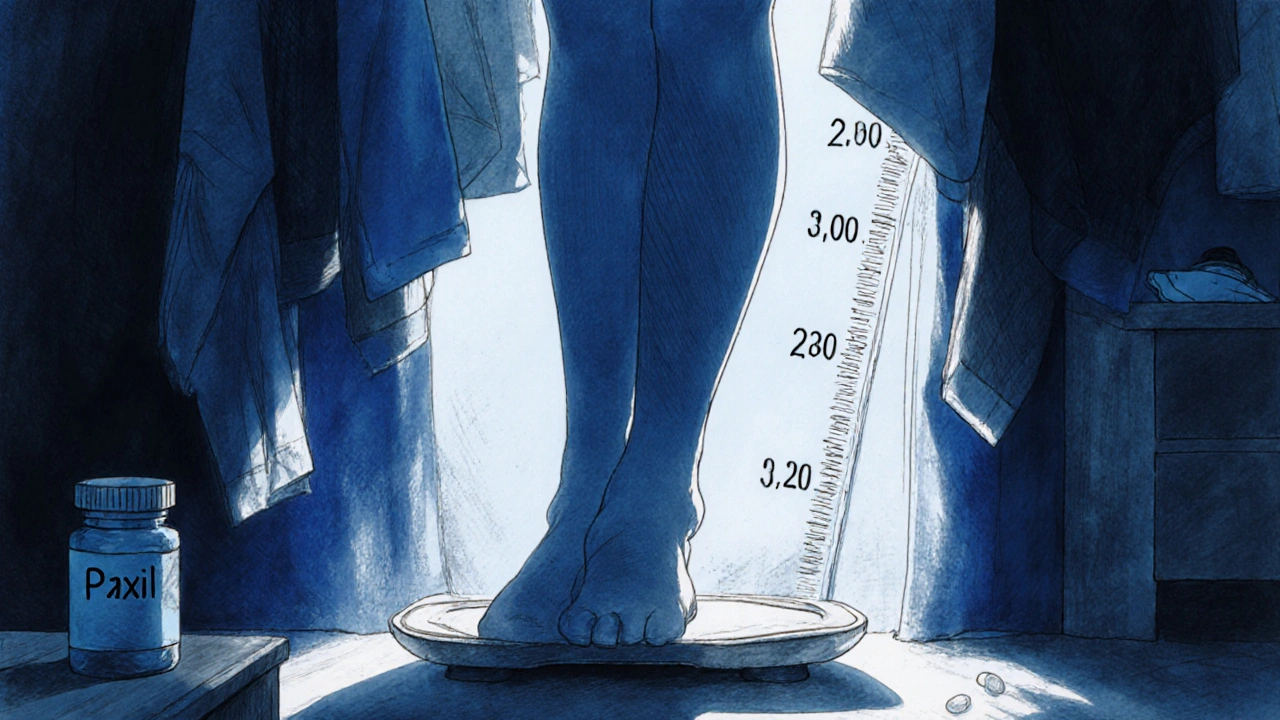
Paroxetine Weight Gain Calculator
Estimate Your Weight Gain Risk
Based on clinical studies showing paroxetine can cause significant weight gain, this calculator estimates your potential weight gain based on your starting weight and duration of use.
Many people start taking paroxetine - sold under brand names like Paxil or Seroxat - to manage depression, anxiety, or panic attacks. For a lot of them, it works. But months later, something unexpected happens: the scale keeps climbing. Even when they’re eating the same, walking more, or trying to exercise, the pounds stick. It’s not laziness. It’s not lack of willpower. It’s a real, documented side effect of the drug itself.
Why Paroxetine Causes Weight Gain
Paroxetine is an SSRI - a selective serotonin reuptake inhibitor. It boosts serotonin levels in the brain, which helps lift mood. But serotonin doesn’t just affect emotions. It also plays a key role in appetite, digestion, and how your body stores fat. When serotonin signaling gets disrupted by long-term paroxetine use, your body can start craving carbs, feeling hungrier after meals, and storing more energy as fat. Unlike some other antidepressants, paroxetine doesn’t just cause a little extra weight - it causes noticeable, sustained gains. A 2014 study in the Journal of Clinical Psychiatry found that 25.5% of people on paroxetine gained at least 7% of their starting body weight over six months. Compare that to sertraline (Zoloft), where only 4.2% saw that level of gain. That’s a six-fold difference. The numbers don’t lie. In one analysis, people on paroxetine gained an average of 3.6% of their body weight over several months. For someone weighing 150 pounds, that’s over 5 pounds - and for many, it’s more. A study tracking patients for over two years found 14.5% gained more than 7% of their initial weight. And it gets worse over time. In the first 12 weeks, weight changes are often minimal. But after six months, the trend flips. The longer you’re on it, the more likely you are to gain.How Paroxetine Compares to Other Antidepressants
Not all antidepressants affect weight the same way. Some even help you lose it.- Fluoxetine (Prozac): Most studies show little to no weight gain - sometimes even a small loss. People on Prozac typically gain less than 1 pound over six months.
- Sertraline (Zoloft): Mild gain for some, but far less than paroxetine. Only about 1% average weight gain.
- Bupropion (Wellbutrin): Often linked to weight loss. It’s one of the few antidepressants that may help curb appetite.
- Mirtazapine: Can cause weight gain, but mostly in the first few weeks. Paroxetine’s gain builds slowly and keeps going.
Real Stories: What Patients Are Saying
Online forums are full of stories from people who didn’t expect this side effect. One Reddit user wrote: “I gained 30 pounds in two years on Paxil. I was eating salads, walking daily, and still gained weight. When I switched to Zoloft, I lost 25 pounds in six months - no diet changes.” Another patient on GoodRx said: “I gained 40 pounds in 18 months. I was working out five days a week. Nothing worked. My doctor said it was the medication.” Women report it more often than men. One woman shared: “I gained 35 pounds on paroxetine. I tried everything - keto, intermittent fasting, personal training. The weight stayed. It wasn’t until I stopped that it started to come off.” But it’s not universal. Some people stay the same. One user on Reddit said: “Five years on 40mg of Paxil. Zero weight gain. My metabolism just didn’t react.” That’s the thing - everyone’s body responds differently. But the odds are stacked against you if you’re on paroxetine long-term.
How to Manage Weight Gain While on Paroxetine
If you’re on paroxetine and worried about weight gain, you’re not powerless. There are proven strategies. 1. Track your weight early and often. Weigh yourself once a week at the same time. If you see a steady climb over two months, don’t wait. Talk to your doctor. Waiting until you’ve gained 15 pounds makes it harder to reverse. 2. Move more - consistently. The CDC recommends 150 minutes of moderate exercise per week. That’s 30 minutes, five days a week. Walking, swimming, cycling - it doesn’t have to be intense. But regular movement helps your body process the drug differently. Studies show structured exercise can reduce paroxetine-related weight gain by up to 40%. 3. Watch your carbs. Paroxetine increases cravings for sugary and starchy foods. That’s not just in your head - it’s the drug altering your brain’s hunger signals. Focus on whole grains, vegetables, lean proteins. Cut back on soda, pastries, white bread. Simple carbs spike blood sugar and make fat storage worse. 4. Try time-restricted eating. A 2023 study found that limiting food intake to an 8-hour window each day (like 10 a.m. to 6 p.m.) reduced weight gain by 62% in people taking paroxetine. Your body gets a longer break from insulin spikes, which helps reduce fat storage. 5. Consider metformin. This diabetes medication is sometimes prescribed off-label for medication-induced weight gain. A 2014 study showed it cut paroxetine-related weight gain by about 5 pounds over 24 weeks. It’s not a magic pill, but for some, it helps.When to Consider Switching Medications
If you’ve been on paroxetine for more than six months and you’ve gained 5 pounds or more, it’s time to have a serious conversation with your prescriber. Switching to fluoxetine or sertraline is often a safe and effective move. Multiple studies show people lose 5 to 10 pounds within 4 to 6 months after switching from paroxetine to these alternatives - even without changing their diet or exercise. Bupropion is another strong option, especially if you’re struggling with low energy or cravings. It doesn’t cause weight gain - and may help you lose it. But don’t switch on your own. Stopping paroxetine abruptly can cause dizziness, nausea, brain zaps, and rebound anxiety. Your doctor needs to help you taper slowly - often over 4 to 8 weeks - and transition to the new medication carefully.
Who Should Avoid Paroxetine
The FDA and American Diabetes Association now advise caution. If you already have:- A BMI of 25 or higher
- High blood pressure
- High cholesterol or triglycerides
- Pre-diabetes or insulin resistance
The Bigger Picture: Why This Matters
Weight gain isn’t just about how you look. It’s about your long-term health. Gaining 10 pounds over a year on paroxetine increases your risk of developing type 2 diabetes, heart disease, and fatty liver disease - especially if you’re already at risk. That’s why the FDA now labels paroxetine as “high risk” for weight gain, while fluoxetine and sertraline are labeled “low risk.” Prescriptions for paroxetine have dropped 42% since 2010, while prescriptions for safer alternatives have surged. This isn’t just a trend - it’s evidence-based medicine changing how doctors treat mental health. You deserve to feel better emotionally - and physically. Paroxetine can help with anxiety and depression. But if it’s making you sick in other ways, it’s worth exploring alternatives that don’t come with a side of weight gain.What to Do Next
If you’re on paroxetine and noticing weight gain:- Start tracking your weight weekly.
- Write down your eating habits - especially cravings and snacking patterns.
- Begin walking 30 minutes a day, five days a week.
- Reduce sugary drinks and refined carbs.
- Schedule a conversation with your doctor. Ask: “Is there a better antidepressant for me, given my weight and metabolic health?”
Does paroxetine always cause weight gain?
No. While paroxetine is more likely to cause weight gain than other SSRIs, not everyone experiences it. About 1 in 4 people gain 7% or more of their body weight over six months, but many others see no change or only minor increases. Genetics, diet, activity level, and starting weight all play a role.
How long does it take to gain weight on paroxetine?
Most people don’t gain weight in the first 4 to 12 weeks. Weight gain typically becomes noticeable after 6 months of use and continues to increase with longer treatment. The longer you’re on it, the higher the risk.
Can I lose the weight if I switch from paroxetine?
Yes. Many people lose 5 to 10 pounds within 4 to 6 months after switching to alternatives like fluoxetine (Prozac), sertraline (Zoloft), or bupropion (Wellbutrin). The weight loss happens even without diet or exercise changes, because the metabolic trigger is removed.
Is weight gain from paroxetine permanent?
Not necessarily. Once you stop taking paroxetine - and especially if you switch to a different antidepressant - the body often returns to its normal metabolic rhythm. Weight loss may take months, but it’s common and achievable with time and healthy habits.
Are there any medications that can help counteract paroxetine-induced weight gain?
Yes. Metformin, a diabetes medication, has been shown in clinical studies to reduce weight gain caused by paroxetine by about 5 pounds over six months. It’s not FDA-approved for this use, but doctors sometimes prescribe it off-label for patients who need to stay on paroxetine but are gaining weight.
Lauryn Smith
December 2, 2025 AT 07:39I know how scary it is to realize your meds are making you gain weight when you’re doing everything right. I was on paroxetine for three years and gained 28 pounds despite walking 5 miles a day and eating clean. It felt like my body betrayed me. Switching to sertraline was the best decision I ever made - I lost 20 pounds in 5 months without changing a single thing. You’re not lazy. This isn’t your fault.
Bonnie Youn
December 3, 2025 AT 09:41YES YES YES THIS IS REAL I WAS ON PAXIL FOR 18 MONTHS AND GAINED 40 POUNDS EVEN THOUGH I WAS DOING CROSSFIT AND EATING ONLY WHOLE FOODS MY DOCTOR SAID IT WAS JUST BECAUSE I ‘ATE TOO MUCH’ LIKE THAT WASN’T THE PROBLEM LMAO I SWITCHED TO WELLBUTRIN AND DROPPED 35 POUNDS IN 6 MONTHS WITHOUT DIETING. IF YOU’RE ON PAROXETINE AND GAINING WEIGHT YOU DESERVE TO KNOW THIS ISN’T YOU IT’S THE DRUG
Edward Hyde
December 3, 2025 AT 19:09Ugh another one of these ‘paroxetine is evil’ rants. Did you even read the study? 25% gain? That means 75% didn’t. You people act like SSRIs are weight-gain grenades when half the population takes them and stays the same. Also, your ‘time-restricted eating’ solution? That’s just intermittent fasting with extra steps. Stop turning every medical issue into a viral post.
Charlotte Collins
December 3, 2025 AT 22:13Edward, your comment is the exact reason why people are terrified to speak up about medication side effects. You reduce complex physiological reactions to ‘people just want attention.’ The fact that the FDA now labels paroxetine as high-risk for weight gain isn’t opinion - it’s data. Your dismissal of lived experience is what keeps patients silent. You’re not helping. You’re silencing.
Amber-Lynn Quinata
December 5, 2025 AT 20:48OMG I’M SO GLAD I’M NOT THE ONLY ONE. I gained 32 pounds on Paxil and my therapist said I was ‘emotionally eating’ but I literally cried after every meal because I didn’t understand why I couldn’t stop. I switched to Zoloft and within 3 months I lost 24 pounds. I didn’t even try. My body just… un-froze. I wish someone had told me this before I lost 2 years of my life feeling broken.
Margaret Stearns
December 7, 2025 AT 19:50I’ve been on paroxetine for 7 years. I gained 15 pounds. I tried keto, fasting, personal training, everything. Nothing worked. My endocrinologist finally said, ‘It’s the medication.’ I switched to escitalopram last year. I’ve lost 10 pounds naturally. I don’t know why this isn’t standard advice. If you’re gaining weight on paroxetine, it’s probably the drug. Not you.
amit kuamr
December 8, 2025 AT 14:39in india we dont even know this side effect. doctors just give paroxetine and say dont eat too much. people think its laziness. i had friend gained 40 kg on paroxetine. she cried every day. no one believed her. she switched to sertraline and lost weight. why dont doctors here learn?
elizabeth muzichuk
December 9, 2025 AT 03:40My sister took paroxetine for 4 years. She gained 60 pounds. She lost her job. Her boyfriend left her. She developed prediabetes. And when she tried to talk to her psychiatrist, he told her she was ‘resistant to change.’ I’ve never been more angry in my life. This isn’t just weight gain. It’s a slow, silent destruction. And no one talks about it because it’s ‘just a side effect.’ But it’s not just a side effect - it’s a betrayal.
Scotia Corley
December 11, 2025 AT 02:16While anecdotal reports are compelling, clinical guidelines still consider paroxetine a first-line agent for severe anxiety disorders. Weight gain must be weighed - literally - against symptom control. For some, the trade-off is acceptable. Not every patient is a candidate for bupropion or fluoxetine. Individualized care remains paramount. Do not discontinue medication without professional supervision.