

What Is Swimmer’s Ear, Really?
Swimmer’s ear isn’t just a nickname for an itchy ear after a pool day. It’s otitis externa - a real infection of the outer ear canal, the tube that runs from your eardrum to the outside of your head. This isn’t the same as an inner ear infection (otitis media). This one lives in the skin lining your ear canal, and when it goes wrong, it hurts. Badly.
It’s not rare. About 1 in 10 Americans get it every year, according to CDC data from 2022. Kids who swim often, adults who wear hearing aids, and people with diabetes are at higher risk. But even one bad shower or a sweaty workout can trigger it if water gets trapped and the ear’s natural defenses break down.
Why Your Ear Gets Infected
Your ear canal isn’t just a hole - it’s a self-cleaning system. It produces wax (cerumen), which keeps the area slightly acidic, around pH 5.0 to 5.7. That acidity is your first line of defense. It stops bacteria and fungi from taking over.
But when you swim, shower, or sweat a lot, water washes that wax away. The skin swells, gets soggy, and cracks. That’s when trouble starts. Bacteria - mostly Pseudomonas aeruginosa - move in. It’s the top culprit, causing 35% to 54% of cases. Staphylococcus aureus is next, followed by Proteus vulgaris and E. coli.
Fungi? Yes. About 1 in 10 cases are fungal, mostly from Aspergillus species. That’s why some people get worse after using antibiotic drops - they treated a bacterial infection, but the real problem was fungus.
How Bad Can It Get?
Not all cases are the same. Doctors split it into three levels:
- Mild (45% of cases): Just itching, mild discomfort, and a little swelling. You might feel fullness, like your ear is plugged.
- Moderate (35%): More pain, especially when you tug your earlobe. The ear canal starts to close up. Hearing gets muffled.
- Severe (20%): Intense pain, swollen lymph nodes, fever above 101°F, and the ear canal is completely blocked. This is when you need to see a doctor fast. Left untreated, it can lead to malignant otitis externa - a rare but dangerous bone infection that mostly hits diabetics or people with weak immune systems.
Which Ear Drops Actually Work?
Not all ear drops are created equal. The right one depends on what’s causing the problem - and how bad it is.
For Mild Cases: Acetic Acid + Hydrocortisone
Over-the-counter drops like Swim-Ear or generic 2% acetic acid with hydrocortisone are your first bet. They work by restoring the ear’s natural acidity and reducing swelling. Studies show they clear up mild cases 85% of the time. They’re cheap - around $15 for a 10mL bottle. And they’re not just for treatment. Using them after swimming can cut your risk of getting it again by 65%.
But here’s the catch: they don’t work on infections that are already deep. If you’ve had pain for more than a day or two, skip these. They won’t touch bacteria or fungi that have taken hold.
For Moderate to Severe: Antibiotic + Steroid Combos
This is where prescription drops like Ciprodex (ciprofloxacin and dexamethasone) come in. It’s the gold standard. FDA trials show it clears up 92% of cases in 7 days. It fights bacteria and reduces swelling at the same time. That’s why doctors reach for it.
There are generics too - like ofloxacin with dexamethasone - which cost about $45 and still work well. But Ciprodex? It’s $147.50 without insurance. That’s why many people switch to the generic after a prescription.
One study in the New England Journal of Medicine found antibiotic-steroid combos beat plain antibiotics by 17%. The steroid cuts the swelling so the antibiotic can actually reach the infected skin.
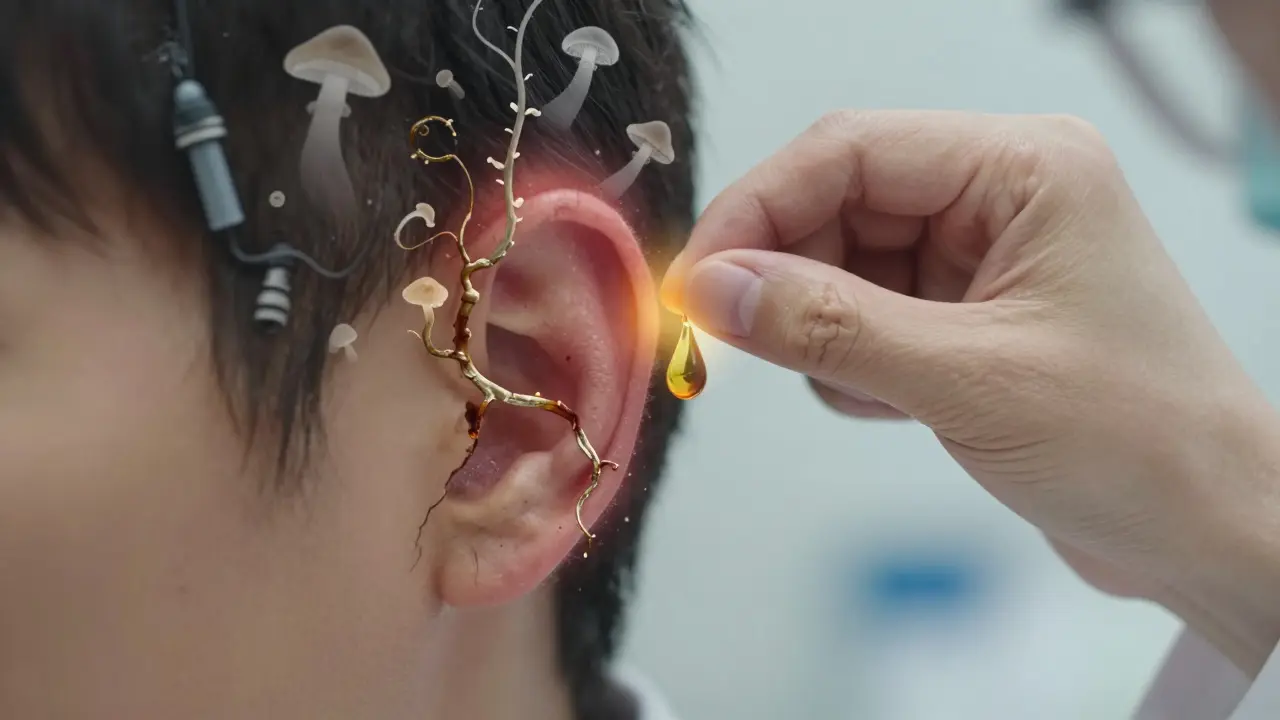
For Fungal Infections: Clotrimazole
If your ear itches like crazy, looks white or gray inside, and doesn’t improve with antibiotics - it might be fungal. Clotrimazole 1% solution works 93% of the time. Acetic acid won’t help here. You need an antifungal. Your doctor can prescribe this or recommend an OTC antifungal ear drop if it’s confirmed.
What Doesn’t Work - And What’s Dangerous
Some products are marketed for ear infections but shouldn’t be used.
- Neomycin-polymyxin drops: These are cheaper but carry a real risk. If your eardrum is even slightly torn (which you might not know), they can damage your hearing. The FDA warns about this. Avoid them unless your doctor specifically says it’s safe.
- Hydrogen peroxide or vinegar rinses: These might sound natural, but they irritate the skin and can make swelling worse. Don’t use them.
- Oral antibiotics: Pills won’t help unless the infection has spread beyond the ear canal. Topical drops work better, cost less, and have fewer side effects. The American Academy of Otolaryngology says systemic antibiotics add almost no benefit.
The Secret Weapon: Debridement
Most people don’t know this - but cleaning out the ear canal is half the battle. If wax, pus, or dead skin is blocking the drops, they can’t reach the infection. That’s why doctors use suction or dry cotton swabs (not Q-tips!) to gently remove debris before applying drops.
Studies show debridement improves treatment success by 30% to 40%. If your ear is blocked and drops aren’t working, ask your doctor to clean it out. It’s quick, not painful, and often makes all the difference.
How to Use Drops Right
Even the best drops fail if you don’t use them correctly. Here’s how to do it:
- Wash your hands.
- Warm the bottle in your hands for 1-2 minutes. Cold drops can make you dizzy.
- Lie on your side with the infected ear facing up.
- Put in the number of drops your doctor or label says.
- Stay on your side for 5 full minutes. Gently tug your earlobe to help the drops go deeper.
- Wipe away any extra drops that leak out. Don’t stuff cotton in your ear.
- Repeat as directed - usually 2-3 times a day for 7 days.
Missed step? Skipping the 5-minute wait reduces effectiveness by 40%, according to Mayo Clinic data. And never stick anything sharp - like a cotton swab - into the canal. You’ll just push debris deeper and risk a tear.

When to See a Doctor
You don’t need to rush to the ER for every earache. But call your doctor if:
- Pain gets worse after 2 days of treatment
- You have a fever above 101°F
- Your hearing gets worse
- You have diabetes or a weakened immune system
- It keeps coming back
And if you’ve tried OTC drops for 3 days with no improvement - it’s time. You might have a fungal infection, a blocked canal, or something more serious.
Prevention: Stop It Before It Starts
Swimmer’s ear is mostly preventable.
- After swimming or showering, tilt your head and let water drain. Use a hair dryer on low, cool setting, held at arm’s length.
- Use 2% acetic acid drops after water exposure. They’re cheap and act as a shield.
- Don’t clean your ears with cotton swabs. Wax is protective. Let your ear clean itself.
- If you swim often, consider custom-fitted earplugs. They’re better than cheap foam ones.
- Keep your ears dry if you have diabetes. Moisture is your enemy.
What’s New in 2026?
There’s a new drop on the market: OtiRx (ofloxacin with extended-release tech). Approved in March 2023, it lasts 24 hours - so you only need one dose a day. Early trials show 94% success. It’s not everywhere yet, but it’s coming.
Telemedicine is helping too. Mayo Clinic found 88% accuracy diagnosing swimmer’s ear via video. You can get a prescription without leaving home - if your symptoms match.
And researchers are testing microbiome treatments - restoring good bacteria to the ear canal instead of killing everything. It’s still experimental, but it could change how we treat this forever.
Bottom Line
Swimmer’s ear is common, treatable, and usually goes away fast with the right drops. But you need to match the treatment to the cause. Mild? Try acetic acid. Moderate to severe? Go for a fluoroquinolone-steroid combo. Fungal? Use clotrimazole. And never skip the debridement or the 5-minute wait. Most people get better in 2-3 days. The rest? They just didn’t use the right drop - or didn’t use it right.
Dylan Patrick
March 14, 2026 AT 21:47Kathy Leslie
March 15, 2026 AT 17:49Amisha Patel
March 16, 2026 AT 18:22Elsa Rodriguez
March 18, 2026 AT 02:26Serena Petrie
March 19, 2026 AT 08:45Buddy Nataatmadja
March 20, 2026 AT 16:57mir yasir
March 22, 2026 AT 11:36Stephanie Paluch
March 23, 2026 AT 12:46tynece roberts
March 24, 2026 AT 12:21Hugh Breen
March 24, 2026 AT 20:30Byron Boror
March 25, 2026 AT 23:44Lorna Brown
March 27, 2026 AT 21:58Rex Regum
March 29, 2026 AT 22:30Scott Smith
March 30, 2026 AT 05:42