

Chronic diarrhea that won’t go away-no blood, no fever, no obvious cause-can be one of the most frustrating health issues to live with. For many people, especially women over 50, this isn’t just an inconvenience. It’s a life-altering condition called microscopic colitis. You might have had it for months, even years, without knowing. Colonoscopies look normal. Blood tests come back fine. But your body is screaming for help. The answer isn’t in the big picture-it’s hidden under a microscope.
What Exactly Is Microscopic Colitis?
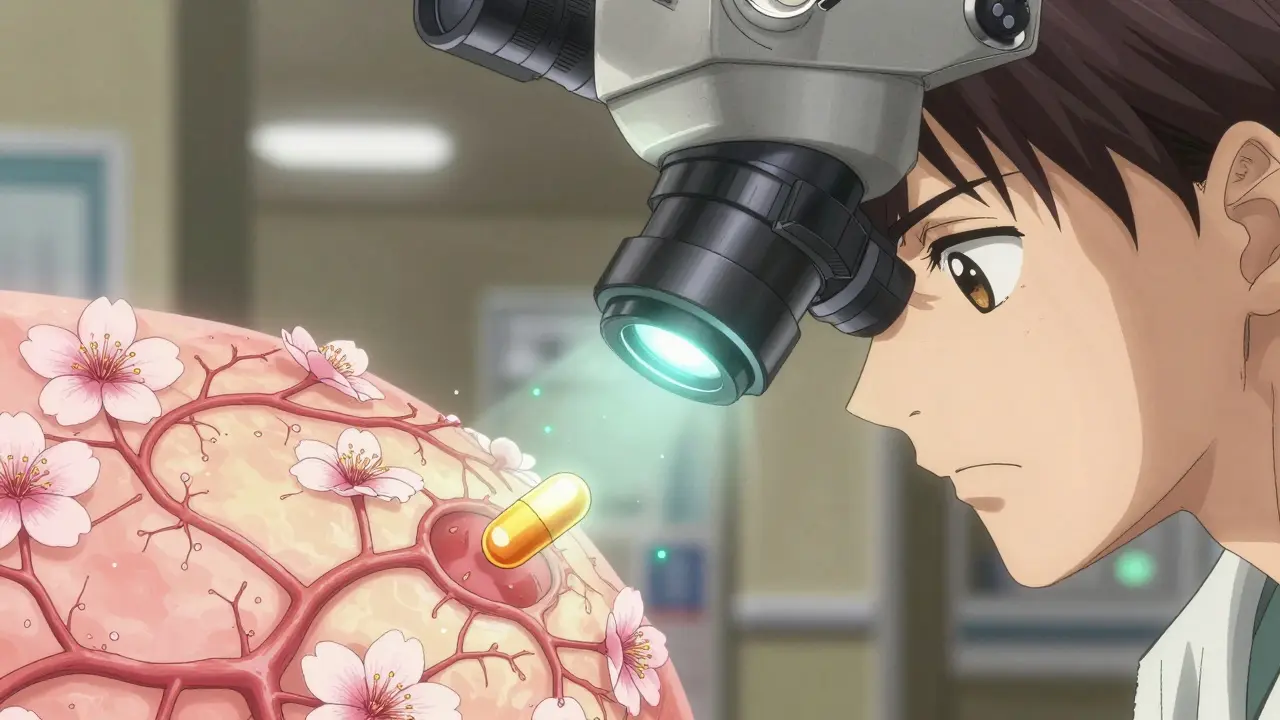
Microscopic colitis isn’t one disease. It’s two: collagenous colitis and lymphocytic colitis. Both cause the same symptoms: frequent, watery, non-bloody diarrhea-often 5 to 10 times a day. You might also have abdominal cramps, weight loss, or sudden incontinence. Some people wake up at night needing to go. It’s not Crohn’s or ulcerative colitis. There’s no visible damage during a colonoscopy. That’s why it’s called microscopic. The inflammation only shows up when a doctor takes a biopsy and looks at it under a magnifying lens.In lymphocytic colitis, there’s a buildup of white blood cells inside the colon lining. In collagenous colitis, a thick band of collagen-like scar tissue-forms just beneath the surface. Either way, the colon can’t absorb water properly. That’s why your stool is always loose. The condition hits women harder: about 7 out of 10 patients are female. Most are diagnosed in their 60s. And while it sounds rare, incidence has more than quadrupled since the 1990s, partly because doctors now know to look for it.
Why Diagnosis Takes So Long
The average person waits 11 months before getting the right diagnosis. Why? Because microscopic colitis mimics other things-irritable bowel syndrome, food intolerances, even stress. Many doctors will tell you to cut out dairy, try probiotics, or reduce caffeine. Those might help a little, but they won’t fix the real problem. Without a biopsy, you’re stuck guessing.That’s why if you’ve had chronic watery diarrhea for more than 3 weeks-especially if you’re over 50-you need to ask for a colonoscopy with multiple biopsies. Not just one or two samples. At least four, taken from different parts of the colon. One missed biopsy can mean a year lost.
Budesonide: The First-Line Treatment That Works
Once diagnosed, the go-to treatment is budesonide. It’s not your grandparent’s steroid. Unlike prednisone, which floods your whole body with hormones and causes weight gain, mood swings, and bone loss, budesonide is designed to work right where it’s needed-in the colon. About 90% of it gets broken down by your liver before it ever reaches your bloodstream. That means you get the anti-inflammatory punch without the side effects.Studies show that when you take 9 mg of budesonide daily for 6 to 8 weeks, 75 to 85% of people go into remission. That’s not a guess-it’s from multiple randomized trials published in the New England Journal of Medicine and the UEG Journal. For collagenous colitis, the numbers are even better: 84% of patients saw complete symptom relief compared to just 38% on placebo.
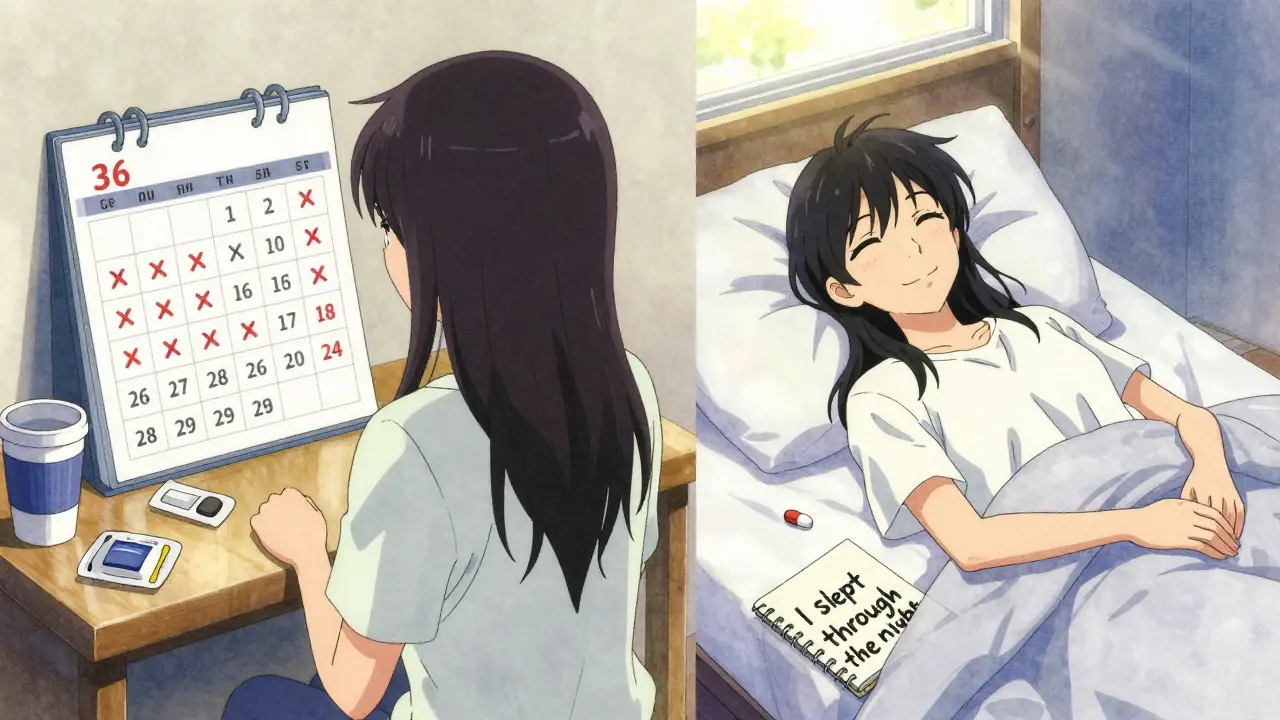
Most people start feeling better within 10 to 14 days. One Reddit user wrote: “Went from 10 bathroom trips a day to 2 in under two weeks. I cried when I slept through the night.” That’s not an outlier. In a PatientsLikeMe survey of 247 people, 68% reported major improvement within two weeks.
How It Compares to Other Options
There are other treatments, but none match budesonide’s balance of power and safety.- Prednisone works about as well-but causes side effects in nearly half of users: high blood sugar, insomnia, muscle weakness. It’s not worth the risk for a condition that’s not life-threatening.
- Mesalamine (a common IBD drug) helps only 40-50% of people. Too inconsistent.
- Bismuth subsalicylate (Pepto-Bismol) gives relief to about a quarter of patients. Useful for short-term help, but not long-term.
- Cholestyramine works well if bile acid malabsorption is part of the problem-about 60-70% respond. Some doctors combine it with budesonide for stubborn cases.
- Biologics like infliximab cost $2,500 per infusion and only help 20-30% of people. Reserved for cases that don’t respond to anything else.
Budesonide isn’t perfect, but it’s the best tool we have right now. It’s recommended as first-line therapy in 90% of European guidelines and 85% of U.S. ones. The European Microscopic Colitis Group gives it the highest rating-GRADE 1A-for good reason.
The Catch: Relapse After Stopping
Here’s the hard truth: budesonide treats the symptoms, but it doesn’t cure the disease. After you stop taking it, about 50 to 75% of people have symptoms return within a year. That’s why many need maintenance therapy.Doctors often reduce the dose slowly: from 9 mg down to 6 mg, then 3 mg, over several months. Some patients stay on 3 mg daily for years. It’s not ideal, but it’s better than living with constant diarrhea. A 2020 study in the United European Gastroenterology Journal found that 30 to 40% of patients end up on long-term low-dose budesonide to stay symptom-free.
Side effects during treatment are usually mild: insomnia (15%), acne (12%), or mood changes (8%). Rarely, there’s adrenal suppression in elderly patients, which is why doctors check blood pressure, HbA1c, and bone density before and during treatment.
Cost and Accessibility
Generic budesonide became available in the U.S. in 2018. A full 8-week course now costs $150 to $250. The branded version, Entocort EC, still runs $800 to $1,200. That’s a big difference-and why so many patients complain about cost without insurance. On Reddit, 72% of negative reviews mention price as a barrier.Some patients find relief through combination therapy. One user wrote: “Budesonide plus cholestyramine fixed me after 3 years. I finally feel normal.” If your diarrhea doesn’t improve after 4 weeks, talk to your doctor about adding bile acid sequestrants or testing for malabsorption.
What’s Next? The Future of Treatment
Researchers are looking at better long-term options. In 2023, the FDA gave fast-track status to vedolizumab, a biologic that targets gut-specific inflammation. Early trials show 65% remission in patients who didn’t respond to steroids. That’s promising-but it’s still years away from being widely available.Another exciting area: personalized medicine. The COLMICS trial is studying whether certain genetic markers (like HLA-DQ2/8) predict who responds best to budesonide. If you carry those genes, you might have a 90% chance of success. That could mean fewer trial-and-error cycles in the future.
For now, budesonide remains the gold standard. It’s safe, effective, and backed by solid science. If you’ve been struggling with chronic diarrhea and no one has checked for microscopic colitis, ask your doctor for a biopsy. Don’t wait. Your quality of life doesn’t have to be this hard.
Is microscopic colitis the same as Crohn’s disease?
No. Crohn’s disease causes visible ulcers, strictures, and bleeding in the GI tract and can affect any part of the digestive system. Microscopic colitis only affects the colon, shows no visible damage during colonoscopy, and is diagnosed only by biopsy. Symptoms are also different-Crohn’s often includes bloody stools, fever, and weight loss, while microscopic colitis causes only watery diarrhea without blood.
Can I take budesonide if I have diabetes?
Yes, but with caution. While budesonide has minimal impact on blood sugar compared to prednisone, it can still raise glucose levels slightly. Your doctor should check your HbA1c before starting and monitor it during treatment. Most patients with well-controlled diabetes tolerate it fine, especially at the low maintenance doses used for microscopic colitis.
How long does it take for budesonide to work?
Most people notice improvement within 10 to 14 days. By week 4, 70-80% of patients have significantly fewer bowel movements. Full remission-defined as 1-2 normal stools per day with no urgency-usually happens by week 6 to 8. Don’t stop early just because you feel better. Completing the full 6-8 week course reduces relapse risk.
Are there natural remedies that help microscopic colitis?
Some people find relief from dietary changes-cutting caffeine, dairy, or artificial sweeteners. A low-FODMAP diet may help reduce bloating and urgency. Bismuth subsalicylate (Pepto-Bismol) can provide temporary relief. But none of these fix the underlying inflammation. Budesonide is the only treatment proven to induce remission in the majority of cases. Natural options are best used as supports, not replacements.
Will I need to take budesonide forever?
Not necessarily. Many people can stop after 8 weeks and stay symptom-free. But about half will relapse within a year. For those with frequent recurrences, long-term low-dose maintenance (3-6 mg daily) is common and generally safe for years. Your doctor will monitor you for bone density, blood pressure, and adrenal function if you’re on it for more than a year. The goal is to find the lowest effective dose.
Can stress cause microscopic colitis?
Stress doesn’t cause microscopic colitis, but it can make symptoms worse. The root cause is likely autoimmune or triggered by medications (like NSAIDs, PPIs, or statins), infections, or genetics. Managing stress through sleep, exercise, or therapy won’t cure it-but it can help you cope better while you’re on treatment.
Aliza Efraimov
December 30, 2025 AT 15:29I was diagnosed with collagenous colitis after 18 months of being told it was 'just IBS.' I cried when I finally got the biopsy results-not because I was sick, but because I wasn't crazy. Budesonide saved my life. I went from 12 trips a day to 2. I slept through the night for the first time in years. No joke-I bought a new mattress because I stopped waking up soaked in sweat from panic and urgency.
Manan Pandya
January 1, 2026 AT 09:55Excellent breakdown. As someone who works in gastroenterology in Mumbai, I see this far more often than people realize. The key is pushing for multiple biopsies-most clinics take one or two samples and miss it entirely. We now routinely take six from different segments. Also, remind patients that budesonide isn't a cure-it's a management tool. Many stop too early and wonder why symptoms return.
Jim Rice
January 1, 2026 AT 18:43Yeah right. Budesonide? That’s just a fancy steroid with a marketing team. I’ve seen people get worse on it. My cousin’s doctor prescribed it, and she ended up with adrenal fatigue. You’re glorifying a drug that suppresses your immune system. What about gut healing? Probiotics? Fecal transplants? This post is dangerously oversimplified.
Nisha Marwaha
January 1, 2026 AT 22:28From a clinical perspective, the GRADE 1A recommendation for budesonide is well-substantiated by the 2021 Cochrane meta-analysis and the 2022 ESGE guidelines. The pharmacokinetic profile-first-pass hepatic metabolism with <5% systemic bioavailability-is what differentiates it from systemic corticosteroids. The 84% remission rate in collagenous colitis versus 38% placebo is statistically robust (p<0.001). That’s not anecdotal-it’s evidence-based medicine at its finest.
Kevin Lopez
January 2, 2026 AT 14:48Biopsy protocol matters. Four samples minimum. No exceptions. If your doc says one’s enough, find a new one. Also, budesonide isn’t magic. It’s the best tool we have, but it’s not the only one. Cholestyramine combo works for bile acid malabsorption overlap. 60-70% response. Simple.
Jasmine Yule
January 3, 2026 AT 15:51To the person who said budesonide is dangerous-I get it. I was scared too. But I’ve been on 3mg daily for 3 years. My bone density is fine. My blood sugar? Normal. My doctor checks me every 6 months. I’m not a guinea pig-I’m a person who got her life back. If you’re scared, talk to your doctor. Don’t let fear stop you from feeling human again.
Greg Quinn
January 4, 2026 AT 17:37It’s funny how medicine has become this race to fix symptoms instead of understanding why they appear. Microscopic colitis isn’t just a colon problem-it’s a signal. Why now? Why me? Why women over 50? Maybe it’s PPIs. Maybe it’s decades of processed food. Maybe it’s stress layered on autoimmune predisposition. Budesonide silences the scream, but doesn’t answer the question. And that’s the real tragedy.
Lisa Dore
January 6, 2026 AT 05:18If you’re reading this and you’ve been suffering for years-please, just ask for the biopsy. I know it’s scary. I know you’ve been told it’s ‘all in your head.’ But you’re not alone. I’ve talked to over 200 women on Reddit who were misdiagnosed. You deserve to feel normal again. You’re not broken. You’re just undiagnosed. And that’s fixable.
Sharleen Luciano
January 7, 2026 AT 12:56Let’s be honest-this post reads like a pharmaceutical ad. Budesonide is expensive, and generic availability doesn’t help if your insurance won’t cover it. And let’s not pretend that ‘75% remission’ means everyone gets their life back. Many still have urgency, bloating, fatigue. This isn’t a cure-it’s a Band-Aid on a bullet wound. And calling it ‘gold standard’ feels like corporate gaslighting.
Himanshu Singh
January 8, 2026 AT 08:26Hey i had this for 2 years and budesonide worked like magic. i was on it for 8 weeks then dropped to 3mg. still going strong after 2 years. dont listen to the haters. you just need to find the right doc. also pepto helps if you eat too much sugar. typos? yeah i know. im typing on my phone at 3am again.
Henriette Barrows
January 9, 2026 AT 12:15I was so relieved to see someone finally explain this without jargon. I Googled for months and all I found were dry medical papers. This? This felt like a friend explaining it over coffee. Thank you. And yes-I cried when I got my first full night’s sleep after 18 months. I didn’t know I’d forgotten what that felt like.
Teresa Rodriguez leon
January 9, 2026 AT 15:04You all sound so grateful. Like you’re lucky to have a treatment at all. Meanwhile, I’ve been on budesonide for 4 years, relapsed twice, and now my insurance won’t cover it anymore. I’m 57, on SSDI, and I can’t afford the $200 co-pay. So now I’m back to Pepto-Bismol and hoping for the best. This isn’t a success story-it’s a broken system.
Paige Shipe
January 11, 2026 AT 02:00It’s not that I don’t believe in science. It’s that I believe in the truth. I’ve seen patients get worse on budesonide. I’ve seen them develop diabetes, osteoporosis, depression. And yet, doctors keep pushing it like it’s harmless. This isn’t medicine. It’s convenience. And you’re all just drinking the Kool-Aid.