
Every year, hundreds of thousands of people are harmed because of simple mistakes with their medications. Some take the wrong pill. Others take too much, too little, or at the wrong time. These aren’t rare accidents-they’re preventable. And they happen just as often at home as they do in hospitals.
In the U.S. alone, medication errors injure at least 1.5 million people annually. Globally, the World Health Organization estimates they cost $42 billion each year. The worst part? Nearly all of these errors could be stopped with better systems, better training, and better habits.
How Medication Errors Happen in Hospitals
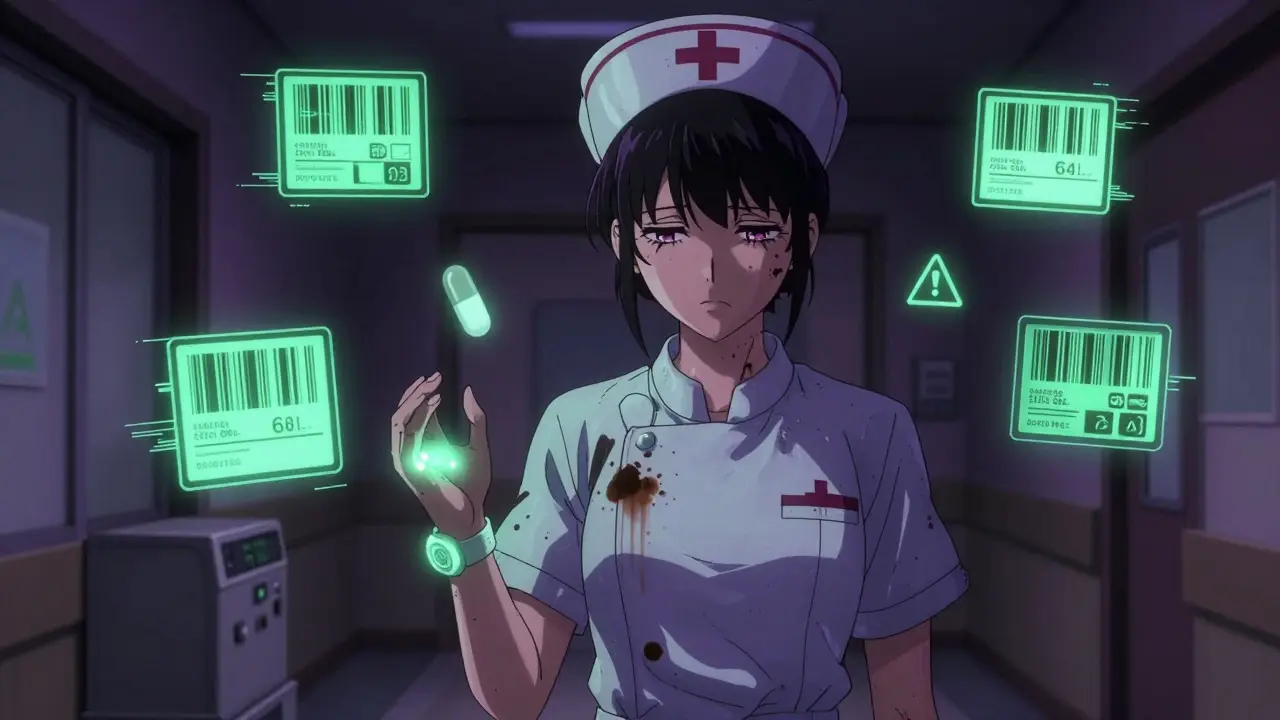
Hospitals have more tools than ever to catch mistakes, but technology doesn’t fix everything. Barcode Medication Administration (BCMA) systems scan a patient’s wristband and the drug’s barcode before giving any medication. It sounds foolproof-and it works. One 2025 study in JMIR found BCMA cut dispensing errors by 44%. Wrong drug errors dropped by over half. Dose mistakes fell by 43%. Monitoring errors? Down 92%.
But here’s what nobody talks about: the beeping.
Nurses in a 500-bed hospital reported on Reddit that BCMA added 15-20 minutes to every medication round. The constant alerts, the scanning, the system slowdowns-it wears people down. Some nurses started bypassing the system just to keep up. A 2024 survey of 1,200 pharmacists found that while 68% saw fewer errors with BCMA, 57% admitted new errors had appeared because staff found workarounds.
Computerized Physician Order Entry (CPOE) systems help too. They stop doctors from prescribing dangerous combinations or wrong doses before the order even leaves their desk. Studies show CPOE cuts errors by at least 50%. But too many alerts? That’s a problem. Clinicians get so flooded with warnings that they start ignoring them. One study found 42% of doctors and nurses just click through alerts without reading them.
And then there’s medication reconciliation-the process of making sure a patient’s full list of meds is accurate when they move between units, or leave the hospital. It’s one of the most effective tools we have. But too often, it’s done poorly. A WHO report found that most hospitals get it wrong at discharge. Patients leave with a list that’s missing their blood pressure pills, or includes a drug they stopped taking months ago.
Why Home Medication Mistakes Are Just as Dangerous
Most medication errors don’t happen in hospitals. They happen in kitchens, living rooms, and bedrooms. And the people most at risk? Seniors taking five or more pills a day.
A 2024 study in the Journal of Patient Safety found 89% of home medication errors involved people aged 75 or older. The biggest problem? Confusion. Not from memory loss-though that plays a role-but from too many containers, too many schedules, too many bottles.
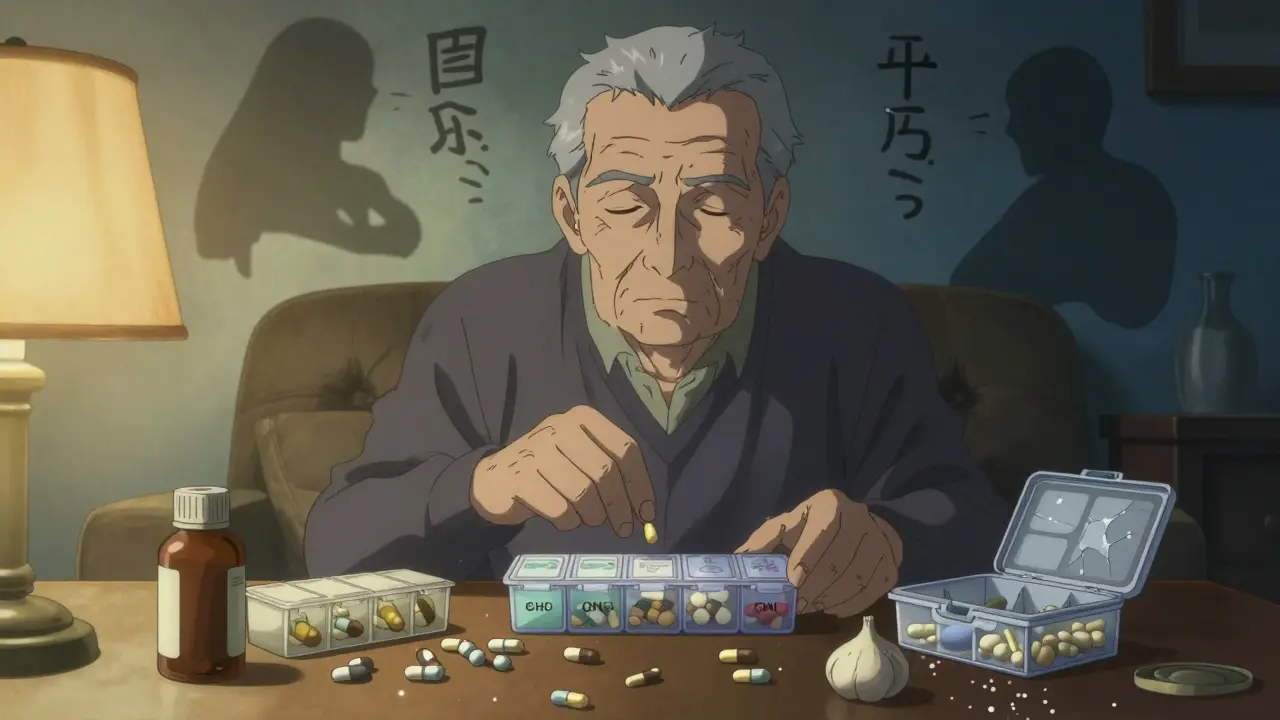
Blister packs and pill organizers seem like the answer. But a 2025 review on SingleCare.com showed 72% of seniors using them still made at least one dosing error each month. Why? Because they used multiple organizers. One for morning, one for night, one for vitamins. Then they mixed them up. Sixty-three percent said they couldn’t tell which container held which drug.
Timing is another big issue. Forty-one percent of errors were because someone took their pill at 7 a.m. instead of 8 p.m. Thirty-three percent were wrong doses-half a pill instead of one, or two instead of one.
And don’t forget supplements. People don’t think of fish oil or vitamin D as “medications,” but they interact with prescriptions. A 78-year-old on blood thinners who starts taking garlic supplements without telling their doctor? That’s a recipe for bleeding.
What Actually Works to Stop These Mistakes
Technology helps-but only if it’s done right. BCMA works best when staff get real training. Not a 30-minute PowerPoint. Not a handout. Real, hands-on practice with simulated errors. One 2024 Johns Hopkins study found it took 3-6 months for nurses to get comfortable with BCMA. In the first month, error rates actually went up 12-15% as people struggled to adapt.
Successful hospitals don’t just install the system. They assign super-users-one for every 10 to 15 staff members-who answer questions, troubleshoot, and keep morale up. They hold biweekly feedback sessions. They link the system directly to the electronic health record so data flows smoothly.
At home, the solution is simpler but just as powerful: reduce complexity.
Patients taking five or more medications should aim for no more than three daily doses. If they need four pills in the morning, ask the pharmacist to combine them into one pill. Use single-dose packaging. A 2023 study in the Annals of Internal Medicine found that when pharmacists reviewed home meds weekly with elderly patients, errors dropped by 37%.
And don’t forget caregivers. A daughter who checks her mom’s pillbox every Sunday? That’s better than any app.
The Hidden Threat: Fake and Substandard Drugs
It’s not just about taking the wrong pill. Sometimes, the pill itself is fake.
The WHO warns that nearly all online pharmacies selling prescription drugs operate illegally. Many use fake Canadian logos, fake URLs with “canada” in them, and sell counterfeit insulin, blood pressure pills, or cancer drugs. These aren’t just ineffective-they’re deadly.
One patient in Ohio bought “generic” metformin from a website that looked official. The pills had no active ingredient. She ended up in the ER with diabetic ketoacidosis.
Experts like Dr. Marcus Schabacker of ECRI say we need to treat this like a public health emergency. The FDA and WHO are pushing for blockchain technology to track drug supply chains. In 2024, 12 U.S. health systems began testing blockchain to verify every pill from manufacturer to patient. It’s early, but it’s promising.
What You Can Do Right Now
Here’s what actually works-no tech required:
- Keep a written list of every medication, supplement, and over-the-counter drug you take. Include the dose and why you take it. Update it every time your doctor changes something.
- Use one pharmacy for all your prescriptions. That way, the pharmacist can catch interactions.
- Ask your pharmacist to put your meds in a single-dose blister pack. It’s often free or low-cost.
- Set phone alarms for each dose. Don’t rely on memory.
- Bring your list to every appointment-even if you think it’s “just a checkup.”
- Never take someone else’s pills, even if they have the same condition.
- Check online pharmacies with the FDA’s website. If it doesn’t require a prescription or looks sketchy, don’t buy from it.
What’s Next? AI and Better Systems
The future is coming. Johns Hopkins tested an AI tool in 2024 that predicted dangerous prescriptions before they were written. It cut high-risk errors by 53%. Hospitals are starting to use it.
But no algorithm will fix a nurse who’s rushed. No app will stop a patient from missing a dose because they’re confused.
Real progress comes from fixing systems-not just adding tech. It means training staff properly. It means simplifying regimens at home. It means listening to the people who use these systems every day.
Medication safety isn’t about perfection. It’s about reducing harm. And that starts with awareness, simple changes, and never assuming “it won’t happen to me.”
Tommy Chapman
February 21, 2026 AT 10:28Let me get this straight - we’re spending billions on barcode scanners while grandma’s still mixing up her pills because she’s too lazy to use a pillbox? This isn’t a tech problem, it’s a people problem. Americans think automation fixes everything, but no, you can’t scan your way out of laziness. Stop outsourcing responsibility to machines and start teaching people to care.
And don’t even get me started on those fake online pharmacies. If you’re buying meds off a site that looks like it was coded in 2003, you deserve what you get. The FDA isn’t the enemy - dumbasses who click ‘Buy Now’ are.
Stop being so damn entitled. Take your damn pills on time. Write them down. Use one pharmacy. It’s not rocket science. It’s basic human responsibility.
And if you’re over 75 and still taking 12 different pills? Maybe you need to ask your doctor if you really need half of them. Not every pill is a trophy.
Fix the culture, not the system. We’re drowning in tech and starving for common sense.
Laura B
February 22, 2026 AT 03:05I work in home health and see this every single day. One of my patients, 82, was taking three different pill organizers - morning, night, vitamins - and mixing them up constantly. We switched her to a single-dose blister pack from the pharmacy, and her fall risk dropped by 60% in two weeks.
It’s not about tech. It’s about simplicity. And honestly? The biggest help isn’t an app or a scanner - it’s a family member who checks in once a week. Just asking, ‘Did you take your blood pressure pill today?’ changes everything.
Pharmacists are underused. They’re not just pill dispensers. They’re frontline safety officers. Let them help.
Hariom Sharma
February 22, 2026 AT 17:45Love this post! From India, I’ve seen how elders here take ‘mixtures’ - five different powders in one glass, no labels, no schedule. No one even knows what’s in them. We need community health workers to walk door-to-door with simple visual charts - pictures of pills, times, colors. No reading needed.
And yes - single-dose packs! My aunt started using one last year. She says it’s the first time she’s felt ‘in control’ of her health. Simple changes. Big impact. We can do this everywhere.
Also, never underestimate the power of a neighbor who brings tea and checks the pillbox. Human connection > AI any day.
Nina Catherine
February 23, 2026 AT 19:43OMG yes!! I just helped my dad switch to a blister pack and it’s been a GAME CHANGER. He kept forgetting if he took his metformin or not - now he just looks at the box. No more panic.
Also - one pharmacy? YES. My mom was getting different versions of the same drug from three different places and ended up with a weird reaction. Pharmacist caught it. She’s basically a superhero.
And alarms?? I set five for my mom’s meds. One for each. She says it’s annoying but she’s not in the ER anymore so… worth it.
Also, I write everything down on a sticky note and put it on the fridge. It’s dumb but it works lol. #typo
Courtney Hain
February 25, 2026 AT 12:24Let’s be real - this whole ‘medication safety’ narrative is a distraction. The real problem? The pharmaceutical industry is a monopoly that profits off confusion. They flood the market with 20 different versions of the same drug, create complex dosing schedules, then sell you ‘organizers’ to fix the mess they made.
And don’t believe the hype about blockchain. That’s just another corporate buzzword to sell more tech. The FDA is complicit. They approve drugs with zero long-term studies. They ignore adverse event reports. The ‘fake drugs’ you’re worried about? They’re often the only affordable option because the real ones cost $500 a pill.
Barcodes? CPOE? Super-users? All Band-Aids. The real solution is defunding Big Pharma and creating a single-payer drug system where dosing is standardized, prices are capped, and patients aren’t treated like walking wallets.
Until then, you’re just rearranging deck chairs on the Titanic. And yes - I’ve read every study cited here. They’re all funded by hospital systems that benefit from the status quo.
Robert Shiu
February 26, 2026 AT 17:06My mom’s 84 and takes 8 meds. I used to stress every day. Then I started doing Sunday pill checks with her - we’d sit with coffee, go through each bottle, and I’d write it down. Now she tells me when something feels off. It’s not about tech. It’s about showing up.
Also - I didn’t know this until last month - you can ask your pharmacist to put all your meds in one blister pack. No extra cost. Just ask. They’ll do it. I wish someone had told me sooner.
And yes, supplements matter. My uncle took turmeric with warfarin. Ended up in the ER. No one told him it was risky. That’s on us. We need to talk about this stuff. Not just in hospitals. At dinner. With friends. With our parents.
You don’t need an app. You just need to care enough to ask.
Caleb Sciannella
February 26, 2026 AT 19:03While the empirical data presented in this article is largely accurate and well-sourced, it lacks a critical dimension: the sociocultural context of medication adherence. In the United States, the fragmentation of healthcare delivery - coupled with linguistic, educational, and socioeconomic disparities - renders even the most elegant technological solutions inequitable.
For instance, single-dose blister packs assume a baseline level of health literacy, access to pharmacy services, and insurance coverage - all of which are unevenly distributed. In rural Appalachia or urban food deserts, the notion of a ‘pharmacist review’ is a luxury.
Furthermore, the emphasis on individual responsibility - ‘write it down,’ ‘set alarms’ - ignores systemic failures in care coordination. The burden of medication management is disproportionately placed on elderly, low-income, or disabled populations who are least equipped to manage it.
True progress requires structural reform: universal access to medication reconciliation services, subsidized packaging, and community-based health navigators - not just better scanners.
Davis teo
February 27, 2026 AT 22:20I was in the ER last year because my sister forgot to tell the doctor I was taking St. John’s Wort with my antidepressant. I had a seizure. Not a joke. I was in a coma for 36 hours.
Now I have a laminated card in my wallet that says: ‘I take: Lexapro, Metformin, Fish Oil, and I cannot take St. John’s Wort, Garlic, or Ginkgo.’
My mom cried when she saw it. She said she didn’t know any of that stuff could interact.
So now I make everyone I know do the same thing. I even printed 50 copies and gave them to my church group. I’m not trying to be dramatic - I just don’t want anyone else to wake up in a hospital with no memory of how they got there.
And yes - I still set five alarms. Every. Single. Day.
Chris Beeley
February 27, 2026 AT 22:33Let me be blunt - America’s entire healthcare model is a grotesque farce. We have the most advanced technology on Earth, yet we can’t prevent a 78-year-old from taking two blood pressure pills because she misread the label?
Meanwhile, in Germany, pharmacists conduct mandatory home visits for polypharmacy patients. In Japan, every prescription is reviewed by a pharmacist before dispensing. In the UK, the NHS has a national medication reconciliation protocol enforced at every transition point.
But here? We let nurses be overwhelmed. We let patients drown in bottles. We let corporations profit off confusion. This isn’t negligence - it’s systemic malpractice disguised as innovation.
And the ‘super-users’? Cute. That’s not a solution. That’s a Band-Aid on a hemorrhage. We need policy. We need mandates. We need to stop treating medication safety like a personal hobby.
Arshdeep Singh
March 1, 2026 AT 11:11Look, the real issue isn’t pills or scanners - it’s the collapse of wisdom. We’ve replaced ancestral knowledge - ‘Ask your aunt, she’s been taking this since ’78’ - with apps and barcodes. We’ve forgotten that medicine isn’t just chemistry. It’s ritual. It’s trust. It’s community.
My grandmother never used a pillbox. She had a wooden box with three slots: morning, afternoon, night. Each pill was wrapped in colored paper - red for blood pressure, blue for sugar, green for heart. She didn’t read labels. She recognized colors. And she lived to 96.
Modern medicine thinks complexity equals progress. It’s wrong. Simplicity is the real innovation. We need to go back - not to the past, but to the essence: human memory, human care, human connection.
Technology should serve that - not replace it.