

Meclizine Safety Risk Calculator
How Your Health Affects Meclizine Safety
This tool helps you understand your personal risk for side effects based on your health profile. Meclizine can cause drowsiness, dry mouth, and other side effects in up to 40% of users. Your individual risk depends on factors like age, medical conditions, and medications.
Your Personal Risk Assessment
When vertigo hits - that sudden spinning sensation that makes the room tilt and your balance vanish - many people turn to meclizine. It’s one of the most commonly prescribed pills for this kind of dizziness, especially when it’s tied to inner ear problems. But while it works for a lot of people, it’s not without its downsides. If you’ve been told to take meclizine for vertigo, you’re probably wondering: How well does it really work? And more importantly, what are you really signing up for?
How Meclizine Stops Vertigo in Its Tracks
Meclizine hydrochloride isn’t just another antihistamine you’d take for a runny nose. It’s specifically designed to calm the inner ear signals that trigger vertigo. Think of your inner ear as a tiny balance sensor. When something goes wrong - maybe from an infection, inflammation, or old age - it sends mixed signals to your brain. That’s when you feel like you’re on a spinning ride, even when you’re standing still.
Meclizine steps in by blocking histamine receptors in the brainstem, especially in areas that control balance. It also has strong anticholinergic effects, meaning it dampens another system that can overreact during vertigo attacks. This dual action helps reduce the spinning, nausea, and even the involuntary eye movements (nystagmus) that often come with it.
A landmark 1972 study published in Archives of Neurology showed meclizine cut vertigo symptoms in half compared to placebo. Patients didn’t just feel a little better - they reported clear improvements in posture, walking stability, and nausea. Even today, decades later, this study still forms the backbone of its use. Doctors still reach for it because it works fast, usually within an hour, and lasts for 8 to 24 hours depending on the dose.
Common Side Effects: It’s Not Just Drowsiness
Most people expect drowsiness with meclizine. And yes, it’s common - but it’s not the only thing you need to watch out for.
Here’s what actually shows up in real users:
- Drowsiness - This is the #1 complaint. Some people feel so tired they can’t drive or operate machinery. The Mayo Clinic warns: "Do not drive or do anything that requires alertness until you know how this medicine affects you."
- Dry mouth - A classic anticholinergic effect. Chewing sugar-free gum or sipping water helps.
- Blurred vision - Especially if you’re already wearing glasses or have eye conditions. It happens because meclizine affects muscles in the eyes.
- Headache - Surprisingly common. Not everyone gets it, but if you do, it usually fades after a few days.
- Constipation - Slows down gut movement. Staying active and eating fiber can help.
- Urinary retention - Especially in older men with prostate issues. If you’re having trouble peeing, talk to your doctor.
These side effects aren’t rare. In fact, up to 40% of users report at least one of them. What’s worse? They don’t always show up right away. Some people feel fine the first day, then get hit with dizziness or dry mouth after a few days of use.
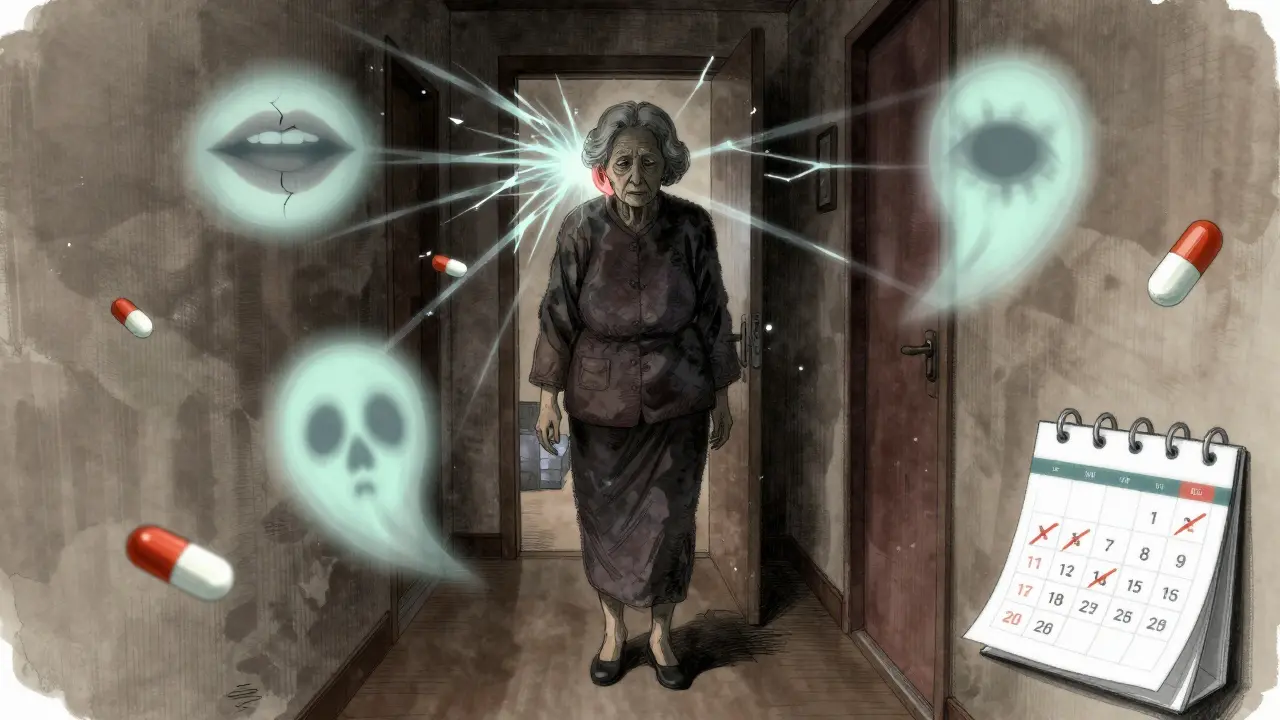
Who Should Avoid Meclizine
Meclizine might be safe for many, but it’s not for everyone. Here are the groups that need to be extra careful:
- People over 65 - Older adults are more sensitive to anticholinergic drugs. The risk of confusion, falls, or urinary problems goes up. Many geriatric guidelines now avoid meclizine entirely for seniors.
- Those with glaucoma - Meclizine can raise eye pressure. If you have closed-angle glaucoma, skip it.
- People with prostate problems - If you have trouble urinating or have an enlarged prostate, meclizine can make it worse.
- Pregnant women - While it’s sometimes used off-label for morning sickness, there’s limited safety data. Always check with your OB-GYN.
- Anyone on other sedatives - Alcohol, sleeping pills, anxiety meds, or even some cold medicines can multiply the drowsiness. The Mayo Clinic says: "Check with your doctor before taking anything else while on meclizine."
One thing that surprises people: meclizine doesn’t work the same for everyone. If you have vertigo from a brain issue - like a stroke or MS - it may not help at all. It’s mainly for inner ear problems. If your dizziness started after a head injury or comes with numbness or slurred speech, you need a different kind of evaluation.
How to Take It Right - And When to Stop
Most prescriptions are 25 mg once a day. For motion sickness, take it 1 hour before travel. For vertigo, doctors often start with 12.5 mg and adjust based on how you respond. Some brands, like Dramamine Less Drowsy, come in lower doses (12.5 mg) over-the-counter.
Here’s what to do:
- Take it with water, at the same time each day.
- Don’t crush or chew tablets unless they’re labeled as chewable.
- Don’t double up if you miss a dose. Just skip it and go back to your regular schedule.
- If you feel dizzy after taking it, don’t get up fast. Sit for a minute first.
- Keep track of side effects. Write them down. Bring them to your next appointment.
Most people only need it for a few days to a week. Long-term use? That’s risky. The longer you take it, the more your body builds tolerance - and the worse the side effects get. If vertigo keeps coming back after stopping meclizine, it’s time to dig deeper. Maybe you need physical therapy (vestibular rehab), or a different medication like betahistine.

What’s the Real Alternative?
Meclizine has been around since the 1950s. But newer options exist.
Betahistine is often used in Europe for Ménière’s disease. It doesn’t cause drowsiness, but it’s not available in the U.S. without special ordering. Dimenhydrinate (Dramamine) works similarly but causes even more drowsiness. Benzodiazepines like diazepam can help in severe cases, but they’re addictive and not meant for daily use.
For many, the best long-term fix isn’t a pill at all. Vestibular rehabilitation therapy (VRT) - a type of physical therapy - retrains your brain to rely on other balance signals. Studies show it works better than drugs for chronic vertigo. But you need a trained therapist. Ask your doctor for a referral.
Final Word: Use It, But Don’t Rely on It
Meclizine is a reliable short-term fix for vertigo. It’s cheap, widely available, and backed by decades of data. But it’s not a cure. It’s a band-aid.
If you’re using it for more than two weeks, you’re masking a problem, not solving it. And if you’re feeling foggy, dry-mouthed, or unsteady after taking it, you’re not alone - but you also shouldn’t ignore it.
For most people, taking it for a few days during a flare-up is fine. But if vertigo keeps coming back, or if side effects start to affect your daily life, it’s time to talk to your doctor about other options - including non-drug treatments that might actually help you feel better for good.
Can I take meclizine with alcohol?
No. Mixing meclizine with alcohol can make you extremely drowsy, dizzy, or even cause breathing problems. The Mayo Clinic specifically warns against combining them. Even one drink can increase side effects. It’s not worth the risk.
Is meclizine addictive?
Meclizine itself isn’t addictive. But if you rely on it for long periods, your body may get used to it, and vertigo symptoms might return worse than before. This isn’t physical dependence - it’s your body not having time to heal naturally. Stopping it suddenly is safe, but you may feel dizzy again.
Can meclizine cause weight gain?
Not directly. But the drowsiness and fatigue it causes can reduce your activity level, which might lead to weight gain over time. Also, dry mouth can make you crave sugary drinks or snacks. It’s an indirect effect, not a chemical one.
How long does meclizine stay in your system?
Meclizine has a half-life of about 5 to 9 hours. That means most of it leaves your body within 24 to 48 hours. But the drowsiness can linger longer, especially in older adults or those with liver problems. Don’t assume you’re "clear" just because you took it the night before.
Is there a better over-the-counter option for vertigo?
For motion sickness, dimenhydrinate (Dramamine) is common, but it causes more drowsiness than meclizine. For vertigo caused by inner ear issues, there’s no true OTC cure. Meclizine (12.5 mg) is the best OTC option available, but it still has side effects. If symptoms last more than a few days, see a doctor - it could be something more serious.
David Robinson
March 19, 2026 AT 19:50Meclizine? Yeah, I took it for a week after my inner ear thing. Felt like a zombie. Couldn’t focus at work. My boss thought I was slacking. Turns out, it’s not just drowsiness-it’s brain fog on steroids. And don’t even get me started on dry mouth. I drank a gallon of water a day and still felt like I was chewing sand.
Also, side note: if you’re over 60, skip it. My uncle took it for vertigo and ended up in the ER from urinary retention. No joke. They had to catheterize him. This isn’t a harmless pill. It’s a chemical sedative with a nice label.
Jeremy Van Veelen
March 19, 2026 AT 21:42Oh honey. You’re telling me people still rely on a 1950s antihistamine for a neurological imbalance? We have functional neuroimaging now. We have vestibular rehab protocols that rewire the brain. And yet, here we are-prescribing a drug that makes people forget their own names because ‘it works fast.’
Meclizine is the pharmaceutical equivalent of duct tape on a leaking pipe. It doesn’t fix the crack. It just makes you too sleepy to notice the flood.
Laura Gabel
March 20, 2026 AT 22:28Stop with the drama. Meclizine works. I’ve used it for years. Drowsy? Yeah. But I just nap it off. My doctor said it’s fine for short-term use. If you can’t handle a little tiredness then maybe you’re not cut out for real life. Also, don’t act like you’re special because you read a study. Everyone’s got a story.
jerome Reverdy
March 21, 2026 AT 07:03There’s a lot to unpack here. Meclizine’s mechanism is solid-histamine + anticholinergic blockade in the vestibular nuclei. But the real issue isn’t the drug-it’s the systemic failure to offer alternatives. VRT is underutilized, underfunded, and underprescribed. And don’t get me started on how primary care docs just hand out prescriptions like candy.
Also, the 40% side effect rate? That’s not a side effect-it’s a feature. We treat vertigo like a glitch to be suppressed, not a signal to be understood. Maybe we need to stop treating symptoms and start treating systems.
Andrew Mamone
March 21, 2026 AT 15:48Good breakdown. I’ve been on meclizine for 3 weeks after a bout of BPPV. Side effects? Yep. Drowsy AF. Dry mouth like a desert. Blurred vision made my Zoom calls awkward 😅
But here’s the thing-it stopped the spinning. And for 72 hours, I could walk without holding onto walls. I’ll take that. Now I’m doing VRT exercises daily. No meds after this week. 🙌
MALYN RICABLANCA
March 23, 2026 AT 04:23Oh MY GOD. I read this and I just screamed into my pillow. I took meclizine for 6 weeks because my doctor said ‘it’s safe.’ SIX WEEKS. I gained 12 pounds. I couldn’t remember my kid’s birthday. My husband thought I was cheating on him because I was so spaced out. And then? I had a urinary tract infection because I couldn’t pee. I had to go to the ER. I’m not even kidding. I thought I was getting better. I was just being drugged into submission. I’m never trusting a doctor again. EVER.
gemeika hernandez
March 25, 2026 AT 02:19Meclizine is fine. I took it. I didn’t die. Stop making it sound like it’s poison. People are overreacting. If you’re tired, don’t drive. If your mouth is dry, drink water. Simple. No need for all this panic. Also, if you’re old, maybe don’t take it. That’s not the drug’s fault. That’s your body’s fault.
Nicole Blain
March 26, 2026 AT 23:30Same. Took it for vertigo after my ear infection. Felt like a zombie but it worked. Now I do balance exercises every morning. 🌿✨
Kathy Underhill
March 28, 2026 AT 12:27The real issue isn’t meclizine. It’s the assumption that vertigo is a problem to be silenced rather than a symptom to be understood. The inner ear doesn’t malfunction without cause. The brain doesn’t misinterpret signals randomly. There’s an underlying trigger-stress, inflammation, trauma, nutrient deficiency. Meclizine gives us a temporary silence. But silence isn’t healing. It’s avoidance.
What we need isn’t more pills. It’s more curiosity.
Srividhya Srinivasan
March 29, 2026 AT 05:18Meclizine? That’s Big Pharma’s trick to keep people docile. They know it makes you sleepy so you don’t ask questions. They don’t want you to know about the real causes-5G, chemtrails, fluoride in the water. Your vertigo? It’s not your ear. It’s the system. They gave you this pill so you’d stop looking. Wake up. This isn’t medicine. It’s control.
Prathamesh Ghodke
March 30, 2026 AT 11:46Hey, I get it. I’m an ER nurse in Mumbai. We see this all the time. Meclizine? It’s the go-to because it’s cheap and available. But yeah, we see the side effects-old folks falling, urinary issues, confusion. We push VRT hard here. It’s not perfect, but it’s better than a chemical nap.
Also, if someone’s dizzy after a head injury? Don’t touch meclizine. Get a CT scan first. That’s non-negotiable. I’ve seen too many people get misdiagnosed because someone just slapped on a pill.
Sanjana Rajan
March 31, 2026 AT 17:09I’m a physical therapist. I’ve seen patients on meclizine for months. One guy? Took it for 8 months. Said he ‘felt better.’ But he couldn’t walk without holding the wall. We did VRT. Two weeks. He’s hiking now. No pills. Just movement. Your body doesn’t need to be chemically sedated to heal. It needs to be moved. And yes, I’m mad you’re still using this like it’s a cure.
Kyle Young
April 2, 2026 AT 02:56Given the pharmacological profile of meclizine, its efficacy appears to be primarily symptomatic, with limited impact on the underlying etiology of vestibular dysfunction. The persistence of anticholinergic side effects raises significant concerns regarding long-term neurocognitive implications, particularly in aging populations. The absence of robust longitudinal data on its chronic use warrants caution. One must question whether pharmacological suppression constitutes therapeutic intervention, or merely temporal palliation.