
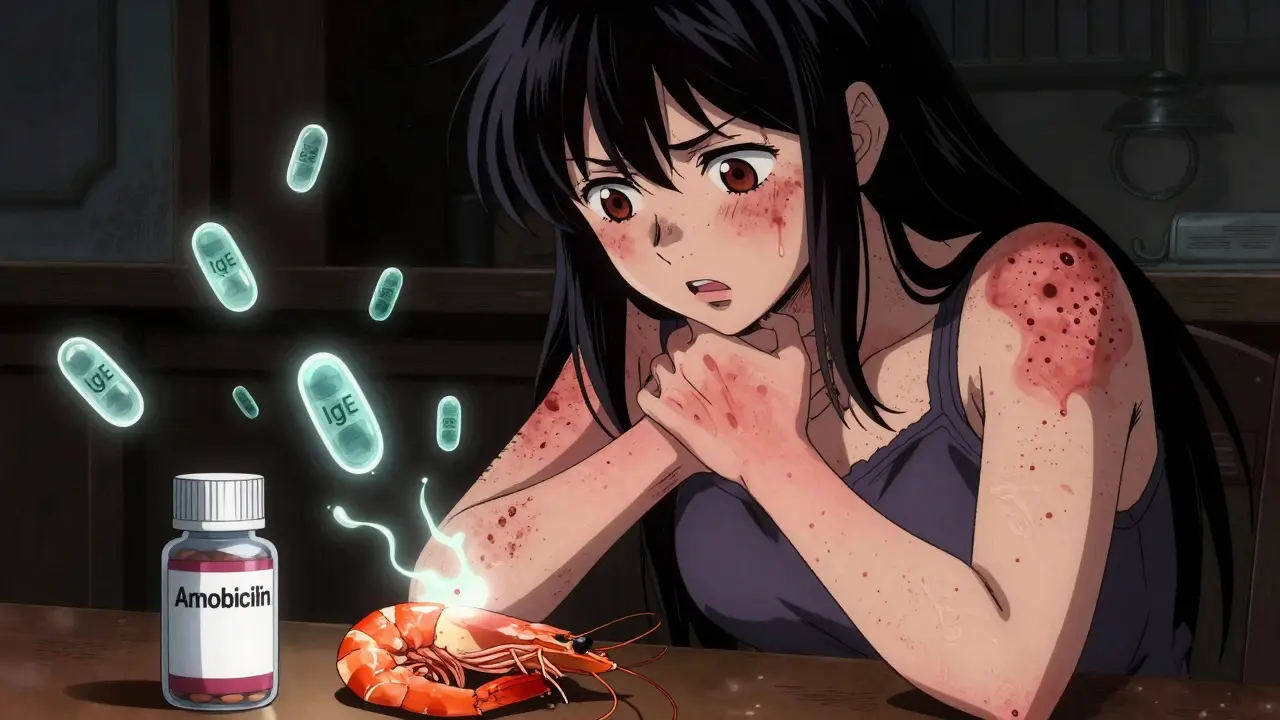
When you break out in hives after eating shrimp or get a rash after taking amoxicillin, it’s natural to assume it’s an allergy. But not all reactions are created equal. Food allergies and medication allergies may look similar on the surface - itching, swelling, rashes - but they’re fundamentally different in how they happen, when they show up, and how they’re diagnosed. Confusing the two can lead to dangerous mistakes: avoiding life-saving medications or missing a food trigger that could trigger anaphylaxis. Knowing the difference isn’t just helpful - it’s critical for your safety.
How Your Body Reacts: IgE vs. Other Pathways
Food allergies are mostly driven by immunoglobulin E (IgE), a type of antibody that kicks in fast. About 90% of serious food reactions, like anaphylaxis, are IgE-mediated. When you eat peanut, shellfish, or milk and your immune system sees it as a threat, IgE triggers mast cells to release histamine and other chemicals. That’s why symptoms like swelling of the lips, vomiting, or trouble breathing happen within minutes - sometimes as fast as 5 to 20 minutes after ingestion.
Medication allergies are more complex. While about 80% of immediate drug reactions (like hives or anaphylaxis after penicillin) are also IgE-mediated, the other 20% involve T-cells, which act slower. These delayed reactions can show up days or even weeks later. Think of a rash that appears 3 days after taking sulfa drugs, or a fever and blistering skin 2 weeks after starting allopurinol. These aren’t just side effects - they’re true immune responses, but they follow a different path than food allergies.
Symptoms: Where They Show Up and How They Progress
Food allergies often start in the mouth or gut. Oral allergy syndrome - tingling or swelling of the lips, tongue, or throat - happens in 70% of cases. Nausea, vomiting, or diarrhea are common, especially in kids. Hives or eczema flares follow in about 89% of reactions. But here’s the key: if you eat the same food again and get the same symptoms, it’s likely a true allergy. Reproducibility matters.
Medication reactions, on the other hand, tend to hit harder and broader. While hives can occur (75% of immediate reactions), the big red flag is systemic involvement. Fever, swollen lymph nodes, joint pain, or liver dysfunction are more common with drugs. A rash from an antibiotic isn’t always an allergy - it could be a viral rash. In fact, up to 90% of people who say they’re allergic to penicillin aren’t. Many rashes during a viral infection (like mononucleosis) are mislabeled as drug allergies.
Timing: The Clock Tells the Story
Timing is one of the clearest clues. With food allergies, 95% of reactions happen within two hours. Most occur in under 30 minutes. If you eat a new food and feel fine for three hours, it’s unlikely to be an IgE-mediated food allergy.
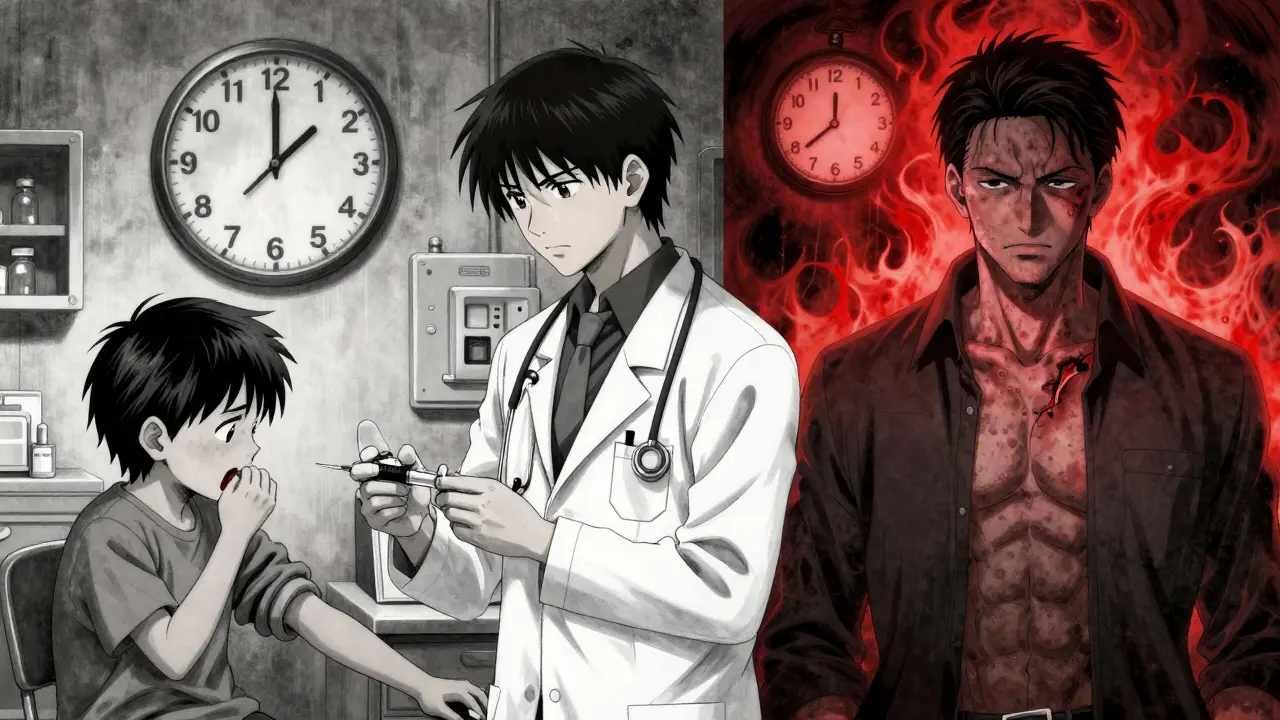
Medication reactions break that pattern. Immediate reactions (within an hour) can mimic food allergies - think anaphylaxis after IV antibiotics. But delayed reactions are a hallmark of drug allergies. A rash that appears 48 to 72 hours after taking a pill? That’s a T-cell response. A fever and peeling skin two weeks after starting a new drug? That could be DRESS syndrome - a life-threatening condition that needs immediate attention.
Diagnosis: What Tests Actually Reveal
Food allergy testing is relatively straightforward. Skin prick tests and blood tests for specific IgE antibodies are reliable. But the gold standard? The oral food challenge. You eat tiny, increasing amounts of the suspected food under medical supervision. If you react, you know for sure. About 80% of children outgrow milk and egg allergies by age 5 - and testing confirms it.
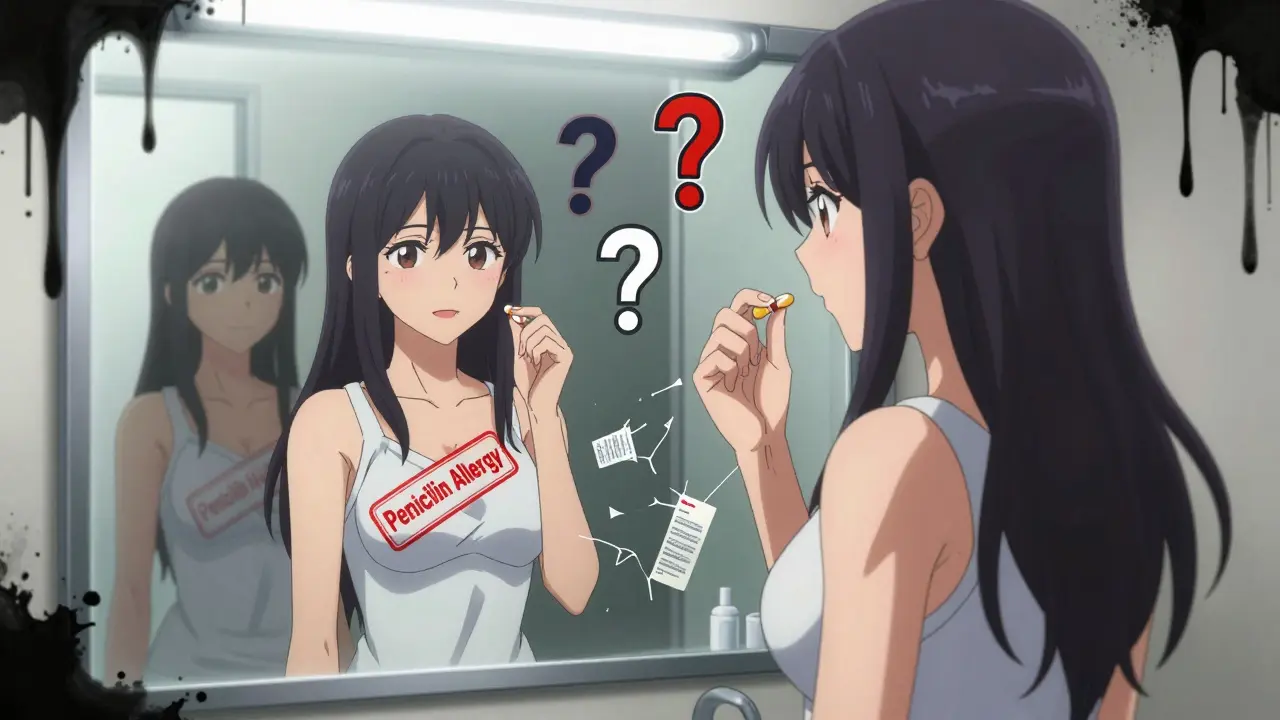
Medication testing is trickier. For penicillin, skin testing with major and minor determinants followed by an oral challenge is 99% accurate at ruling out true allergy. But for many other drugs - like NSAIDs, chemotherapy agents, or anticonvulsants - there’s no reliable skin or blood test. Doctors rely on detailed history and sometimes drug provocation tests, done in controlled hospital settings. And here’s the kicker: up to 90% of people who say they’re allergic to penicillin test negative. That means they’ve been avoiding a safe, cheaper, more effective antibiotic for years.
Why Misdiagnosis Costs Lives - and Money
Mislabeling a food allergy as intolerance can be deadly. About 150 to 200 people die each year in the U.S. from food-induced anaphylaxis, often because symptoms were ignored or misdiagnosed as indigestion. In contrast, mislabeling a medication allergy leads to overuse of broader-spectrum antibiotics. A 2022 study in Annals of Internal Medicine found that patients wrongly labeled as penicillin-allergic are 30% more likely to be given expensive, less effective antibiotics like vancomycin or fluoroquinolones. These drugs increase the risk of Clostridium difficile infection by 25% and contribute to antibiotic resistance.
One real case involved a 34-year-old woman who avoided all NSAIDs for 10 years because she thought she was allergic to aspirin. Turns out, her rash was from the lactose filler in the pills - not the aspirin itself. Once tested, she could safely use ibuprofen again.
What You Can Do: Track, Test, Confirm
If you suspect a food allergy, keep a detailed diary. Note the exact food, how it was prepared, when you ate it, and when symptoms started - down to the minute. Did the rash appear 15 minutes after eating peanut butter? That’s a red flag. Did it happen 4 hours after taking a new painkiller? That’s a different story.
For medication reactions, don’t just assume. If you had a rash after antibiotics, ask your doctor about allergy testing. Penicillin testing is safe, quick, and can change your medical future. Many hospitals now have delabeling programs that help patients get tested and remove false allergy labels from their records.
And if you’ve been told you have a food allergy but have never been tested - get tested. Many people avoid foods unnecessarily. One study found that 40% of kids labeled with a peanut allergy didn’t react during an oral challenge. Avoiding peanuts long-term isn’t just inconvenient - it can lead to nutritional gaps and unnecessary anxiety.
What to Watch For: Red Flags and Myths
Myth: If you only had one reaction, it’s not an allergy. False. Even one severe reaction can mean you’re allergic. But if you’ve eaten the same food or drug multiple times without issue, it’s less likely to be an allergy.
Myth: All rashes from drugs are allergies. Not true. Many rashes during illness are viral, not allergic. Doctors look for timing, pattern, and other symptoms before calling it an allergy.
Red flag: If your reaction included swelling of the throat, trouble breathing, dizziness, or a drop in blood pressure - that’s anaphylaxis. It’s a medical emergency, whether from food or drug. Use epinephrine immediately and call 911.
Red flag: If you’ve been avoiding a whole class of drugs (like all penicillins) based on a childhood rash - get tested. You might be able to safely use them again.
When to See an Allergist
See a board-certified allergist if:
- You’ve had a reaction that involved breathing trouble, swelling, or dizziness
- You’ve been told you have a food or drug allergy but have never been tested
- You’re avoiding multiple foods or medications because of a past reaction
- You’re unsure whether your symptoms are allergy or intolerance
An allergist doesn’t just test - they help you understand what’s real, what’s not, and how to live safely without unnecessary restrictions.
Can you outgrow a food allergy?
Yes, many children outgrow allergies to milk, eggs, soy, and wheat - about 80% by age 5. Peanut, tree nut, and seafood allergies are less likely to be outgrown, but about 20% of peanut-allergic children lose their allergy by adulthood. Testing with an allergist can confirm whether you’ve outgrown it.
Can you develop a medication allergy later in life?
Absolutely. While food allergies often start in childhood, medication allergies can develop at any age. The average age for a new drug allergy is 42. Even if you’ve taken a drug safely for years, your immune system can suddenly react to it. That’s why it’s important to report any new rash, fever, or swelling after starting a new medication.
Is a food intolerance the same as a food allergy?
No. A food intolerance, like lactose intolerance, doesn’t involve the immune system. It’s a digestive issue - bloating, gas, diarrhea - that’s uncomfortable but not life-threatening. A food allergy triggers an immune response that can cause anaphylaxis. Many people confuse the two. Up to 20% of those who think they have a food allergy actually have an intolerance. Testing can tell the difference.
Why is penicillin allergy testing so important?
Because up to 90% of people who say they’re allergic to penicillin aren’t. They may have had a rash as a child, or a reaction during a viral infection. Without testing, they’re stuck with less effective, more expensive, and riskier antibiotics. Penicillin testing - which includes skin tests and sometimes an oral challenge - is safe, quick, and can change your medical care for life.
Can you have both a food allergy and a medication allergy?
Yes. Having one doesn’t protect you from the other. In fact, people with food allergies are slightly more likely to develop drug allergies too. The key is to track each reaction separately. Keep separate logs for food and medication exposures, and always tell your doctors about both.
Jinesh Jain
March 13, 2026 AT 01:44Interesting breakdown. I’ve seen so many people in India assume any rash after antibiotics is an allergy. No testing, no follow-up. Just avoidance. It’s scary how often people are denied effective meds because of old rashes from childhood chickenpox or measles. A simple skin test could save lives and money.
Sabrina Sanches
March 13, 2026 AT 03:34OMG YES I had a rash after amoxicillin at 7 and now I’m 32 and still avoid ALL penicillins like they’re poison. My doctor finally pushed me to get tested last year and turns out I was fine. I could’ve saved so many $$$ and avoided that nasty C. diff last time I got sick. Thank you for this. 🙌
Kelsey Vonk
March 13, 2026 AT 09:07Reading this made me reflect on how we treat medical labels like tattoos-permanent, unchangeable, sacred. But immune responses aren’t carved in stone. They’re fluid. A rash at 8 doesn’t mean you’re allergic at 35. We cling to narratives because they’re easier than uncertainty. Maybe the real allergy is to admitting we might’ve been wrong. 🤔
Devin Ersoy
March 14, 2026 AT 02:50Oh honey, if you think penicillin testing is the pinnacle of medical wisdom, you haven’t met my cousin who got misdiagnosed with a shellfish allergy because he got hives after eating shrimp tacos during a Norovirus outbreak. He’s now terrified of seafood, sushi, and ocean air. 🌊😂 The system is a circus. Someone’s gotta clown it up.
Shruti Chaturvedi
March 15, 2026 AT 13:12Love how you explained the timing difference. I used to think if it wasn't immediate it wasn't serious. Now I know a delayed rash can be deadly. My sister had DRESS from allopurinol. Took 6 months to recover. She didn't know it was an immune thing. Just thought it was 'bad luck'. Education saves lives. 💛
Katherine Rodriguez
March 16, 2026 AT 04:16So let me get this straight-we’re supposed to trust doctors who misdiagnose 90% of penicillin allergies and then expect us to just believe them when they say 'oh wait, you’re fine now'? I’m not buying it. My aunt died from anaphylaxis because they told her it was just a 'stomach bug'. So no, I’m not getting tested. I’m just avoiding everything. 🤷♀️
Tim Schulz
March 18, 2026 AT 00:08Oh wow. A whole article on this and not one mention of the FDA’s 1988 guidelines on drug hypersensitivity? The real scandal isn’t misdiagnosis-it’s that we still don’t have a universal, validated algorithm for non-IgE reactions. We’re operating on vibes and anecdote. I’m not impressed. 🤓
Kandace Bennett
March 19, 2026 AT 22:52As an American, I’m so proud of how far we’ve come with allergy science. No other country has delabeling programs. We’re leading the world. Meanwhile, India still thinks 'allergy' means 'bad food'. 🇺🇸👏
Scott Smith
March 21, 2026 AT 18:02Thank you for sharing this. I work in a clinic and see this daily. Patients avoid life-saving meds because of a childhood rash. We need more awareness. Testing isn’t scary. Not testing is.
douglas martinez
March 22, 2026 AT 22:32Thank you for the thoughtful, evidence-based overview. This is precisely the kind of information that should be shared with every patient who presents with a suspected allergic reaction. Clear, calm, and clinically accurate-this is what public health communication should look like.