

When gabapentin or pregabalin are prescribed for nerve pain, many patients expect relief - not dizziness that makes them stumble, or a growing urge to take more than prescribed. These drugs, known as gabapentinoids, are among the most commonly prescribed medications for chronic pain, yet their risks are often underestimated. Between 2005 and 2015, prescriptions for gabapentinoids in the U.S. jumped from 39 million to 69 million. By 2018, pregabalin was the 10th most prescribed drug in the country. But behind those numbers is a growing crisis: dizziness that leads to falls, misuse that fuels addiction, and doses that far exceed what’s safe or effective.
What Gabapentinoids Are and How They’re Used
Gabapentin and pregabalin are structurally similar to GABA, a calming brain chemical, but they don’t work the same way. They don’t boost GABA levels. Instead, they bind to calcium channels in nerve cells, reducing the release of pain signals. Originally developed for seizures, they’re now mostly used for neuropathic pain - like diabetic nerve pain, post-shingles pain, or spinal cord injury pain. They’re also used for restless legs syndrome and sometimes for anxiety.
But here’s the catch: they’re not opioids. They don’t trigger the same rush of dopamine. Yet, for people with substance use disorders, gabapentinoids can be a dangerous substitute. Some take them to smooth out opioid withdrawal. Others mix them with opioids or alcohol to intensify the high. That’s why the CDC reports a 497% increase in gabapentin-related overdose deaths between 2012 and 2020.
Dosing: More Isn’t Better
Many doctors still start patients at high doses, thinking stronger = better. But research shows otherwise. The American Academy of Neurology’s 2022 guidelines say doses above 1,800 mg per day for neuropathic pain offer little extra relief - but double the risk of side effects. In fact, the FDA says there’s no proven benefit for doses higher than 1,800 mg for postherpetic neuralgia.
Here’s what safe dosing looks like:
- Gabapentin: Start at 300 mg once a day. Increase by 300 mg every 3-7 days. Most people find relief between 900 mg and 1,800 mg daily, split into three doses. The maximum is 3,600 mg daily - but only if absolutely necessary.
- Pregabalin: Start at 75 mg twice daily. After 3-7 days, increase to 150 mg twice daily. If needed, go up to 300 mg twice daily (600 mg total). Never exceed that.
Renal function changes everything. If your kidneys aren’t working well - common in older adults or people with diabetes - you need lower doses. For example:
- CrCl 50-79 mL/min: max 1,800 mg gabapentin daily
- CrCl 30-49 mL/min: max 900 mg daily
- CrCl under 30 mL/min: max 600 mg daily, or even less
Many patients are started on 1,200 mg or more on day one. That’s dangerous. A 2023 study in the Journal of Pain Medicine found that patients started on low doses and increased slowly had 40% fewer side effects and were more likely to stick with treatment.
Dizziness: The Silent Risk
Dizziness isn’t just a nuisance - it’s a red flag. About 20-30% of people taking gabapentinoids report it. But it’s worse than that. In older adults, it’s the leading cause of falls - and falls mean broken hips, hospital stays, and even death.
Here’s what the data shows:
- At doses under 900 mg/day: 15.3% experience dizziness
- At doses over 1,800 mg/day: 32.7% experience dizziness
- For patients over 65: rates jump to over 40%
- 68% of dizziness cases happen during the first week of dose increases
One Reddit user, a 72-year-old woman with diabetic neuropathy, wrote: “I was on 1,800 mg a day. I couldn’t walk to the bathroom without holding onto the wall. My doctor said it was ‘just side effects.’ I switched to 900 mg - suddenly I could garden again.”
Prevention is simple:
- Start low: 100-300 mg daily, especially if you’re over 65
- Go slow: Wait 5-7 days between dose increases
- Avoid evening doses: Dizziness can linger into the morning
- Check for fall risks: Remove rugs, install grab bars, get a cane if needed
The American Geriatrics Society’s 2022 Beers Criteria says: never exceed 900 mg daily for anyone over 80. Many patients over 70 get full pain relief at just 600-900 mg.
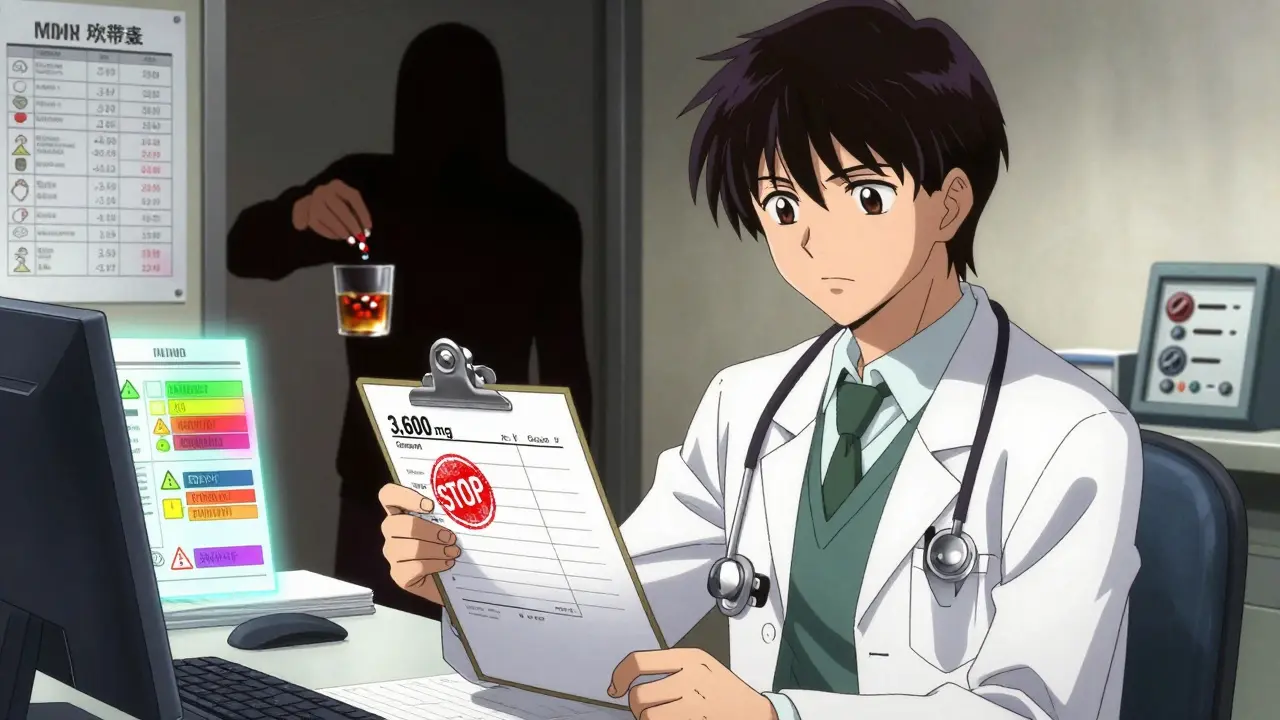
Misuse: When a Pain Med Becomes a Drug of Abuse
Gabapentinoids aren’t addictive in the same way as opioids, but they can be misused - and often are. The National Survey on Drug Use and Health found that 15.5 million people in the U.S. misused prescription pain relievers containing gabapentin in 2021. Many of them already had opioid use disorder.
Why? Because gabapentinoids can:
- Reduce opioid withdrawal symptoms
- Enhance the euphoria of opioids or alcohol
- Produce a mild high at high doses (over 3,600 mg)
On forums like PainForum.org, users report taking 3,600-4,800 mg daily to get high. One person wrote: “I used to take 4,000 mg with my oxycodone. I’d feel floaty. Then I’d black out. Ended up in the ER twice.”
Prevention isn’t just about patient education - it’s about system changes:
- 49 U.S. states now track gabapentin in prescription drug monitoring programs (PDMPs)
- The CDC recommends limiting initial prescriptions to 7-day supplies for acute pain
- Universal screening for substance use disorder is now standard before prescribing
- Urine drug testing every 3-6 months catches misuse early
The American Society of Addiction Medicine (ASAM) says: if someone has a history of opioid use, alcoholism, or benzodiazepine misuse, gabapentinoids should be avoided unless absolutely necessary - and even then, with close monitoring.
What You Should Do Now
If you’re taking gabapentin or pregabalin:
- Check your dose. Are you on more than 1,800 mg of gabapentin or 600 mg of pregabalin daily? Ask your doctor if it’s still needed.
- Track your dizziness. Do you feel unsteady when you stand up? Have you bumped into things more often? Tell your doctor - even if you think it’s normal.
- Review your history. Have you ever misused pills, alcohol, or opioids? Be honest. It changes your risk.
- Ask about alternatives. Topical lidocaine, duloxetine, or physical therapy might work just as well - with fewer risks.
- Never stop cold turkey. Withdrawal can cause anxiety, insomnia, and even seizures. Taper slowly: reduce by 300 mg every 3 days.
If you’re a prescriber:
- Use the START protocol: Screen for kidney function and substance use, Titrate slowly, Assess dizziness weekly, Review necessity monthly, Taper properly.
- Don’t prescribe more than 1,800 mg gabapentin daily unless you’ve documented clear benefit and no side effects.
- Check PDMPs before prescribing - and every time you refill.
- Document why you’re prescribing it. Was it for neuropathic pain? Or just because the patient asked?
The Bottom Line
Gabapentinoids can help. But they’re not harmless. The biggest danger isn’t the drug itself - it’s how we use it. Too many people are started on too much, too fast. Too many older adults are left dizzy and at risk of falling. Too many people with addiction histories are handed a script without a safety net.
The science is clear: lower doses work just as well. Slower titration prevents side effects. Screening prevents misuse. And stopping when it’s no longer needed saves lives.
The days of prescribing gabapentin like it’s aspirin are over. The new standard is cautious, thoughtful, and patient-centered. That’s not just good medicine - it’s essential.
Can gabapentin cause falls in older adults?
Yes. Dizziness from gabapentin is one of the leading causes of falls in older adults. Studies show over 40% of patients aged 65 and older experience dizziness, especially at doses above 900 mg daily. The American Geriatrics Society recommends never exceeding 900 mg daily for those over 80 and always assessing fall risk before starting.
Is 1,200 mg of gabapentin too much?
Not necessarily. For many people with neuropathic pain, 1,200 mg daily (400 mg three times a day) is effective and safe. But it’s not a target - it’s a starting point. The goal is to find the lowest dose that works. If you’re on 1,200 mg and feel fine, it’s likely appropriate. If you’re dizzy or confused, it may be too much.
Can you get high on gabapentin?
Yes, especially at high doses (over 3,600 mg) or when mixed with alcohol or opioids. Some people report feeling relaxed, euphoric, or floaty. This is why gabapentin is now a controlled substance in 49 U.S. states. Misuse is dangerous - it increases overdose risk, especially when combined with other depressants.
How long does it take for gabapentin to cause dizziness?
Dizziness usually starts within the first week of treatment, especially during dose increases. About 68% of cases occur during the initial titration phase. If you start feeling unsteady after increasing your dose, it’s likely related. Slowing down the titration schedule can prevent this.
What happens if you stop gabapentin suddenly?
Stopping abruptly can cause withdrawal symptoms like anxiety, insomnia, nausea, sweating, and even seizures. The FDA recommends tapering slowly: reduce by 300 mg every 3 days. For higher doses, tapering over 7-14 days is safer. Never stop on your own - talk to your doctor first.
Are there safer alternatives to gabapentin for nerve pain?
Yes. Topical lidocaine patches, duloxetine (Cymbalta), or venlafaxine (Effexor) are FDA-approved for neuropathic pain with lower risk of dizziness and misuse. Physical therapy, acupuncture, and cognitive behavioral therapy also help many people reduce pain without medication. Ask your doctor about combining non-drug options with lower-dose meds.
Next Steps for Patients and Providers
If you’re a patient:
- Write down your current dose and how you feel daily - especially dizziness, balance, or mood changes.
- Bring this log to your next appointment.
- Ask: “Is this dose still necessary? Can we try lowering it?”
If you’re a provider:
- Use the CDC’s 2022 guideline: limit initial prescriptions to 7 days for acute pain.
- Check PDMPs before every new prescription and every refill.
- Document renal function and substance use history - every time.
- Offer a taper plan before prescribing - not after problems arise.
The goal isn’t to stop gabapentinoids entirely. It’s to use them wisely - only when needed, at the lowest effective dose, and with constant attention to safety. Because when it comes to pain relief, the best outcome isn’t just less pain - it’s less risk, too.
Usha Sundar
December 22, 2025 AT 14:19I was on 1800mg for sciatica. One day I walked into a door. Literally. My doctor said, 'It's just dizziness.' I cut it to 600mg. Now I can chase my grandkids.
claire davies
December 23, 2025 AT 14:42Oh my goodness, this post is such a needed wake-up call. I’m from London and my mum, 78, was prescribed gabapentin after a minor fall - they just handed her a script like it was paracetamol. She was wobbling like a newborn giraffe. We got her down to 600mg and now she’s back to tending her roses and arguing with the garden gnome. It’s wild how we normalize these side effects like they’re just part of aging. We need to treat these meds like fireworks - beautiful if handled right, explosive if you’re careless. And honestly? If your doctor doesn’t ask about kidney function or fall risk before prescribing, find a new one. This isn’t just medicine, it’s dignity.
Harsh Khandelwal
December 24, 2025 AT 08:28Big Pharma’s new opioid. They made gabapentin so easy to prescribe because it’s cheap and they got the FDA to greenlight it without real long-term studies. Now everyone’s on it - old folks, addicts, even people with back pain that’s just stress. And guess what? The DEA’s watching, but your doctor? Still writing scripts like it’s candy. I saw a guy at the gas station buying 120 capsules of gabapentin. No script. Just cash. That’s not medicine, that’s a cult.
Andy Grace
December 25, 2025 AT 07:32I’m a physio in Sydney and we see this all the time. Patients come in with dizziness, fall risk, and a 2400mg gabapentin script. We try to talk them down, but the pain is real - so we work with their GP to taper slowly. The magic number? 900mg for most over-65s. Anything more is just gambling with their balance. Also, people don’t realize how long dizziness lingers. It’s not just when they take it - it’s the next morning too. Sleep disruption + wobbliness = disaster waiting to happen.
Spencer Garcia
December 25, 2025 AT 15:51Start low, go slow. That’s the rule. 300mg first week. If no side effects, bump by 300 every 5 days. Most people plateau around 900-1200. Higher doses don’t help - they just make you clumsy. Also, check PDMPs. If someone’s getting this from 3 doctors, that’s a red flag.
Abby Polhill
December 26, 2025 AT 22:35Per the 2022 AAN guidelines and CDC Class II evidence, gabapentinoid titration beyond 1800mg/day for neuropathic pain demonstrates diminishing returns with exponential increase in CNS adverse events - particularly in geriatric cohorts with reduced glomerular filtration. The Beers Criteria explicitly contraindicates >900mg/day in patients >80, yet off-label prescribing persists due to cognitive inertia in primary care. PDMP integration remains inconsistent across states, creating therapeutic fragmentation. We must operationalize renal-adjusted dosing algorithms and implement mandatory pre-prescription screening for SUD history.
Austin LeBlanc
December 27, 2025 AT 16:30You people are overreacting. I’ve been on 3600mg for 5 years. I feel fine. My doctor says it’s working. You think because some junkie overdosed on it that everyone should be scared? I’m not a drug addict. I’m a patient with chronic pain. Stop shaming people who need this. Also, your 'low dose' nonsense is just giving people more pain. You’re not helping - you’re punishing.
Christine Détraz
December 28, 2025 AT 04:44I used to be the guy who said, 'Just take what the doctor gives you.' Then my mom fell, broke her hip, and spent 6 months in rehab. She was on 1800mg gabapentin. The doctor said, 'It’s just dizziness.' Turns out, she’d been dizzy for months. We lowered her dose to 600mg. She got her independence back. This isn’t about being anti-medication. It’s about being pro-safety. We owe it to our elders to question everything - even when the script looks legit.
John Pearce CP
December 29, 2025 AT 20:19As a retired military medic, I’ve seen the consequences of lax prescribing. This isn’t 'medicine.' It’s a national disgrace. Gabapentinoids are being handed out like candy while real painkillers are restricted. The government lets these drugs flood the streets while locking up people for marijuana. The system is broken. If you’re prescribing more than 900mg to someone over 65, you’re not a doctor - you’re a liability. And if you’re taking more than 1800mg without a documented history of treatment failure? You’re gambling with your life. This isn’t freedom - it’s negligence.
Ajay Sangani
December 30, 2025 AT 14:00isnt it funny how we treat pain like its a problem to be solved with chemicals, when maybe its a signal? gabapentin silences the noise but does nothing to fix the root. we’ve forgotten that the body speaks - we just stopped listening. i wonder if we spent as much energy on movement, breath, and community as we do on pills, we’d find less need for them. not saying they’re bad… just that maybe we’re using them as a crutch for a culture that doesn’t know how to hold space for suffering.
Pankaj Chaudhary IPS
December 30, 2025 AT 21:49This is precisely why India needs a national guideline on gabapentinoid prescribing. We are seeing a surge in misuse among young adults in urban centers - often combined with alcohol or tramadol. The medical community must adopt the START protocol immediately. Also, we must train pharmacists to flag excessive quantities. A 30-day supply of 3600mg gabapentin should trigger a mandatory counseling session. Safety is not optional - it is a professional obligation.
Bhargav Patel
December 31, 2025 AT 15:48The most dangerous part of this isn’t the drug - it’s the assumption that if it’s not an opioid, it’s safe. We’ve created a false dichotomy: opioids = bad, gabapentin = good. But the brain doesn’t care about the label. It cares about the effect. And when you’re stacking it with alcohol, benzodiazepines, or even just aging kidneys? You’re playing Russian roulette with your cerebellum. The data is clear: low dose + slow titration + renal check = success. Anything else is just hope dressed as a prescription.