
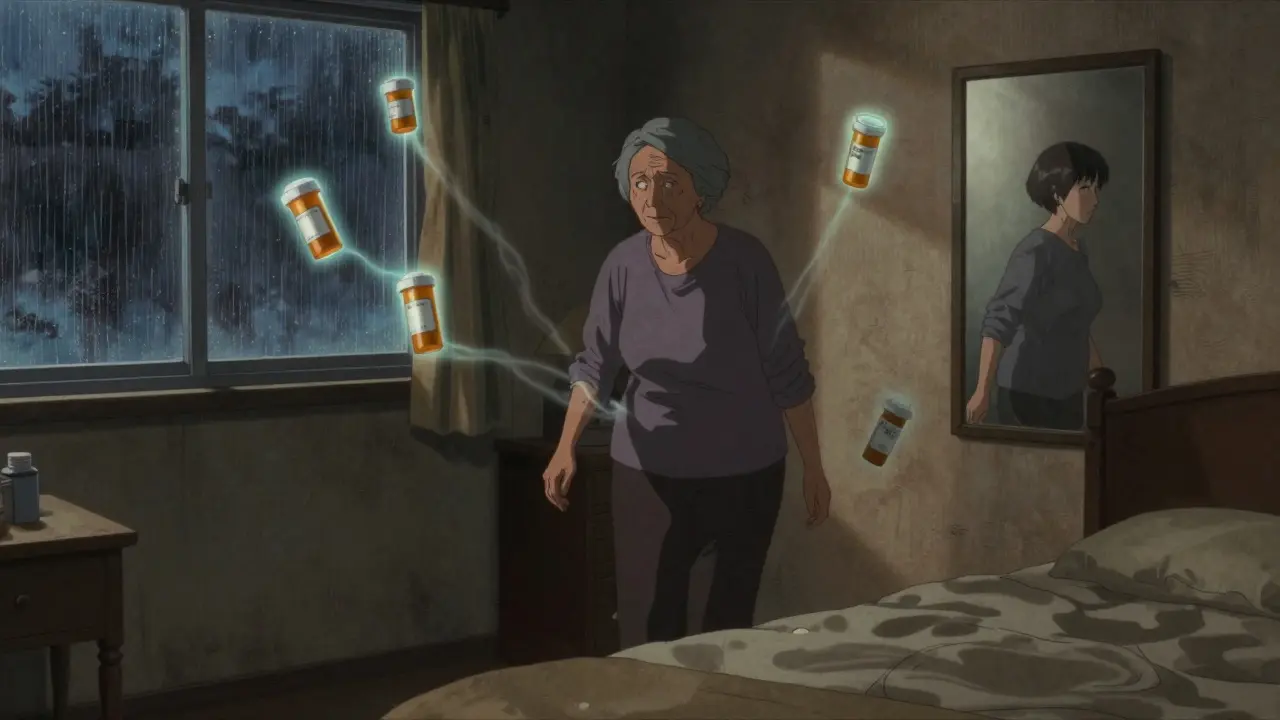
Every year, one in three adults over 65 falls. That’s not just a stumble-it’s a broken hip, a hospital stay, or worse. And while slippery floors and poor lighting get all the attention, the real culprit is often something hiding in the medicine cabinet. Medications meant to help can quietly increase the chance of a fall, sometimes without the person even realizing it.
Why Medications Are a Silent Threat
It’s easy to think of pills as harmless helpers. But for older adults, the body changes. Liver and kidney function slow down. Drug metabolism gets slower. What was a safe dose at 50 can become dangerous at 75. Combine that with multiple prescriptions-43% of seniors take four or more-and you’ve got a recipe for trouble.Research from the Mayo Clinic in 2023 shows that 65% to 93% of older adults who were injured in a fall were taking at least one medication known to raise fall risk. These aren’t rare outliers. They’re common drugs, prescribed for common problems: anxiety, sleeplessness, high blood pressure, joint pain.
The Top 9 Medication Classes That Raise Fall Risk
Not all drugs are equal when it comes to falls. Some carry a much heavier weight. Here are the nine classes most linked to injury, based on decades of research and updated guidelines from the American Geriatrics Society and CDC:- Antidepressants - These show the strongest link to falls. Both tricyclics (like amitriptyline) and SSRIs (like sertraline) can cause dizziness, low blood pressure, and slowed reaction time. A 2023 JAMA analysis found seniors on antidepressants were nearly twice as likely to fall compared to those not taking them.
- Benzodiazepines - Drugs like diazepam (Valium), lorazepam (Ativan), and alprazolam (Xanax) are sedatives used for anxiety or insomnia. They cause drowsiness, confusion, and poor balance. The risk jumps 50% after just a few weeks of use. Long-acting versions like diazepam stick around longer, making daytime dizziness worse.
- Sedative-hypnotics - Sleep aids like zolpidem (Ambien), eszopiclone (Lunesta), and zaleplon (Sonata) don’t just help you sleep-they can leave you groggy the next morning. The CDC calls these "complex sleep behaviors" because people sometimes get up and walk around without remembering it. That’s a fall waiting to happen.
- Antipsychotics - Used for dementia-related agitation or psychosis, these drugs (like haloperidol or risperidone) can cause stiffness, tremors, and sudden drops in blood pressure. First-generation antipsychotics carry the highest risk. A 2022 National Council on Aging study found a 40% increase in fall risk with these medications.
- Diuretics - Water pills like furosemide help with heart failure and swelling, but they can cause dehydration and sudden drops in blood pressure when standing. This is called orthostatic hypotension. It’s one of the most common causes of falls in older adults taking these drugs.
- Antihypertensives - Blood pressure meds like beta-blockers or ACE inhibitors are lifesavers, but if the dose is too high or the timing is off, they can drop pressure too far. Standing up too fast after taking them can mean a trip to the floor.
- Opioids - Painkillers like oxycodone or hydrocodone cause dizziness, slowed reflexes, and mental fogginess. The higher the dose, the greater the risk. High-potency opioids can increase fall risk by up to 80% compared to low-dose options.
- NSAIDs - Over-the-counter pain relievers like ibuprofen and naproxen might seem harmless. But they can raise blood pressure, interfere with kidney function, and cause internal bleeding that leads to weakness. A 2023 study linked NSAID use to a 25% higher fall risk.
- Anticholinergics - Found in many bladder meds (like oxybutynin), allergy pills (diphenhydramine), and even some stomach remedies, these drugs block a brain chemical needed for memory and coordination. They cause dry mouth, blurred vision, and confusion. Many seniors don’t realize their nighttime allergy pill is making them unsteady.
Who’s Most at Risk?
It’s not just about the drug-it’s about the combination. Seniors on three or more of these medications are at dramatically higher risk. The CDC found that 63% of older adults taking multiple fall-risk drugs didn’t know they were at risk.Women are more likely to be prescribed these medications, especially antidepressants and benzodiazepines. People with dementia, Parkinson’s, or a history of prior falls are also more vulnerable. And here’s the quiet truth: many of these drugs are taken long after they’re needed. A benzodiazepine prescribed for a short-term anxiety spike often becomes a daily habit for years.
Real Stories, Real Consequences
On Reddit, a caregiver named Jane wrote about her 78-year-old mother: "She fell three times in two months after starting Ambien. The third fall broke her hip. She needed surgery. She never went back to living alone."Another user on GoodRx shared: "I took Xanax for six months for anxiety. I started bumping into walls. I couldn’t walk down stairs without holding the railing. I installed grab bars everywhere. I didn’t connect it to the pill until my pharmacist asked."
The CDC’s 2022 survey found that 28% of older adults who fell blamed their medications-but only 15% ever told their doctor.
What Can Be Done?
The good news? Many of these risks are preventable. The CDC’s STEADI program (Stopping Elderly Accidents, Deaths & Injuries) gives clear advice: STOP, SWITCH, REDUCE.- STOP medications that aren’t needed. A 2023 study showed that 30% of seniors could safely stop at least one fall-risk drug after a careful review.
- SWITCH to safer alternatives. For anxiety, talk therapy works better than benzodiazepines long-term. For insomnia, cognitive behavioral therapy for insomnia (CBT-I) is 70-80% effective and has no fall risk.
- REDUCE doses. Lowering the dose of an opioid or antidepressant can cut fall risk without losing benefits.
Pharmacists are key players here. A 2023 study found that pharmacist-led reviews reduced falls by 22%. They spot dangerous combinations, outdated prescriptions, and hidden risks in over-the-counter meds.
Try the "brown bag method"-bring all your pills, vitamins, and supplements to your next doctor visit. Don’t assume your doctor knows what you’re taking. Many seniors don’t even realize their allergy pill or sleep aid is a fall risk.
What’s Changing in 2026?
New tools are emerging. AI-powered systems can now scan a senior’s entire medication list and flag dangerous combinations with 89% accuracy. Medicare is starting to penalize doctors who overprescribe fall-risk drugs. And the American Geriatrics Society’s 2024 Beers Criteria update will include new warnings for recently approved drugs.Still, progress is slow. The cost of safer alternatives is a barrier. Generic benzodiazepines cost $30 a month. Newer, non-sedating anxiety meds can cost $450. Many seniors can’t afford them. Insurance doesn’t always cover the shift.
What You Can Do Today
If you or someone you care for is over 65 and taking any of these medications:- Ask your doctor: "Could any of these be making me unsteady?"
- Ask your pharmacist: "Do any of these interact or increase fall risk?"
- Review all meds-prescription, OTC, and supplements-every six months.
- Never stop a drug suddenly. Tapering under medical supervision is key.
- Look for non-drug options first: physical therapy for balance, CBT for sleep or anxiety, heat packs for pain.
Falls aren’t inevitable. They’re often preventable. And the most powerful tool isn’t a handrail or a non-slip mat. It’s asking the right question: "Could this pill be the reason I’m falling?"
Tatiana Barbosa
February 7, 2026 AT 18:40Every time I see a senior on meds, I think: this isn’t just about pills, it’s about dignity. I’ve watched my grandma go from independent to afraid to walk down the hall. It breaks my heart. But here’s the thing-most of these risks are reversible. You don’t need to live in fear. You just need someone to ask the right questions.
Pharmacists are the unsung heroes here. They catch interactions doctors miss. They know which OTC stuff is a landmine. Bring your brown bag. Make them earn their paycheck. It’s not paranoia-it’s advocacy.
Ken Cooper
February 8, 2026 AT 09:56so like… i took xanax for like 3 months after my dad died… and i kept tripping over my own feet? thought i was just getting old. turns out? the pill was making me a zombie. my pharmacist was like ‘uh, yeah, this is why you’re bumping into walls.’ i was like… oh. wow. thanks. now i feel dumb. but also… kinda relieved? like, i didn’t lose my mind, the drugs did.
Joseph Charles Colin
February 10, 2026 AT 02:13From a clinical pharmacology standpoint, the polypharmacy burden in geriatric populations is the primary driver of fall-related morbidity. The pharmacokinetic alterations in hepatic CYP450 metabolism and renal clearance, compounded by reduced plasma protein binding, lead to elevated drug exposure. Anticholinergic burden, particularly when cumulative >3, is strongly correlated with cognitive decline and postural instability. The Beers Criteria update in 2024 now includes levocetirizine and chlorpheniramine under high-risk anticholinergics due to CNS penetration-many clinicians still overlook OTC formulations.
John Sonnenberg
February 11, 2026 AT 00:14This is why I say the medical industrial complex is a scam. They get you hooked on pills for every little thing, then act shocked when you fall. They don’t care if you break your hip-they care if you keep paying. And don’t get me started on how they push benzodiazepines like candy. It’s not medicine-it’s addiction by prescription. And now they’re gonna use AI to monitor us? How about they stop prescribing the damn things in the first place?
Joshua Smith
February 12, 2026 AT 10:19That JAMA study on antidepressants and falls is really telling. I wonder if the same risk applies to SNRIs like venlafaxine? I know a few people on those. Also, has anyone looked at the timing of dosing? Like, if you take a blood pressure med at night instead of morning, does that reduce orthostatic hypotension risk? Just thinking out loud.
John Watts
February 14, 2026 AT 04:23Let me tell you something-my uncle in Texas was on six of these drugs. Six. He didn’t even know half of them were for something he didn’t have anymore. His doctor just kept renewing. Then he fell, broke his pelvis, ended up in a nursing home. He cried every day. Not from pain-from regret. He said, ‘I just wanted to sleep.’
But here’s the truth: there’s hope. CBT-I works. Physical therapy works. Tai chi works. You don’t need a pill to be safe. You need someone who cares enough to say: ‘Let’s try something else.’
Randy Harkins
February 15, 2026 AT 09:49This is so important. 💙 I’m so glad you shared the brown bag method. My mom did that last year. We found three OTC meds she’d been taking for 12 years-none were necessary. One was an anticholinergic that was fogging her brain. She’s been so much sharper since. And no, she didn’t even know they were in her cabinet. We threw them out. No guilt. No drama. Just better living.
Chima Ifeanyi
February 15, 2026 AT 22:24Let’s be real-the whole ‘medication risk’ narrative is a distraction. The real cause of falls? Poverty. Lack of home modifications. No access to PT. But no one wants to fix that. So we blame pills. Convenient. Easy. Lets the system off the hook. Meanwhile, Medicare cuts home safety grants while funding more prescriptions. The math doesn’t add up. It’s not the drug-it’s the system.
Tori Thenazi
February 16, 2026 AT 17:52Wait… so you’re telling me… the government… is secretly using these drugs… to make seniors fall… so they can’t vote? I mean… think about it… who’s more likely to be on 5 meds? Seniors. Who’s more likely to be isolated? Seniors. Who’s more likely to be written off as ‘accidental’? Seniors. And now they’re using AI to track it? That’s not medicine. That’s eugenics. With a prescription pad.
Elan Ricarte
February 18, 2026 AT 04:29Y’all are so sweet, pretending this is about ‘safety.’ Nah. This is about profit. Benzodiazepines? $30. CBT-I? $1,200. Who’s gonna pay? You. Or your kid. Or your Medicare. And don’t even get me started on how pharma bribes doctors with steak dinners and ‘educational grants.’ I’ve seen the emails. The pills aren’t the problem. The greed is. And nobody’s gonna fix it until we burn the whole system down.
Ashlyn Ellison
February 18, 2026 AT 16:29I just took my dad to his appointment. He’s on 7 meds. We asked. They cut one. He hasn’t fallen since. Simple. But nobody told us. So… yeah. Just ask.
THANGAVEL PARASAKTHI
February 20, 2026 AT 02:45in india we dont have this problem because elders live with family and they dont take so many pills. also we use turmeric and yoga. but here? people take pills for everything. even for being sad. its crazy. i think maybe we need to go back to simple things.
Frank Baumann
February 21, 2026 AT 12:14Let me tell you about my cousin Linda. She was 82. Brilliant woman. Taught college for 40 years. Then she started on gabapentin for ‘nerve pain’-no diagnosis, just ‘try it.’ Within weeks, she was wandering the house at 3 a.m., talking to ghosts. We thought she was dying. Turned out? The gabapentin was making her hallucinate. She didn’t tell anyone because she didn’t want to be ‘a burden.’
That’s the real tragedy. Not the drugs. The silence. The fear of being seen as weak. We need to break that. Talk. Ask. Push. Don’t let them suffer in silence.
Chelsea Deflyss
February 23, 2026 AT 01:37Oh wow, I’m so glad someone finally said this. I’ve been saying for years that antidepressants are overprescribed. My neighbor’s husband took them for 8 years after his wife died. He was fine. Then he fell. Broke his wrist. Now he’s on a walker. And they just gave him another pill. For the pain. For the depression. For the insomnia. It’s a spiral. And nobody sees it. Because everyone’s too polite to say: ‘Maybe stop the pills?’