
Immunosuppressant & Supplement Interaction Checker
Select the medication you are taking and the supplement you are considering to check for known interactions described in the article.
Result
Please select both options to see the risk analysis.
This tool is for educational purposes based on the article. Never start or stop a medication or supplement without consulting your prescribing physician, nephrologist, or rheumatologist.
| Supplement | Primary Effect | Immune Interaction | Risk with Immunosuppressants |
|---|---|---|---|
| Echinacea | Immune stimulation | High (Activates leukocytes) | High (Antagonizes medication) |
| Milk Thistle | Liver support | Low/Indirect | Moderate (Metabolism based) |
| Ginger | Anti-inflammatory | Low | Low |
The Tug-of-War Inside Your Immune System
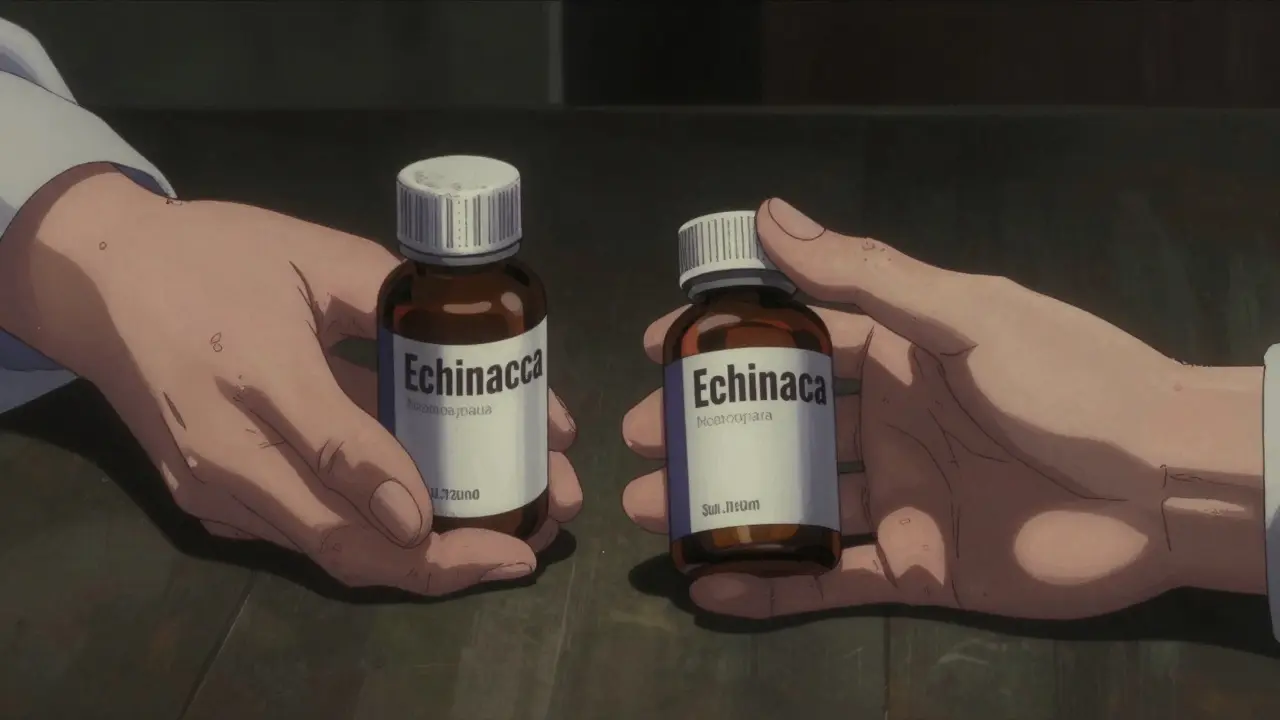
When you take an Immunosuppressant, you are essentially putting your immune system's "soldiers" (like T-cells and B-cells) into a state of dormancy. This is vital for people with autoimmune diseases or organ transplants because it prevents the body from attacking its own tissues or a foreign graft. However, Echinacea does the exact opposite. It acts like a megaphone, waking up those same soldiers. Specifically, Echinacea activates phagocytosis and increases the mobility of leukocytes. It stimulates neutrophils, macrophages, and natural killer cells to become more active. If you are taking a drug to suppress these cells, Echinacea acts as an antagonist-it fights against the medication's goal. This creates a biological tug-of-war where the supplement tries to ramp up the immune response while the medication tries to shut it down. In the best-case scenario, the medication just becomes less effective. In the worst-case scenario, your immune system wakes up enough to cause a severe flare-up or organ rejection.Which Medications Are at Risk?
Not every medication is affected the same way, but the risk is highest for those used in transplant surgery and severe autoimmune treatment. If you are taking any of the following, the use of Echinacea is generally cautioned against by medical professionals:- Cyclosporine and Tacrolimus (Calcineurin inhibitors used heavily in transplants)
- Corticosteroids (Powerful anti-inflammatory steroids)
- Azathioprine and Mycophenolate Mofetil (Antimetabolites)
- Methotrexate (Used in rheumatoid arthritis and cancer)

Real-World Consequences: Case Studies
While some people might take a supplement and feel nothing, the medical literature contains sobering examples of what happens when this interaction goes wrong. The Memorial Sloan Kettering Cancer Center has documented cases that highlight the unpredictability of these interactions. One 55-year-old man with pemphigus vulgaris-a severe autoimmune skin disease-was taking immunosuppressants to keep his condition stable. After using Echinacea, he experienced a sudden exacerbation of his disease. Even with re-treatment, doctors could only achieve partial remission. Another case involved a 61-year-old man with lung cancer who developed profound thrombocytopenia (a dangerously low platelet count) while taking Echinacea alongside chemotherapy drugs like cisplatin and etoposide. These aren't just theoretical risks. On patient forums like Inspire and HealthUnlocked, transplant recipients have reported needing higher doses of their medications or experiencing acute rejection episodes shortly after using "immune-boosting" herbal supplements. While these reports aren't always formally diagnosed as Echinacea-related, the pattern is too consistent for doctors to ignore.The Chronic Use Paradox
Here is where things get confusing: Echinacea doesn't always behave the same way. Most people know it as an "immune booster" for short-term use during a cold. However, research from the American Academy of Family Physicians suggests a paradox. While acute use stimulates the immune system, long-term use (typically more than eight weeks) may actually lead to immunosuppression. Why does this matter? If you use Echinacea intermittently, you risk antagonizing your meds. If you use it chronically, you might be adding an extra layer of suppression that could lead to unexpected vulnerabilities or liver toxicity. This dual-phase response makes it a volatile addition to any medical regimen, especially one that requires precise dosing of powerful pharmaceuticals.
Practical Steps for Patients and Caregivers
If you or a loved one are on immunosuppressive therapy, the rule is simple: avoid Echinacea entirely. The American Society of Transplantation recommends complete avoidance for all solid organ transplant recipients due to the risk of graft rejection. But it's not just about this one herb. Many "immune support" blends contain multiple ingredients that could interfere with your health. Here is a checklist for managing your supplements safely:- Audit Your Cabinet: Check every tea, tincture, and vitamin for ingredients like Echinacea purpurea or other immunostimulants.
- Full Disclosure: Tell your specialist (rheumatologist, nephrologist, or oncologist) about every supplement you take. Don't assume they know or that "natural" means "safe."
- Question "Immune Boosting": Be skeptical of any product claiming to "boost" your immune system if you are taking medication to suppress it. You cannot boost and suppress the same system simultaneously without risk.
- Use Approved Alternatives: If you're fighting a cold, ask your doctor for safe, non-interactive ways to manage symptoms, such as saline sprays or specific honey-based lozenges.
Expert Consensus and Current Research
Medical organizations are increasingly clear on this. The American College of Rheumatology explicitly states that patients on immunosuppressive therapy for autoimmune diseases should avoid Echinacea. This isn't based on a whim; it's a response to the mechanistic evidence of how alkamides interact with cannabinoid receptors and the resulting impact on leukocyte activity. To put a fine point on it, the National Institutes of Health is currently investing millions of dollars into studying the pharmacokinetic interactions between Echinacea and Tacrolimus. We are waiting for the final data, but the current clinical guidance from the European Medicines Agency and the AHFS is clear: the risk is too high to justify the benefit of a common cold remedy.Can I take Echinacea for a short time if I'm on immunosuppressants?
No. Even short-term use can trigger an acute immune response that may antagonize your medication, increasing the risk of organ rejection or autoimmune flare-ups. Always consult your prescribing physician before taking any supplement.
Is Echinacea safe for people with rheumatoid arthritis?
Generally, no. Many RA treatments, such as Methotrexate, are designed to suppress an overactive immune system. Because Echinacea stimulates immune activity, it can counteract the efficacy of these treatments, potentially leading to worse joint inflammation.
Does Echinacea affect the liver?
While the primary concern is immune interaction, some medical experts have raised concerns about hepatotoxicity (liver damage), especially when Echinacea is combined with other drugs that are hard on the liver.
Why is Echinacea called an "antagonist" to these drugs?
In pharmacology, an antagonist is something that opposes the action of another agent. Since immunosuppressants aim to decrease immune activity and Echinacea aims to increase it, the supplement "antagonizes" or blocks the intended effect of the drug.
What are the most dangerous symptoms to watch for?
For transplant patients, any sign of graft rejection (such as decreased organ function or fever) is a red flag. For autoimmune patients, a sudden return of symptoms after a period of stability should be reported to a doctor immediately.