
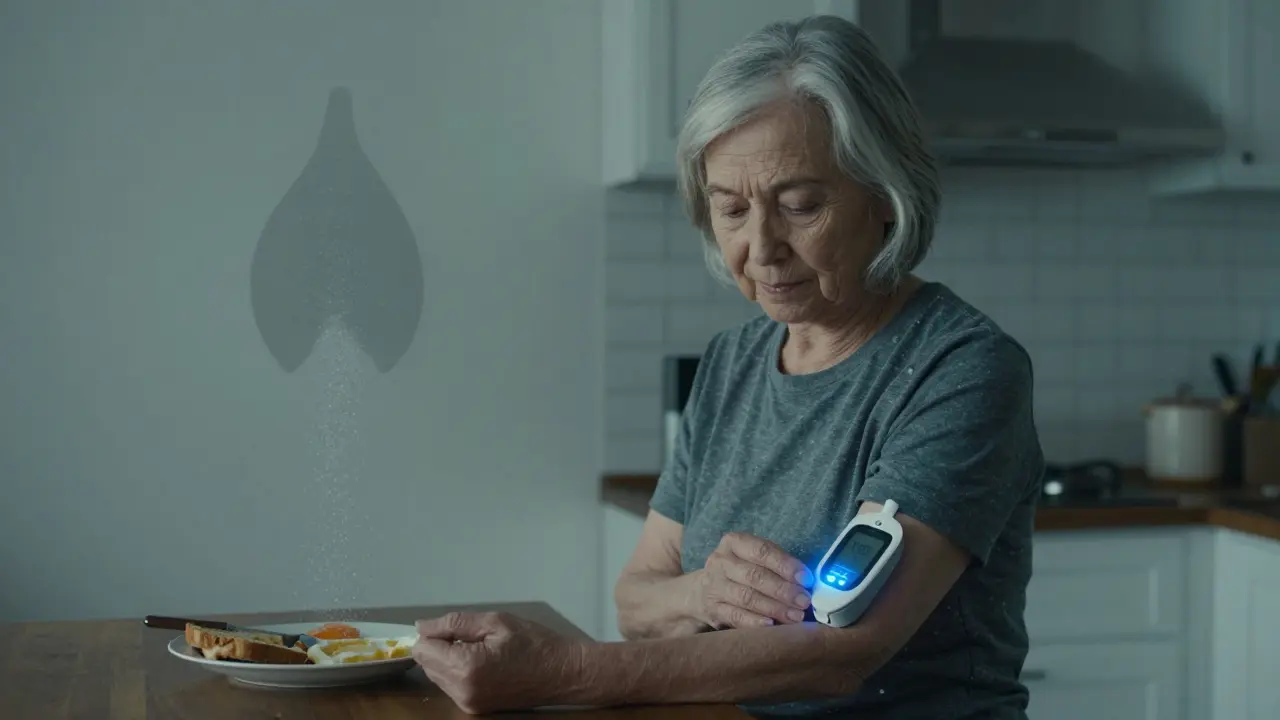
When someone over 65 has diabetes, managing blood sugar isn't just about hitting a number-it's about staying safe. For older adults, low blood sugar isn't a minor inconvenience. It's a serious threat that can lead to falls, confusion, heart problems, and even death. The good news? Not all diabetes medications carry the same risk. Some are far safer than others, and choosing the right one can make all the difference in a senior’s quality of life.
Why Hypoglycemia Is More Dangerous for Seniors
Low blood sugar, or hypoglycemia, means glucose drops below 70 mg/dL. For a young person, that might mean a quick snack and a return to normal. For a senior, it can mean a fall, a broken hip, or an emergency room visit. Why? Because aging changes how the body handles blood sugar.
Older adults often have weaker kidney function, which means medications stick around longer in the body. Their bodies also don’t release stress hormones like glucagon or epinephrine as quickly when blood sugar drops. That means they don’t feel the warning signs-shakiness, sweating, or a racing heart-until it’s too late. A 2010 study in the Diabetes Journals found that a single severe hypoglycemic episode in someone over 65 increases their risk of dying within a year by 60%. That’s not a small risk. It’s a life-altering one.
And it’s not rare. Seniors experience hypoglycemia two to three times more often than younger adults. In fact, hypoglycemia is the leading cause of diabetes-related emergency room visits among Medicare beneficiaries, making up nearly 29% of all such visits, according to the CDC’s 2022 report.
Medications That Put Seniors at Highest Risk
Not all diabetes pills or injections are created equal. Some are simply too dangerous for older adults.
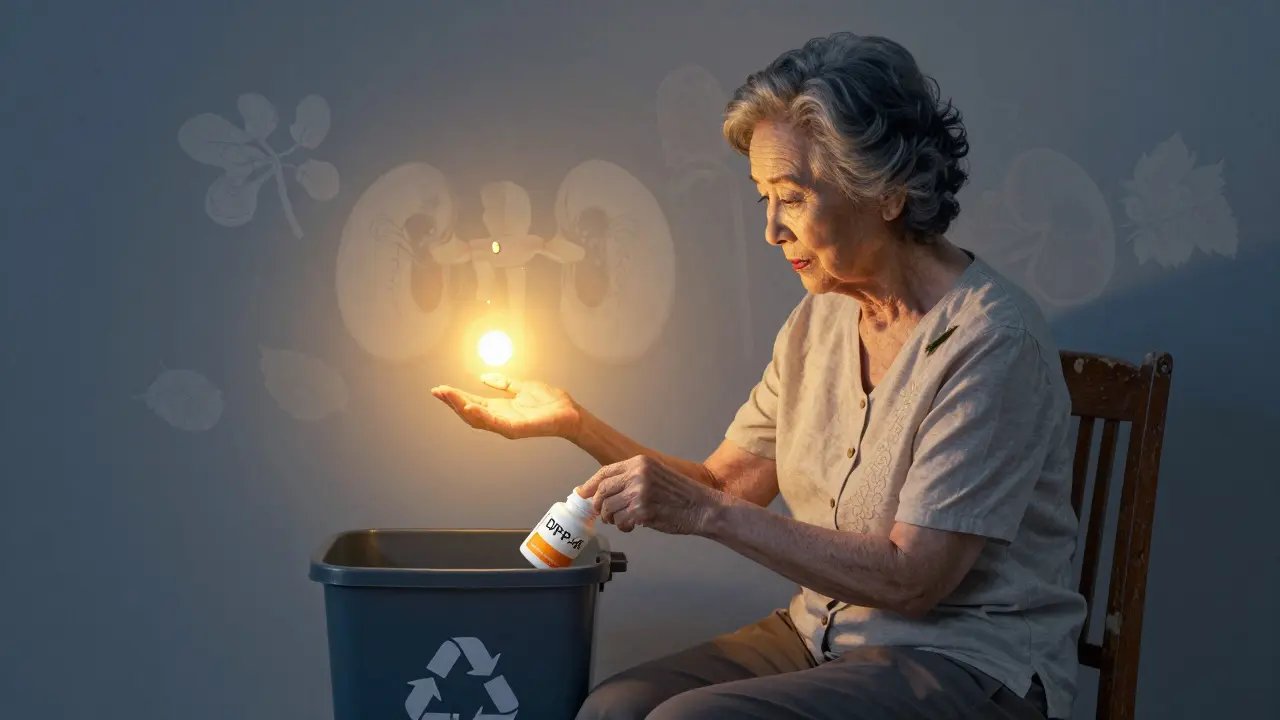
Glyburide (brand name: Glynase) is one of the worst offenders. It’s a sulfonylurea, a class of drugs that forces the pancreas to pump out more insulin. But in seniors, glyburide’s effects last too long-sometimes over 24 hours. Because it’s cleared by the kidneys, and many older adults have reduced kidney function, the drug builds up. Studies show that nearly 40% of seniors on glyburide have at least one hypoglycemic episode each year. The American Geriatrics Society explicitly lists glyburide as a medication to avoid in older adults, calling it a “Potentially Inappropriate Medication.”
Even glipizide (Glucotrol), another sulfonylurea, is riskier than newer options. While it’s safer than glyburide, it still causes hypoglycemia in 15-20% of elderly users. And when it happens, it often strikes at night, leading to confusion, falls, or seizures while sleeping.
Insulin is another major concern. Research from PubMed shows insulin use increases fall risk by 30% in seniors due to dizziness and lightheadedness from low blood sugar. For someone already at risk of osteoporosis or balance issues, that’s a dangerous combination.
Safe Alternatives with Minimal Hypoglycemia Risk
The good news? There are much safer options.
DPP-4 inhibitors like sitagliptin (Januvia), linagliptin (Tradjenta), and saxagliptin (Onglyza) work differently. They don’t force the pancreas to make more insulin. Instead, they help the body use its own insulin more efficiently-only when blood sugar is high. As a result, hypoglycemia rates with these drugs are just 2-5%, compared to 30-40% with sulfonylureas. Many seniors and caregivers report dramatic improvements after switching. One 78-year-old woman on the American Diabetes Association forum shared that after switching from glyburide to sitagliptin, she had zero low blood sugar episodes in six months and stopped fearing walking around her home.
SGLT2 inhibitors like empagliflozin (Jardiance) and dapagliflozin (Farxiga) are another safe choice. These drugs help the kidneys remove excess sugar through urine. They rarely cause hypoglycemia when used alone. Clinical trials show only 4.5% of users had low blood sugar, compared to 13.8% in placebo groups. They also offer extra benefits-lowering heart failure risk and slowing kidney disease progression, both common concerns in seniors.
Metformin is still the first-line drug for many, but it needs careful use. It doesn’t cause hypoglycemia on its own. But in seniors over 80 or those with poor kidney function, it can build up and cause lactic acidosis-a rare but serious condition. Doctors should check creatinine clearance before prescribing it and avoid it if kidney function is below 30 mL/min.
What to Avoid and What to Choose
Here’s a simple guide for medication safety in seniors:
| Medication Class | Examples | Hypoglycemia Risk in Seniors | Recommended for Seniors? |
|---|---|---|---|
| Sulfonylureas (long-acting) | Glyburide (Glynase) | Very High (30-40%) | Avoid |
| Sulfonylureas (short-acting) | Glipizide (Glucotrol) | High (15-20%) | Use with caution |
| Insulin | Insulin glargine, NPH | High (20-30%) | Use only if necessary |
| DPP-4 Inhibitors | Sitagliptin, Linagliptin | Low (2-5%) | Recommended |
| SGLT2 Inhibitors | Empagliflozin, Dapagliflozin | Very Low (4-5%) | Recommended |
| Metformin | Metformin ER | Very Low (if kidney function normal) | Use with kidney monitoring |
Based on real-world data, switching from glyburide to a DPP-4 inhibitor can cut hypoglycemia episodes by more than 80%. That’s not just better numbers-it’s safer nights, fewer falls, and more independence.
Monitoring and Lifestyle Strategies
Even the safest meds need monitoring. Seniors should check blood sugar more often, especially when starting a new drug or changing doses. The American Diabetes Association recommends checking before meals and at bedtime for those on insulin or sulfonylureas.
But here’s a game-changer: continuous glucose monitors (CGMs). These small devices, worn on the arm or belly, track glucose levels 24/7 and alert users when levels drop too low. A 2021 study in Diabetes Technology & Therapeutics found that seniors using CGMs had 65% fewer hypoglycemic events than those using fingersticks. For someone living alone, a CGM isn’t a luxury-it’s a lifeline.
Education matters too. Caregivers and seniors need to recognize early signs of low blood sugar: dizziness, sweating, confusion, hunger, or a fast heartbeat. These aren’t just “getting older” symptoms-they’re warning signs. The CDC’s National Diabetes Prevention Program has shown that seniors who learn these signs reduce severe hypoglycemia by 47% over a year.

Drug Interactions and Polypharmacy Risks
Most seniors take multiple medications. The average diabetic over 65 takes nearly five prescription drugs and two over-the-counter ones. That’s a recipe for dangerous interactions.
Beta-blockers-often used for high blood pressure or heart conditions-can hide the symptoms of hypoglycemia. If someone’s heart doesn’t race when their blood sugar drops, they won’t know they’re in danger. NSAIDs like ibuprofen can make sulfonylureas stronger, increasing hypoglycemia risk. Even some antibiotics and antifungals can interfere.
A pharmacist-led medication review can cut hypoglycemia events by 28%. These reviews look at every pill, supplement, and OTC drug to spot risks. The STOPP/START criteria-a tool used by geriatric specialists-helps identify which drugs to stop and which ones to start. When implemented, it reduces hospitalizations from hypoglycemia by 32%.
What’s Next? The Future of Safer Diabetes Care
New drugs are coming. Tirzepatide (Mounjaro), approved in 2022, caused only 1.8% hypoglycemia in elderly trial participants-far lower than insulin’s 12.4%. It’s not yet widely used in seniors, but it’s a sign of what’s possible.
Researchers are also working on “smart” insulins that only activate when blood sugar is high. Several are in Phase 2 trials specifically for older adults. If they work, they could eliminate hypoglycemia risk entirely.
For now, the best advice is simple: avoid glyburide. Choose DPP-4 or SGLT2 inhibitors. Use CGMs. Get a pharmacist to review all medications. And remember-your goal isn’t to hit a perfect HbA1c. It’s to stay safe, stay independent, and stay out of the hospital.
What is the safest diabetes medication for seniors?
The safest options for seniors are DPP-4 inhibitors (like sitagliptin or linagliptin) and SGLT2 inhibitors (like empagliflozin). These drugs rarely cause low blood sugar when used alone. Metformin is also safe if kidney function is normal. Avoid glyburide and other long-acting sulfonylureas entirely.
Why is glyburide dangerous for older adults?
Glyburide has a long half-life and is cleared by the kidneys. As people age, kidney function declines, causing the drug to build up in the body. This leads to prolonged, unpredictable low blood sugar episodes. Studies show nearly 40% of seniors on glyburide have at least one hypoglycemic event per year. The American Geriatrics Society advises against its use in older adults.
Can insulin be used safely in seniors?
Insulin can be used, but it carries high risk. It increases fall risk by 30% due to dizziness from low blood sugar. If insulin is necessary, use long-acting analogs like glargine or degludec, not NPH. Always pair it with a continuous glucose monitor and frequent checks. Many doctors avoid insulin in frail seniors unless absolutely needed.
How can I tell if a senior is having low blood sugar?
Early signs include dizziness, sweating, confusion, hunger, weakness, irritability, fast heartbeat, and shakiness. In seniors, confusion or drowsiness may be the only signs. These aren’t normal aging symptoms-they’re red flags. If in doubt, check blood sugar. Never assume it’s just "getting old."
Should seniors use continuous glucose monitors?
Yes, especially if they’re on insulin, sulfonylureas, or have had prior hypoglycemia. CGMs reduce hypoglycemia events by 65% in seniors compared to fingersticks. They provide real-time alerts and trends, helping prevent dangerous drops-especially at night. Medicare covers CGMs for eligible patients with insulin use or frequent low blood sugar.