
Deprescribing Potential Calculator
Medication Review Tool
This tool helps identify medications that may be unnecessary or risky for older adults. Based on the Beers Criteria (2023), it flags medications that should be reviewed by your healthcare provider.
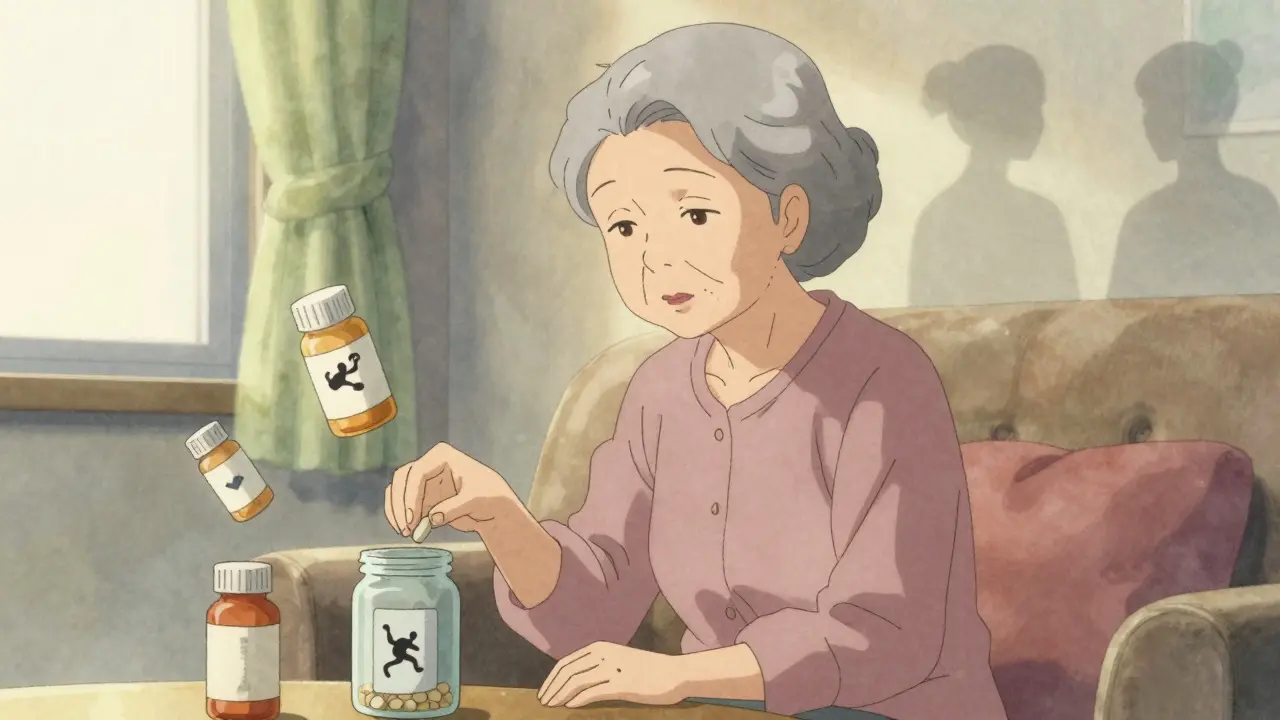
Every year, millions of older adults take more medications than they need. Some started years ago for a condition that’s since improved. Others were prescribed during a hospital stay and never reviewed again. The result? A medicine cabinet full of pills that might do more harm than good. This isn’t just a personal problem-it’s a growing public health issue. And the solution isn’t adding more drugs. It’s deprescribing.
What Exactly Is Deprescribing?
Deprescribing isn’t about stopping meds cold turkey. It’s a planned, careful process of reducing or stopping medications that are no longer helping-or may even be hurting. The goal isn’t to cut pills for the sake of cutting them. It’s to improve quality of life, reduce side effects, and avoid unnecessary risks. According to the American Geriatrics Society, it’s defined as the "planned and supervised process of dose reduction or stopping of medication that might be causing harm, or no longer be of benefit." Think of it like this: if you were prescribed a blood pressure pill ten years ago, and your blood pressure has been stable for five years, do you still need that same dose? Maybe not. Maybe the risks-dizziness, falls, kidney strain-now outweigh the benefits. Deprescribing asks that question. And it’s backed by research.Why It Matters: The Problem with Too Many Pills
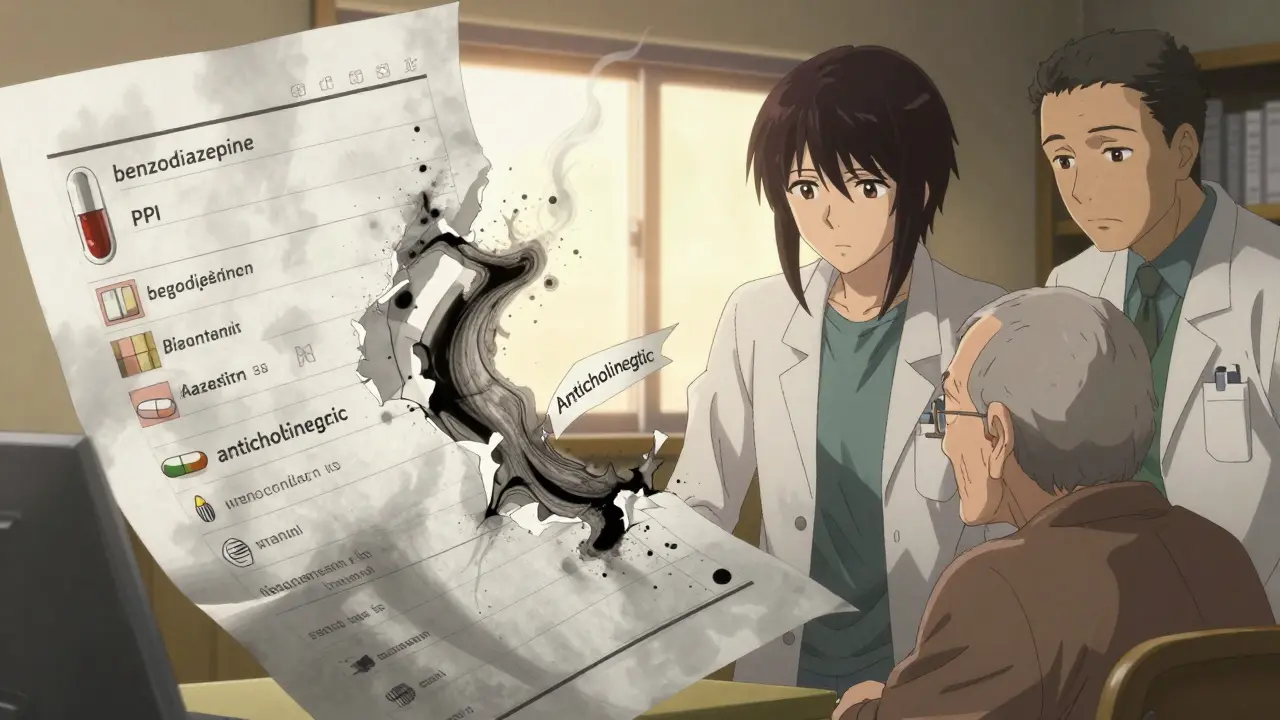
In the U.S., about 40% of older adults take five or more medications. One in five take ten or more. That’s polypharmacy. And it’s not harmless. Each additional drug increases the chance of side effects, drug interactions, and hospital visits. A 2023 study in JAMA Network Open found that people on multiple medications had higher rates of falls, confusion, and kidney problems. The more pills, the higher the risk. Some drugs are especially risky for older adults. Benzodiazepines for sleep, proton pump inhibitors for heartburn, anticholinergics for overactive bladder-these are common, often long-term, and linked to memory issues, falls, and even dementia. The American Geriatrics Society’s Beers Criteria, updated in 2023, lists these as potentially inappropriate for seniors. But here’s the catch: doctors don’t always stop them. Patients don’t always ask. And no one reviews the list.The Five Steps of Safe Deprescribing
Deprescribing isn’t guesswork. It’s a clinical process with clear steps:- Identify potentially inappropriate medications. Look at each drug: Is it still needed? Was it prescribed for a short-term issue? Is it on the Beers Criteria list?
- Determine if it can be reduced or stopped. Not all meds can come off immediately. Some need gradual tapering, especially antidepressants, opioids, or steroids.
- Plan the taper. How fast? What’s the schedule? Will the patient need extra support?
- Monitor closely. Watch for withdrawal symptoms, return of original symptoms, or new problems. Keep notes.
- Document everything. Why was it stopped? What happened? If symptoms came back, was it the drug or something else?
What Does the Research Say About Outcomes?
The big question: does deprescribing actually make people feel better-or just take fewer pills? The evidence is strong on one thing: it reduces the number of medications. A 2023 meta-analysis found that deprescribing interventions lowered the average number of drugs taken by older adults from 9.7 to around 8.7. That might sound small. But when you scale it up-say, a family doctor with 2,000 patients-just one pill reduced per patient adds up to 140 fewer prescriptions across the practice. That’s less cost, fewer side effects, less clutter. But the real wins? They’re in quality of life. Studies show people who’ve had medications safely reduced report:- Improved mental clarity
- Fewer falls
- Less dizziness and fatigue
- Better sleep
- Higher satisfaction with care
When Is Deprescribing Most Important?
It’s not for everyone. But certain patients stand to gain the most:- Older adults with multiple chronic conditions
- Those with frailty or dementia
- People nearing end of life
- Anyone with new symptoms that might be drug-related-like confusion, dizziness, or unexplained falls
- Those on high-risk drugs like benzodiazepines, antipsychotics, or long-term NSAIDs
- People taking preventive drugs (like statins or aspirin) with no clear short-term benefit
What Patients Say
Most people don’t ask to stop their meds. They assume the doctor knows best. But when they’re asked-when they’re included in the decision-they’re often relieved. A survey by deprescribing.org found that 87% of older adults would be willing to stop a medication if their doctor explained it was no longer needed. The biggest barrier? Fear. Fear of symptoms coming back. Fear of being seen as difficult. Fear that stopping means giving up. The key is communication. Instead of saying, “You don’t need this anymore,” try: “Let’s talk about whether this pill is still helping you feel your best.” Frame it around goals: “You said you want to be more alert and less dizzy. Could any of these meds be making that worse?”
Challenges and Gaps in the Research
The science is promising-but incomplete. Most deprescribing studies are small, short-term, and focused on medication count, not real-world outcomes like mobility, cognition, or hospitalization. We need longer studies. We need better tools to predict who will benefit most. One major gap? Coordination. When a patient is discharged from the hospital, who follows up? Often, no one. The family doctor might not know what was changed. The pharmacist doesn’t have access to the discharge summary. A 2023 review found that up to 60% of deprescribing decisions made in hospitals are never carried out at home. Another challenge? Time. Doctors are busy. Reviewing 10+ medications for each patient takes 15-20 minutes. Most appointments are 10. That’s why tools are being developed to integrate deprescribing prompts into electronic health records. Pilot programs in the U.S. showed a 15% drop in inappropriate prescriptions just by adding a simple checklist.The Future: Personalized and Predictive Deprescribing
The next wave of research is moving beyond one-size-fits-all. Scientists are exploring how genetics affect how people process drugs. For example, some people metabolize benzodiazepines slowly, making them more prone to drowsiness and falls. Others clear proton pump inhibitors quickly, making them less effective long-term. Early studies suggest we could one day use genetic testing to guide deprescribing decisions. Imagine a simple blood test telling your doctor: “You’re at high risk for side effects from this sleep med. Try stopping it first.” Meanwhile, AI tools are being trained to flag high-risk medication combinations. One model, tested in Australian clinics, identified 32% more potentially harmful drug pairs than doctors caught on their own.What You Can Do
If you or a loved one is on multiple medications:- Ask your doctor: “Is this still necessary?”
- Bring a full list of all meds-including supplements and over-the-counter drugs-to every appointment.
- Ask: “What happens if we stop this? What should I watch for?”
- Don’t stop anything on your own. Tapering safely matters.
- Use resources like deprescribing.org for patient-friendly guides.
Is deprescribing safe?
Yes, when done properly. Deprescribing is a planned, supervised process, not random stopping. Studies show that most medications can be reduced or stopped with minimal risk, especially when done slowly and with close monitoring. Withdrawal symptoms are rare and usually mild-like temporary anxiety or sleep changes-when tapering is followed. The bigger risk is staying on unnecessary drugs.
Can deprescribing cause symptoms to return?
Sometimes. That’s why monitoring is critical. For example, stopping a proton pump inhibitor might cause temporary heartburn to return, but it often fades within weeks. Stopping an antidepressant too quickly can cause dizziness or mood swings. The key is tapering slowly and watching for signs. If symptoms return and are severe, the medication can be restarted. But often, the original problem was never really drug-dependent in the first place.
Who should lead the deprescribing process?
Your primary care doctor should lead it, but it’s a team effort. Pharmacists play a huge role-they spot drug interactions and suggest safer alternatives. Nurses help with monitoring. And patients must be involved. The best outcomes happen when everyone talks: doctor, pharmacist, patient, and family. Hospitals should communicate directly with primary care teams when making changes during admission or discharge.
How long does it take to see benefits from deprescribing?
It varies. Some people feel better within days-less dizziness, more energy. Others need weeks or months, especially if the medication was masking a symptom like chronic pain or anxiety. For long-term risks like kidney damage or cognitive decline, benefits may take years to show. That’s why follow-up is essential. Don’t assume nothing happened if you don’t feel different right away.
Are there any medications that should never be stopped?
Not necessarily. Even essential drugs like blood pressure or diabetes meds can sometimes be reduced if the condition improves. The rule isn’t “never stop,” it’s “reassess regularly.” For example, someone with well-controlled type 2 diabetes might reduce or stop insulin if weight loss and diet changes improve control. The key is ongoing evaluation-not automatic lifelong use.
Sawyer Vitela
January 23, 2026 AT 14:35Deprescribing is just lazy medicine. If you can't manage polypharmacy properly, don't blame the pills. Doctors don't prescribe 10 meds because they're bored. They do it because the patient has 10 problems. Stop trying to simplify complex biology with feel-good buzzwords.
Chloe Hadland
January 24, 2026 AT 09:18i just wish more drs would actually ask us how we're feeling instead of just adding more pills
my grandma stopped her sleep med last year and suddenly she was laughing again like she used to
no magic, just less junk in her system
Amelia Williams
January 25, 2026 AT 02:07THIS. I’ve been pushing my dad to review his meds for years and he kept saying ‘but the doctor said to take them’
finally got him to a geriatric pharmacist and they cut 4 meds-now he walks without the cane, sleeps through the night, and actually remembers our names
why isn’t this standard practice everywhere??
it’s not about cutting pills, it’s about cutting clutter so people can actually live
Viola Li
January 25, 2026 AT 14:00Oh wow, so now we’re supposed to trust doctors who can’t even spell ‘pharmacy’ correctly? Deprescribing is just Big Pharma’s way of making us think we don’t need their drugs anymore. Meanwhile, the FDA is still approving new anticholinergics every month. Wake up.
Dolores Rider
January 26, 2026 AT 01:25they're hiding something... i swear every time someone stops a med they get 'suddenly better'... but then the next week the news says 'new cancer drug approved'... it's all connected
they want you dependent, then they sell you the cure for the side effects they made
you think this is medicine? it's a pyramid scheme with pills
:(
venkatesh karumanchi
January 27, 2026 AT 01:20in india, many elderly take 10+ medicines because they're afraid to stop
but when we talk to them gently, show them the research, they’re relieved
it’s not about cutting pills-it’s about giving back their dignity
small steps, big impact
Darren Links
January 27, 2026 AT 07:19One of the most important topics in geriatric care and yet it’s still treated like an afterthought. I’ve seen patients on 12 meds who could drop 5 without a hitch. The real barrier isn’t science-it’s inertia. Systems aren’t built for this. Appointments are too short. EHRs don’t flag interactions well. We need better tools, not just better intentions.
Kevin Waters
January 27, 2026 AT 08:53My mom was on 9 meds. After deprescribing, she went from needing help to get out of bed to gardening every morning. The only thing that changed? She stopped 4 pills that were doing nothing but causing dizziness. Doctors need to stop treating meds like they’re permanent fixtures. They’re tools. Tools can be put down.
Kat Peterson
January 28, 2026 AT 22:06OMG I just realized my aunt’s entire personality change last year was because she stopped her benzos... she was this zombie for 7 years and then suddenly she was quoting poetry and dancing in the kitchen??
why is this not a headline??
WE NEED A MOVEMENT
:))))
Jamie Hooper
January 29, 2026 AT 17:29bloody hell, i had a mate’s mum on 11 meds and she was just ‘tired all the time’ turns out half were for stuff she didn’t even have anymore
doc didn’t even check if they were still needed
she’s now down to 4 and actually going out again
why is this so hard??
Husain Atther
January 30, 2026 AT 19:40The concept of deprescribing is not merely clinical-it is philosophical. It challenges the assumption that more intervention equals better care. In many cultures, including my own, elders are seen as repositories of wisdom. Yet we treat them as passive recipients of pharmaceutical regimens. True care requires humility: the willingness to question, to listen, and to reduce.
Izzy Hadala
January 31, 2026 AT 03:34While the anecdotal evidence presented is compelling, the methodological limitations of the cited studies-namely, small sample sizes, short follow-up durations, and lack of standardized outcome measures-render the generalizability of these findings questionable. A meta-analysis of randomized controlled trials with longitudinal follow-up is required before deprescribing can be considered an evidence-based standard of care.
Sawyer Vitela
February 1, 2026 AT 01:23See? Even the ‘optimists’ here are just ignoring the fact that 30% of patients who stop meds end up back in the ER. This isn’t empowerment-it’s negligence dressed up as compassion.