
When you fill a prescription for a brand-name drug, you expect the pharmacist to hand you the cheapest option available-unless your doctor specifically says otherwise. In most states, that’s exactly what happens: pharmacists can swap in a generic version that’s just as safe and effective, often saving you hundreds of dollars. But what if the drug company made it impossible for that swap to happen? That’s not a glitch in the system. It’s a deliberate strategy-and it’s breaking the law.
How Generic Substitution Is Supposed to Work
Generic drugs are exact copies of brand-name medications. They contain the same active ingredients, work the same way, and meet the same FDA safety standards. The only difference? Price. Generics typically cost 80% to 90% less. That’s why state laws allow pharmacists to substitute them automatically, unless the prescriber says no. This system was designed to save patients and taxpayers billions every year.Here’s how it’s supposed to play out: A brand-name drug’s patent expires. Generic manufacturers rush to get approval. Within weeks, generics flood the market. Pharmacies switch over. Patients pay less. Everyone wins-except the brand-name company, which loses its monopoly.
But instead of letting the market work, some drug makers have found a way to game the system. They don’t wait for generics to arrive. They change the drug first.
Product Hopping: The Legal Trap
The most common trick is called product hopping. It works like this:- A brand-name drug is about to lose patent protection.
- The company releases a new version-slightly different, but not better.
- It’s often a new dosage form: a pill becomes a film, an immediate-release tablet becomes an extended-release capsule.
- Then, they pull the original version off the market.
Why? Because state substitution laws only apply to drugs that are bioequivalent and still available. If the original drug disappears, pharmacists can’t substitute the generic. Patients are forced to stay on the new version-still under patent-and still expensive.
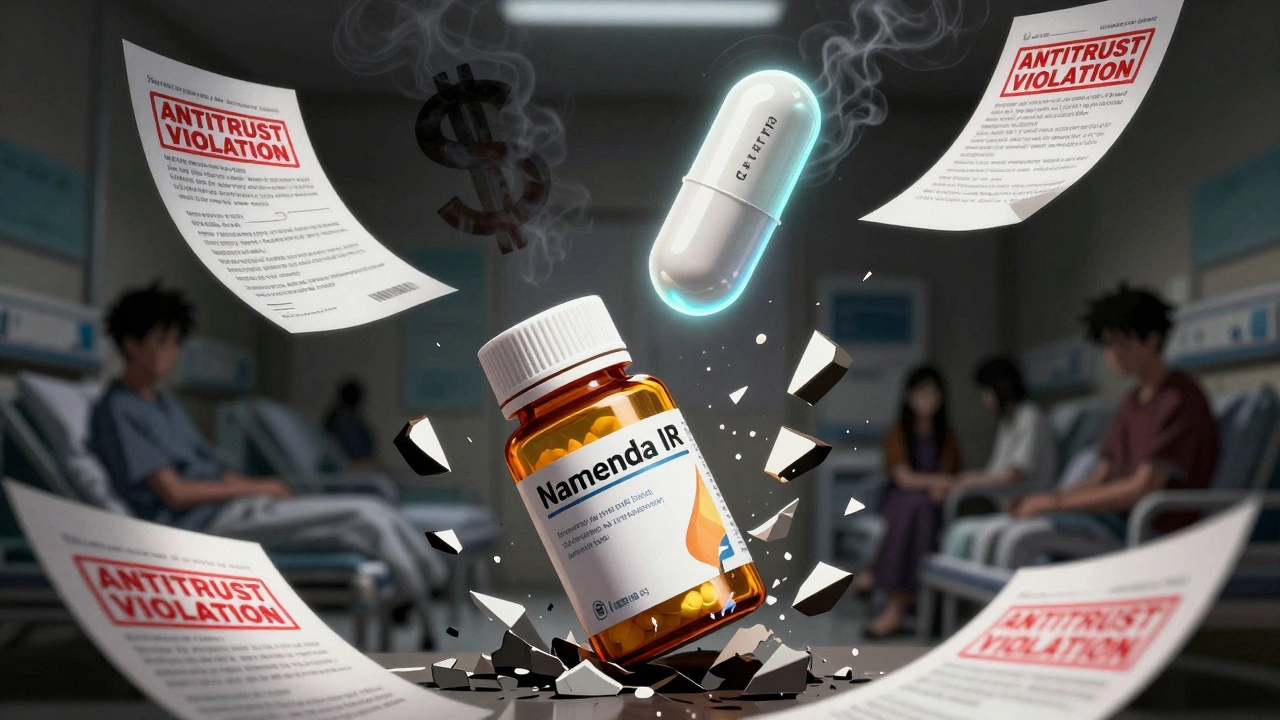
The most famous case is Namenda, a drug for Alzheimer’s. In 2013, Actavis introduced Namenda XR, an extended-release version. Thirty days before the original Namenda IR lost patent protection, they stopped selling it. Generic manufacturers couldn’t get their version on shelves fast enough. Patients were stuck paying $200 a pill instead of $2.
In 2016, a federal appeals court ruled this was illegal. The court said Actavis didn’t just launch a new product-they sabotaged the entire system designed to bring down prices. The ruling was a landmark: for the first time, courts recognized that removing an old drug to block generics isn’t innovation-it’s anticompetitive behavior.
Why This Isn’t Just ‘Better Medicine’
Drug companies claim these new versions are improvements. But the data tells a different story.In the Namenda case, the new version didn’t work better. It didn’t reduce side effects. It didn’t improve patient outcomes. It just changed how the pill was absorbed-enough to trigger a new patent, but not enough to matter clinically.
Same with Copaxone, a multiple sclerosis drug. Teva switched from a daily injection to a three-times-a-week version. The change offered no real benefit. But it blocked generics for years. A 2023 analysis found this maneuver cost patients between $4.3 billion and $6.5 billion in just two and a half years.
Even when patients switch, they rarely go back. Once you’re on a film instead of a tablet, your doctor won’t easily switch you back. Pharmacists can’t substitute unless the original is still available. And if the original is gone? You’re locked in.
The REMS Abuse Loophole
Another tactic? Blocking access to the drug sample.Before a generic company can get FDA approval, they need to test their version against the brand-name drug. That requires samples. But some companies use FDA-mandated safety programs-called REMS-to deny those samples.
REMS were meant to control dangerous drugs, like those with high addiction risk. But instead of limiting access for safety, some brands use REMS as a weapon. They claim the generic company can’t handle the risks. They refuse to provide samples. Or they demand impossible conditions.
According to a 2017 study by legal scholar Michael A. Carrier, over 100 generic manufacturers reported being blocked this way. One analysis found that for 40 drugs held under restricted access programs, the cost of delayed entry exceeded $5 billion per year.
This isn’t a side effect-it’s the plan. If generics can’t test their drugs, they can’t enter the market. No generics. No competition. No price drop.
What Courts Have Said-And What They Haven’t
Not every case has gone the same way.In 2009, AstraZeneca switched from Prilosec to Nexium, another heartburn drug. But they kept selling Prilosec. The court dismissed the antitrust claim, saying offering a new version was just competition.
The difference? In that case, the old drug stayed on the shelf. Patients could still get the generic version. In Namenda, the old drug vanished. That’s the line courts now look at: Was the original drug pulled before generics could enter?
Another case involved Suboxone, a drug for opioid addiction. Reckitt Benckiser pulled the tablet version and replaced it with a film. They also ran ads claiming the tablet was unsafe. The court found this was coercion-not innovation. The FTC settled for $1.4 billion in 2019 and 2020.
But many courts still don’t get it. Some say generics should just spend more on marketing. As if a small generic company can outspend a billion-dollar pharma giant. That’s not competition. That’s suicide.
Enforcement Is Starting to Catch Up
The FTC has been watching this for years. In their 2022 report, they called product hopping a “major barrier to generic competition.” They’ve taken action:- In the Namenda case, they forced Actavis to keep selling the old version for 30 days after generics entered.
- In Suboxone, they forced Reckitt to pay $1.4 billion and stop misleading advertising.
- They’ve pushed states to strengthen substitution laws so they can’t be easily bypassed.
The Department of Justice has also stepped in-not just against brand-name companies, but against generic manufacturers too. In 2023, Teva paid a $225 million criminal fine for colluding with other generics to fix prices. Glenmark paid $30 million. That’s a warning: no one’s above the law.
The Real Cost: Billions and Lives
It’s not just about money. It’s about access.Take Humira, a rheumatoid arthritis drug. Its price jumped from $1,200 per month in 2002 to over $7,000 today. Because of patent tricks and product hopping, no generic entered for nearly 20 years. In Europe, generics arrived in 2018. In the U.S.? Not until 2023.
A 2023 analysis found that just three drugs-Humira, Keytruda, and Revlimid-cost the U.S. system an estimated $167 billion more than they would have if generics had entered on time.
Revlimid’s price went from $6,000 to $24,000 per month over 20 years. That’s not innovation. That’s exploitation.
When patients can’t afford their meds, they skip doses. They go without. They end up in the hospital. The cost to the healthcare system is far higher than the price of a generic pill.
What’s Next?
The tide is turning. More courts are seeing product hopping for what it is: a legal loophole exploited to protect profits at the expense of patients. The FTC is pushing for clearer rules. Congress is holding hearings. States are updating their substitution laws to close the gaps.But the fight isn’t over. Drug companies still have lawyers, lobbyists, and billions to spend. As long as there’s a profit to be made by delaying generics, they’ll keep trying.
What can you do? Ask your pharmacist: Is there a generic available? If they say no, ask why. If the brand-name drug was recently pulled and replaced, it might not be because it’s unsafe-it might be because someone’s trying to keep the price high.
This isn’t about being anti-pharma. It’s about being pro-fairness. The system was built to save money and lives. It’s working-when no one cheats.
What is product hopping in the pharmaceutical industry?
Product hopping is when a drug company replaces an expiring-patent medication with a slightly modified version-like a new dosage form or delivery method-and then stops selling the original. This blocks pharmacists from substituting cheaper generics, because state laws only allow substitution if the original drug is still available. The new version is rarely clinically better, but it keeps patients on the expensive brand-name drug longer.
Is it legal for a drug company to stop selling an older version of a medicine?
It’s legal to discontinue a product for business reasons-but not if the sole purpose is to block generic competition. Courts have ruled that removing a drug right before generics enter, while launching a new version, violates antitrust laws if it eliminates the ability of pharmacists to substitute. The 2016 Namenda case set this precedent: if the original drug is pulled to prevent substitution, it’s illegal.
How do REMS programs help drug companies block generics?
REMS (Risk Evaluation and Mitigation Strategies) are safety programs required by the FDA for certain high-risk drugs. Some brand-name companies misuse these programs by refusing to provide samples of their drug to generic manufacturers-claiming safety concerns-so generics can’t test their versions. This delays FDA approval and keeps prices high. Over 100 generic companies have reported being blocked this way, costing the system over $5 billion annually.
Why don’t generic companies just advertise to compete?
Generic companies typically have tiny budgets compared to big pharma. Advertising won’t fix the problem if the original drug is gone and pharmacists can’t legally substitute. The system relies on automatic substitution because it’s the most cost-effective way to bring down prices. Asking generics to outspend brand companies in marketing ignores how the system actually works-and puts patients at a disadvantage.
What’s being done to stop these practices?
The FTC has filed lawsuits, won injunctions, and secured multi-billion-dollar settlements in cases like Namenda and Suboxone. They’ve also pushed states to strengthen substitution laws. The DOJ has criminally prosecuted generic manufacturers for price-fixing, sending a message that all sides must play fair. Congress is holding hearings, and legal scholars are calling for clearer laws to define what counts as legitimate innovation versus anticompetitive behavior.
How much money do these tactics cost patients?
Just three drugs-Humira, Keytruda, and Revlimid-cost U.S. patients and payers an estimated $167 billion more than they would have if generics had entered on time. In the case of Revlimid, the price rose over 300% in 20 years. When product hopping delays generics, patients pay hundreds or thousands more per month. That’s not just a financial burden-it affects health outcomes.
ian septian
December 10, 2025 AT 07:37Pharmacists should be able to swap generics without paperwork. This is basic healthcare commonsense.
William Umstattd
December 11, 2025 AT 12:54This isn't just unethical-it's a criminal betrayal of public trust. These corporations are not innovating; they are predatory parasites feeding off the sick and the elderly. The law must treat this as fraud, not business strategy. The Namenda ruling was a start, but it's not enough. We need jail time for executives who pull this garbage.
Sabrina Thurn
December 13, 2025 AT 10:07The structural issue here is systemic: product hopping exploits the gap between regulatory frameworks and market dynamics. REMS abuse, in particular, creates artificial barriers to bioequivalence testing-essentially weaponizing safety protocols. The FTC’s interventions are necessary but reactive. What’s needed is a statutory presumption that discontinuation of a pre-patent-expiry product with concurrent launch of a non-clinically-superior variant constitutes anticompetitive conduct. The EU’s parallel import mechanisms offer a useful model for bypassing these chokepoints.
Simran Chettiar
December 15, 2025 AT 01:06you know what its really about? its not just drugs its about control. the system is designed to make people dependent. pharma dont want you healthy they want you buying. its the same with food, with tech, with everything. we think we have freedom but we are just consumers in a cage made of patents and legal loopholes. the real question is not how to fix the law but how to break the mindset that says we must trust the corporations who profit from our pain. maybe we need to stop asking for permission and start making our own solutions.
Sarah Gray
December 16, 2025 AT 15:42Oh please. People who complain about drug prices are the same ones who think ‘natural remedies’ cure cancer. If you can’t afford your medication, maybe you shouldn’t have chosen to live in a capitalist society. Stop blaming the companies for being profitable. They didn’t force you to get sick.
Kathy Haverly
December 17, 2025 AT 02:44Let’s be real-this is all just performative outrage. The FTC? The DOJ? They’re all bought and paid for. The $1.4 billion Suboxone settlement? That’s pocket change to Reckitt. And don’t even get me started on how generic manufacturers collude too. This whole ‘big pharma bad’ narrative is a distraction. The real problem? You. You’re the one who lets your doctor prescribe $7,000/month drugs instead of asking for the $2 generic. You’re complicit.
Suzanne Johnston
December 18, 2025 AT 04:41It’s fascinating how we’ve turned healthcare into a battleground of legal technicalities instead of a human right. The fact that a patient’s access to medicine hinges on whether a pill is a tablet or a film-rather than on clinical need-reveals how deeply we’ve lost our way. Perhaps the answer isn’t more lawsuits, but a reimagining of the system: what if drugs were treated like public infrastructure? Not commodities, but necessities. We don’t charge extra for clean water because the company patented the filtration process. Why do we tolerate this for life-saving drugs?
Haley P Law
December 18, 2025 AT 10:16THIS IS WHY I HATE AMERICA 😭💸 The fact that people are dying because a company changed a pill shape… I’m literally crying right now. Someone call the news. This needs to go viral. #StopProductHopping #GenericsAreNotAScam #HumiraIsARipoff