
When you fill a prescription for a brand-name drug, you might expect your pharmacist to hand you a cheaper generic version-unless your doctor says otherwise. That’s the law in most U.S. states. But what if the drug company makes it impossible for that to happen? That’s not a glitch in the system. It’s a strategy. And it’s costing consumers billions.
How Generic Substitution Is Supposed to Work
State laws across the U.S. allow pharmacists to swap a brand-name drug for a generic version without needing to re-consult the doctor, as long as the generic is bioequivalent. This system was designed to save money-fast. When a patent expires, generics should flood the market, driving prices down by 80% or more. In fact, when there’s no interference, generics capture 80-90% of prescriptions within months. But that’s not always what happens. Some drug makers don’t wait for the patent to expire. They don’t just release a new version. They pull the old one off the shelf entirely. This is called product hopping. And it’s not innovation-it’s a legal loophole exploited to block competition.Product Hopping: The Playbook
Take Namenda, a drug for Alzheimer’s. In 2013, the manufacturer, Actavis, introduced Namenda XR, an extended-release version. Then, just 30 days before generic versions of the original Namenda IR were set to launch, they pulled the original tablet from the market. No warning. No stock. Just gone. Why does this matter? Because state substitution laws only apply to the exact drug prescribed. If the original Namenda IR disappeared, pharmacists couldn’t substitute a generic for it. Patients were forced to switch to the new version-Namenda XR-before generics even had a chance to enter. And switching meant a new prescription, a new copay, and a new barrier to affordability. The Second Circuit Court of Appeals called this out in 2016. They ruled Actavis’s move wasn’t competition-it was exclusion. The court said: "The only cost-efficient means of competing available to generic manufacturers is state substitution laws. When you destroy the product those laws depend on, you’re not competing-you’re eliminating competition." This wasn’t an isolated case. Teva did something similar with Copaxone, a multiple sclerosis drug. They switched from a daily injection to a weekly one, then stopped selling the original. The result? Consumers paid $4.3 billion to $6.5 billion extra over two and a half years before the new patent was invalidated.How the System Gets Manipulated
Product hopping isn’t the only trick. Drug companies also abuse FDA-mandated safety programs called REMS (Risk Evaluation and Mitigation Strategies). These are meant to control dangerous drugs, like those with high abuse potential. But instead of using them for safety, some companies use them to block access. Generic manufacturers need samples of the brand-name drug to prove their version works the same way. But if the brand company refuses to sell samples-or only sells them under restrictive conditions-generics can’t test, can’t file, and can’t enter the market. A 2017 study found more than 100 generic companies couldn’t get samples for 40 different drugs. The cost? Over $5 billion a year in lost savings. Another tactic? Making the old version seem unsafe. In the Suboxone case, Reckitt Benckiser claimed the original tablet form was more likely to be abused than the newer film strip. They then threatened to pull the tablets from the market. Doctors and patients, scared by the safety warning, switched en masse-even though there was no real medical difference. The FTC later called it a coercive tactic. They settled for $1.4 billion in 2019 and 2020.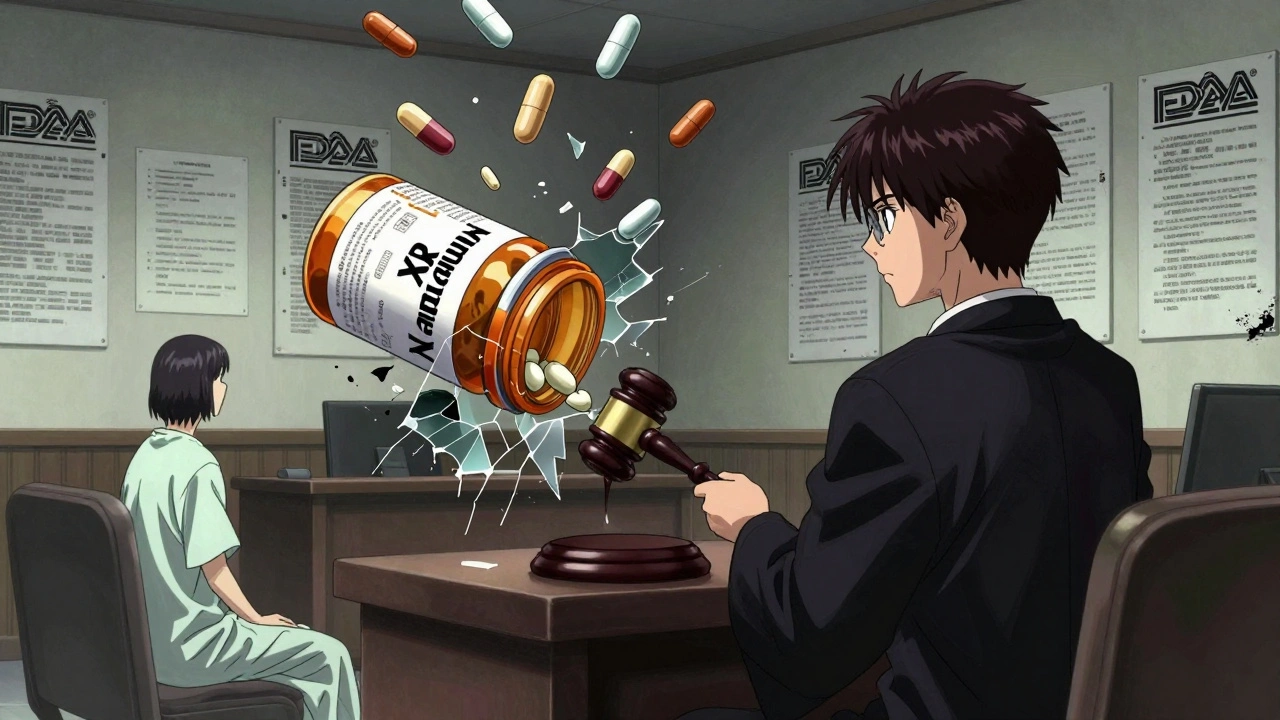
Why Courts Are Split
Not every case ends the same way. In 2009, a court dismissed a lawsuit against AstraZeneca for switching patients from Prilosec to Nexium. Why? Because Prilosec was still available. The court saw it as adding a new product, not removing an old one. But that’s the key difference. If the original drug stays on the shelves, courts tend to say it’s fair competition. But if it’s pulled before generics can enter? That’s where judges start to see antitrust violations. The FTC’s 2022 report highlighted this inconsistency. One court argued generics could just spend more on advertising to win back patients. But that ignores reality. Patients don’t choose generics because they’re cheaper-they choose them because their pharmacist hands them over. If the original drug is gone, the pharmacist has nothing to substitute. Advertising doesn’t fix that.Who’s Fighting Back?
The FTC has been pushing back hard. After the Namenda case, they got a court order forcing Actavis to keep selling the old version for 30 days after generic entry. That gave generics time to take over. In the Suboxone case, they forced Reckitt to stop using fear tactics to push patients toward the film. State attorneys general have also stepped in. New York sued Actavis in 2014 and won an injunction. Other states followed. Meanwhile, the Department of Justice has gone after generic companies too-for price-fixing. Teva paid $225 million in 2023, the largest criminal antitrust penalty ever for a domestic drug cartel. But the biggest threat to consumers isn’t just big pharma’s tricks-it’s the lack of clear rules. Courts still disagree. Some see product hopping as legal innovation. Others see it as illegal monopolization. That uncertainty lets companies keep trying.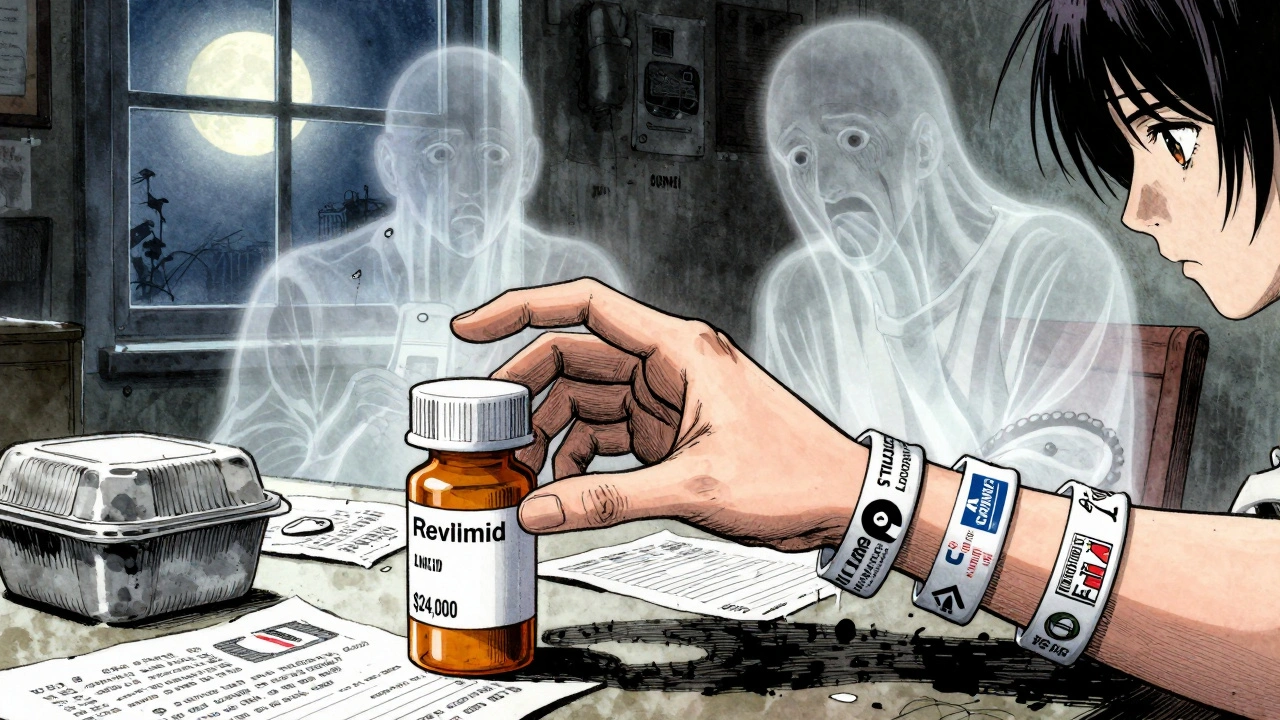
The Real Cost to Patients
The numbers are staggering. Revlimid’s price jumped from $6,000 to $24,000 a month over 20 years. Humira, Keytruda, and Revlimid alone cost the U.S. system an estimated $167 billion more than they would have in Europe, where generic entry isn’t blocked the same way. In the Ovcon case, a manufacturer introduced a chewable version and then pulled the original. The result? Generic market share dropped from 85% to under 20%. That’s not market choice. That’s market sabotage. Every time a drug stays expensive longer than it should, someone skips doses. Someone pays for food instead of medicine. Someone’s insurance premium goes up because the system is rigged.What’s Next?
The FTC’s 2022 report was a wake-up call. Chair Lina Khan made it clear: product hopping won’t be ignored anymore. Congress is paying attention. Hearings were held in 2023 to examine barriers to generic competition. Some lawmakers are pushing bills to ban REMS abuse and require drug makers to keep old versions available for 90 days after generic entry. The solution isn’t to stop innovation. It’s to stop hiding behind it. A new delivery method that actually improves patient outcomes? Fine. A pill that’s just a little slower to dissolve, sold only to block generics? That’s not innovation. That’s fraud. The system was built to save money. It’s working-unless someone breaks it. And right now, too many are.What is product hopping in the pharmaceutical industry?
Product hopping is when a drug company replaces an older medication with a slightly modified version-like a new dosage form or extended-release version-and then pulls the original off the market right before generics can enter. This blocks pharmacists from substituting cheaper generics under state laws, forcing patients to switch to the new, often more expensive version.
Why can’t pharmacists just substitute generics if the brand drug changes?
State substitution laws only allow pharmacists to swap drugs that are identical in active ingredient, strength, and dosage form. If the original version is discontinued, there’s nothing for the pharmacist to substitute. Even if the new version is similar, it’s considered a different drug under the law, so substitution isn’t allowed without a new prescription.
How do companies prevent generic manufacturers from getting drug samples?
Companies abuse FDA-mandated REMS programs, which are supposed to ensure drug safety. Instead of using them for safety, they restrict access to samples, requiring generic makers to jump through impossible hoops-or refuse to sell them at all. Without samples, generics can’t prove they’re bioequivalent, so they can’t get FDA approval.
Has any court ruled against product hopping?
Yes. In 2016, the Second Circuit Court ruled in New York v. Actavis that withdrawing Namenda IR before generic entry was anticompetitive. The court said it destroyed the foundation of state substitution laws, which are the only cost-effective way for generics to compete. The FTC has since used this ruling to challenge other cases.
What’s being done to stop these practices?
The FTC and DOJ have filed lawsuits and secured settlements, like the $1.4 billion deal with Reckitt over Suboxone. The FTC also published a major report in 2022 calling out product hopping. Some states are updating laws to require companies to keep old versions available for 90 days after generic entry. Congress is considering bills to ban REMS abuse and make it harder to block generics.
How much money do these tactics cost consumers?
An estimated $167 billion has been wasted on just three drugs-Humira, Keytruda, and Revlimid-because generic entry was delayed in the U.S. compared to Europe. In some cases, like Copaxone, consumers paid over $6 billion extra over just two and a half years. When product hopping works, generic market share drops from 80-90% to as low as 10-20%.
Katie Harrison
December 9, 2025 AT 01:41So, let me get this straight: companies aren’t just raising prices-they’re actively deleting the very product that lets generics compete? That’s not capitalism. That’s sabotage with a PhD.
Mona Schmidt
December 9, 2025 AT 14:51It’s fascinating how the legal system treats pharmaceutical innovation differently than any other industry. If a car company replaced a model with a slightly upgraded version and then discontinued the old one to block competitors, it’d be an antitrust case within weeks. But with drugs? We call it ‘business strategy.’
Michael Robinson
December 10, 2025 AT 23:03People think drugs are expensive because they’re hard to make. But it’s not the science. It’s the game. They’re not selling medicine. They’re selling monopoly.
Kathy Haverly
December 11, 2025 AT 11:50Oh please. You think the FTC gives a damn about you? They’re just waiting for the next scandal to make headlines while the same CEOs get promoted. This system isn’t broken-it’s designed this way.
Suzanne Johnston
December 12, 2025 AT 17:19I live in the UK, and we don’t have this problem. Generics hit the market fast. Prices drop. Patients win. The difference isn’t technology-it’s political will. We decided decades ago that health isn’t a profit center. The U.S. still hasn’t made that choice.
Haley P Law
December 13, 2025 AT 00:52WHY IS THIS STILL HAPPENING?? 😤 I paid $400 for a 30-day supply of a drug that’s been generic in Canada for 5 years. This isn’t just unfair-it’s cruel. Someone needs to burn it all down.
Andrea DeWinter
December 13, 2025 AT 11:52REMIS abuse is the silent killer here. Generic makers need samples to test equivalence but the brand companies control access like a gated community. No samples = no approval = no competition. It’s a chokehold disguised as regulation. The FDA needs to mandate sample access as a condition of REMS eligibility. Simple fix. Hard to implement because Big Pharma owns the lobbyists.
Steve Sullivan
December 14, 2025 AT 01:00so like… if a company makes a new pill that’s just a little slower to dissolve… and then yanks the old one… that’s not innovation… that’s like replacing your coffee with decaf and saying ‘oh we dont sell regular anymore’ so you gotta buy our new version… and pay more… 🤦♂️
George Taylor
December 14, 2025 AT 04:49...but... what if... the new version... is actually better? ...I mean... isn't there... a chance... that... this... is... just... progress? ...and... we're... just... mad... because... we... like... the old... thing? ...