

For decades, women have been told to use backup contraception when taking antibiotics. You’ve probably heard it from a pharmacist, a friend, or even a doctor: "Just to be safe, use condoms while you’re on antibiotics." But here’s the truth - for almost all antibiotics, that advice is outdated. The fear isn’t based on science. It’s based on a myth that refused to die.
The Real Culprit: Only a Few Antibiotics Matter
The idea that antibiotics mess with birth control pills started in the 1970s with a handful of unverified case reports. Back then, doctors didn’t have the tools to study this properly. Fast forward to today, and we have solid data from dozens of clinical trials. The Centers for Disease Control and Prevention (CDC), the American College of Obstetricians and Gynecologists (ACOG), and the FDA all agree: most antibiotics do not reduce the effectiveness of birth control pills. The only antibiotics proven to interfere are rifampin (also called rifampicin) and rifabutin. These are not your typical antibiotics. They’re used to treat tuberculosis and some rare infections. They work by ramping up liver enzymes that break down hormones. Specifically, they speed up the metabolism of ethinyl estradiol and progestin - the two key hormones in most birth control pills. A 2018 study in Pharmacotherapy found rifampin can drop estrogen levels by up to 50%. That’s enough to put you at risk for pregnancy. There’s also griseofulvin, an antifungal often mistaken for an antibiotic. It’s used for fungal infections like athlete’s foot or ringworm. Like rifampin, it boosts liver enzymes and reduces hormone levels. Both rifampin and griseofulvin require backup contraception for 28 days after stopping treatment.What About Amoxicillin, Azithromycin, or Doxycycline?
Let’s clear this up once and for all. If you’ve been prescribed any of these, you’re fine:- Amoxicillin - used for ear infections, strep throat, sinus infections
- Azithromycin (Zithromax) - used for pneumonia, STIs, bronchitis
- Doxycycline - used for acne, Lyme disease, urinary tract infections
- Clarithromycin, Erythromycin, Metronidazole (Flagyl), Ciprofloxacin (Cipro)
Why Do People Still Believe the Myth?
You might be thinking: "But I’ve heard stories. My friend got pregnant while on amoxicillin." Here’s the thing: correlation isn’t causation. If you’re on antibiotics, you might be sick. You might be vomiting. You might forget to take your pill. Or maybe you started it late. Those are the real reasons birth control fails - not the antibiotic itself. A 2022 survey by Planned Parenthood found that 62% of women believed antibiotics reduce birth control effectiveness. Even more telling - 43% of them used backup contraception during antibiotic treatment, even though it wasn’t necessary. Why? Because pharmacists, doctors, and even online forums keep repeating the myth. A 2022 study in the Journal of the American Pharmacists Association found 35% of pharmacists still recommend backup methods for all antibiotics. Dr. Jen Gunter, an OB/GYN and author of The Menopause Manifesto, says it best: "There’s zero evidence that common antibiotics like amoxicillin affect birth control." The myth sticks because it’s simple. It’s easier to say "use condoms" than to explain enzyme induction and liver metabolism.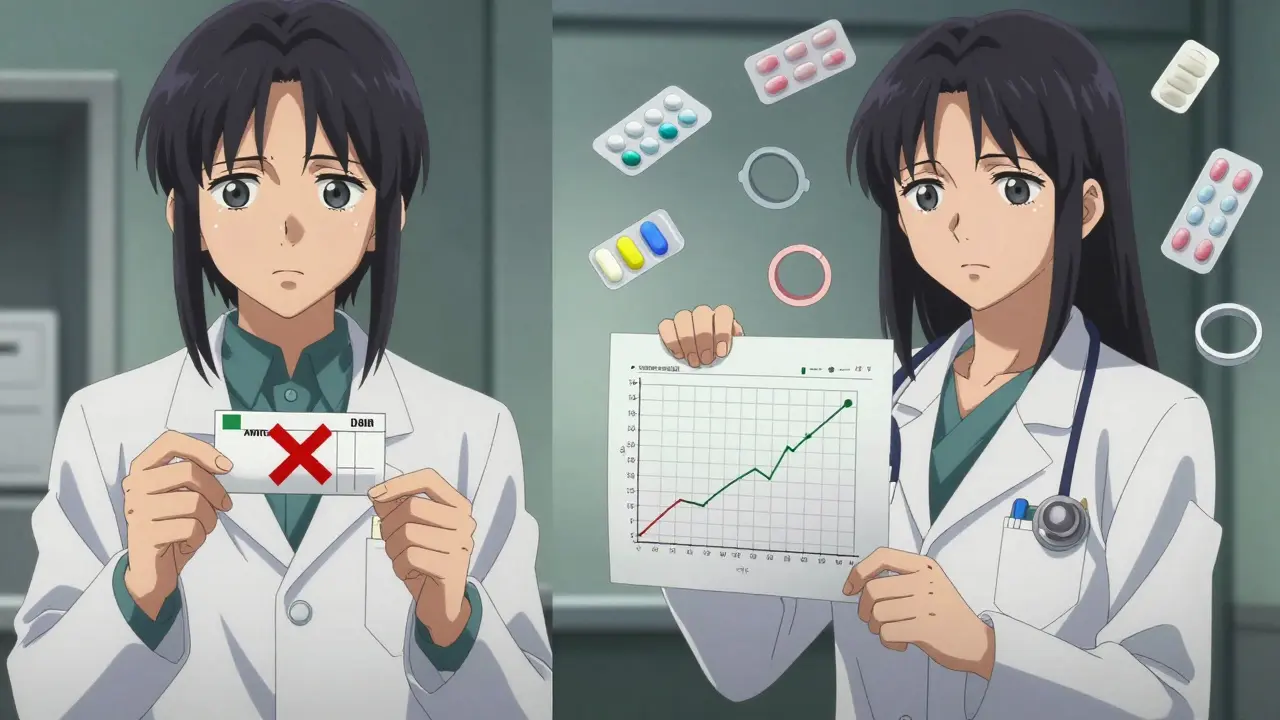
What About Other Medications?
Antibiotics aren’t the only drugs that can mess with birth control. Here are others you should know about:- Lamotrigine - an antiseizure drug. At doses over 300 mg/day, it can cut estrogen levels by 50%.
- Topiramate - another seizure medication. At doses over 200 mg/day, it reduces hormone effectiveness.
- EFavirenz and Nevirapine - HIV medications that lower estrogen levels.
- St. John’s Wort - a popular herbal supplement. A 2017 study showed it can drop estrogen levels by up to 57%.
What Should You Do?
Here’s your simple action plan:- If your antibiotic is rifampin, rifabutin, or griseofulvin - use backup contraception (condoms, diaphragm) for 28 days after finishing the course.
- If it’s any other antibiotic - no backup needed. Take your pill at the same time every day.
- If you’re unsure - check the drug name. Rifampin sounds like rifaximin. But rifaximin (Xifaxan) - used for traveler’s diarrhea - does NOT interact with birth control. The FDA confirmed this in 2022.
- If you’re vomiting or have severe diarrhea while on birth control - skip your pill and use backup. That’s the real risk, not the antibiotic.

Why This Matters
Believing this myth has real consequences. Women avoid antibiotics because they’re scared of getting pregnant. Others use backup methods unnecessarily, which can lead to reduced condom use over time. And let’s not forget - it distracts from the real issues: missed pills, vomiting, drug interactions with seizure meds or supplements. The CDC updated its guidelines in 2021 to say clearly: "Broad-spectrum antibiotics do not reduce the concentration of hormones in combined hormonal contraceptives to a sub-therapeutic level." That’s not a suggestion. It’s science. In September 2023, the American Medical Association surveyed 500 board-certified OB/GYNs. 98% agreed: only rifamycins require backup contraception. That’s not close to unanimous - it’s overwhelming.Frequently Asked Questions
Do all antibiotics affect birth control pills?
No. Only rifampin, rifabutin, and griseofulvin have been proven to reduce the effectiveness of birth control pills. All other common antibiotics - including amoxicillin, azithromycin, doxycycline, and metronidazole - do not interfere with hormonal contraception.
I took amoxicillin and got pregnant. Was it the antibiotic?
Almost certainly not. Amoxicillin does not affect birth control pills. Pregnancy in this case was likely due to missing pills, vomiting, diarrhea, or taking the pill at inconsistent times. Antibiotics don’t cause birth control failure - user error and other medications do.
Should I use backup contraception just to be safe?
If you’re taking rifampin, rifabutin, or griseofulvin - yes, for 28 days after. For all other antibiotics, no. Using backup when it’s not needed can create unnecessary stress and reduce condom use over time. Trust the science: most antibiotics are safe with birth control.
What about the gut bacteria theory? Doesn’t antibiotics kill good bacteria that help absorb estrogen?
That theory was popular in the 1980s but has been disproven. Studies show even broad-spectrum antibiotics don’t reduce gut bacteria enough to affect estrogen absorption. Serum estrogen levels remain stable during antibiotic treatment. The real mechanism for interaction is liver enzyme induction - not gut bacteria.
I’m on birth control and need to take rifampin. What are my options?
Use a non-hormonal method during and for 28 days after rifampin treatment - condoms, diaphragm, or copper IUD. After that, you can return to your hormonal method. If you’re on long-term rifampin (like for TB), talk to your doctor about switching to a non-hormonal contraceptive permanently.
Does the birth control patch or ring work the same way as pills with antibiotics?
Yes. The same rules apply. Rifampin and rifabutin reduce hormone levels regardless of whether you’re using pills, patches, or vaginal rings. All combined hormonal contraceptives are affected the same way by enzyme-inducing drugs.
I’m taking St. John’s Wort. Should I worry?
Yes. St. John’s Wort can reduce estrogen levels by up to 57%, making birth control less effective. If you’re using herbal supplements, always tell your doctor. You may need to switch to a non-hormonal method.
Prateek Nalwaya
February 16, 2026 AT 12:09Wow. This is one of those posts that makes you realize how much misinformation gets passed down like family recipes. I used to stress about amoxicillin like it was poison to my birth control-turns out, I was just scared of a ghost. The real villain? Forgetting to take the pill because I was too busy coughing up a lung. Thanks for cutting through the noise with hard data. Finally, someone who doesn’t treat patients like toddlers who need constant hand-holding.
Oliver Calvert
February 16, 2026 AT 19:55Griseofulvin being lumped in with antibiotics is a classic mix-up. It's not even an antibiotic. It's an antifungal. People see 'treatment for fungus' and think 'antibiotic' because they don't know the difference. That's the real problem here-not the myth itself but the lack of basic pharmacology education. If we taught this stuff in high school, we wouldn't have 62% of women panicking over a sinus infection.
Adam Short
February 18, 2026 AT 04:54Christ on a bike. We’ve got pharmacists still pushing this myth like it’s gospel and women are out here buying condoms like they’re toilet paper because they’re terrified of a bloody amoxicillin prescription. This isn’t science-it’s institutional laziness. In the UK we call this 'risk-averse nonsense' and it’s costing the NHS millions in unnecessary contraception. Someone needs to fire every pharmacist who still says 'just to be safe' without checking the literature.
Liam Earney
February 19, 2026 AT 21:01You know, I’ve spent years quietly suffering from this myth-I mean, I literally carried condoms in my purse like they were emergency flares, just in case I got a cold and needed amoxicillin. And now I find out I’ve been paying for extra protection for over a decade… for nothing? It’s not even that I’m mad-it’s more like… grief? Like I lost a friend I didn’t know was fake. I trusted that advice. I believed it. I thought it was protecting me. And now? Now I feel like I’ve been lied to. By doctors. By pharmacists. By society. And I’m not sure how to unlearn it.
Steph Carr
February 20, 2026 AT 02:56Let’s be real-the reason this myth survives is because ‘use condoms’ is easier than explaining cytochrome P450 induction to someone who just wants to know if they’ll get pregnant while taking antibiotics for their UTI. It’s not malice. It’s cognitive laziness wrapped in a white coat. And St. John’s Wort? That’s the real silent killer. People think herbal = safe. Nope. It’s like putting a banana peel on your birth control pill and calling it a day.
Dennis Santarinala
February 20, 2026 AT 04:01I love how science finally caught up with the myth, but honestly? I’m not surprised. I’ve been telling my friends for years: ‘If you’re on birth control and take antibiotics, the only thing you should be worried about is whether you actually took the pill.’ I mean, come on. We’ve got MRI machines and CRISPR, but we’re still using 1970s advice? This is like using a rotary phone to order a Tesla. We’re smarter than this. We just need to stop repeating what we heard in 2005.
Geoff Forbes
February 21, 2026 AT 20:36It’s amusing how the general public clings to pseudoscience while dismissing peer-reviewed meta-analyses. The CDC? ACOG? Please. These institutions are too bureaucratic to be trusted. I’ve seen too many women on hormonal IUDs get pregnant after taking ‘safe’ antibiotics. Coincidence? I think not. There’s a reason we have ‘just to be safe’ as a phrase-it’s because biology is messy. And you can’t reduce it to a bullet point list.
Sam Pearlman
February 22, 2026 AT 18:51Wait wait wait-I’m gonna say something controversial: what if the myth exists because it’s a form of control? Like, we tell women ‘you have to double-check everything’ so they stay anxious, dependent, and compliant? The real power move isn’t the pill-it’s the fear around it. And pharmacists? They’re not wrong-they’re just playing into a system that profits from confusion. Maybe the real issue isn’t the antibiotic… it’s the patriarchy.
PRITAM BIJAPUR
February 24, 2026 AT 12:23Science wins again 🧪💡 But honestly? This is why I love the internet. We used to have to rely on doctors who didn’t update their knowledge since med school. Now? We get deep dives with citations, clear thresholds (50 pg/mL!), and even FDA updates. I’m not just relieved-I’m inspired. If we can fix this myth, maybe we can fix the next one too. Keep sharing truth. The world needs more of this.